She was twelve years old. Her crime? Taking a key and some money that did not belong to her. Her punishment? A metal key dragged across her back, her arms, and under her armpits, until she bled. Then a knife to the back of her hands.
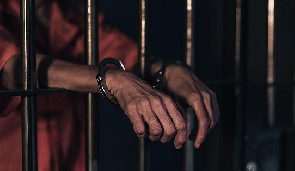
Akosua Mansa, not her real name, ran for her life. She ran to her headmaster. She ran to safety. Her stepmother was arrested, charged, and sentenced to four months in prison.
Four months. For scars that will last a lifetime.
But Akosua's story is not an isolated tragedy. It is a window into a quiet epidemic sweeping across Ghanaian homes and classrooms, one where 94 per cent of children aged 1 to 14 experience some form of physical punishment or psychological aggression from the very people meant to protect them. Ghana ranks first globally in this statistic.
The Numbers That Should Shame a Nation
According to UNICEF data, the scale of violence against Ghanaian children is staggering. Over 1 in 10 teenage girls aged 15 to 19 report having suffered at least one act of sexual violence.
In 2024 alone, 23,626 cyber tip line reports linked to child sexual abuse materials were accessed or shared from Ghana—a shocking leap from just 750 in 2016.
The 2023 Ghana Multiple Indicator Cluster Survey found that approximately 22 per cent of children aged 1 to 14 are subjected to violent discipline, including physical, emotional, and sexual abuse.
Perhaps most chilling is a media surveillance study that identified 25 child homicides associated with corporal punishment in Ghana between 2007 and 2024. Four of these deaths occurred in school settings, while 21 took place in domestic environments.
The victims ranged in age from 18 months to 20 years old. Among the perpetrators, stepmothers were disproportionately represented.
These are not statistics. They are children. They are our children.
When 'Correction' Becomes a Legal Loophole
How does a nation allow this to happen? The answer lies in the law itself.
Article 13(2) of Ghana's Children's Act 1998 confirms the concept of "justifiable" and "reasonable" correction of a child. Article 41 of the Criminal Offences Act 1960 goes further, stating that "a blow or other force may be justified for the purpose of correction" by a parent, guardian, or even a schoolmaster delegated with that authority.
In other words, the law that is meant to protect children also provides a shield for those who harm them.
While the Children's Act prohibits "cruel, inhuman or degrading treatment or punishment", the "reasonable correction" defence creates a legal grey area where violence is normalised, and perpetrators often walk free.
The ministerial directives against corporal punishment in schools exist, but they have not been confirmed in legislation.
This means that while teachers are officially discouraged from using the cane, the law still allows it.
'When You Are Beaten, You Learn to Hate School'
Hassan Mansour, a Junior High School student, knows this reality all too well.
"When you are beaten, you don't learn math," he told Anass Sabit. "You learn to hate school. You learn to be afraid of adults. That is not discipline. That is damage."
A female senior high school student who spoke to us on condition of anonymity described how her teacher called her "stupid" in front of the entire class, then hit her palm until it swelled. "I stopped raising my hand forever," she said.
In schools, infractions leading to punishment include classroom disturbances, disruptions during worship, and poor academic performance.
At home, children have been beaten for everything from a toddler's delayed ability to walk, to self-defecation, to the loss of money entrusted to them during an errand.
The Cycle Passed Down Through Pain
Why do parents continue to beat their children? The answer is often simple: because they were beaten themselves.
"We carry what happened to us," said Nana Ama Asantewaa Munufie II, Hansuahemaa of the Techiman Traditional Area. "In how we shout. In how we cannot control our anger.
In how we struggle to love gently. The cycle is real. And it is broken only when someone says: enough."
"When a child is abused, the wound on the body may heal. But the wound in the heart? That stays forever. We, as leaders, must rise against this. Not tomorrow, now," she added.
ASP Ama Nyarko Winifred, Bono East Regional Commander of the Domestic Violence and Victim Support Unit (DOVVSU), confirmed that child abuse cases in the region are rising.
"Between 2024 and 2025, we have recorded a steady increase in child abuse reports," she said.
"But the real numbers are higher. Many children never speak. They are told: 'This is how you learn respect.'"
The SOS Solution: Breaking the Cycle with NORAD Support
But there is hope.
SOS Children's Villages in Ghana, in partnership with SOS Children's Villages Norway, has launched a five-year initiative funded by the Norwegian Government through the Norwegian Agency for Development Cooperation (NORAD).
The project, titled "Protecting Children at Risk of Losing Parental Care," will run from 2025 to 2029.
The project targets 6,000 children at risk of losing parental care and 2,000 caregivers across 20 communities in the Greater Accra, Volta, Central, and Bono East regions. Implementation is focused on five districts: Ada West, Dangme East, Ekumfi, Adaklu, and Sene West.
Key interventions include:
Economic empowerment of caregivers through income-generating assistance, addressing poverty as a root cause of family stress and separation.
Positive parenting training promoting non-violent discipline techniques
Literacy programmes tailored to local contexts
Strengthening community-based child protection committees, with 15 committees to be trained under the project
Empowering eight civil society organisations to advocate for children's rights Emergency support for disaster-prone communities
"Advocacy is not a one-off journey," said Gloria Emeka, National Advocacy Advisor at SOS Ghana. "It requires collective effort from diverse partners who believe in child protection".
Martina Deri, Project Coordinator for the NORAD Project, emphasised that the initiative seeks to prevent unnecessary family separations, pointing out that poverty remains a major cause of such breakups.
What Must Change: Recommendations for a Nation
Ending physical punishment in Ghana requires action from all sectors of society.
To Parents and Caregivers:
Learn and practice positive discipline—it builds trust, not fear.
Seek counseling support if you are struggling with anger or stress.
Remember, you can correct without causing pain
To Schools and Teachers:
Fully implement the ban on corporal punishment
Engage trained professional counsellors at the basic school level
Develop alternative discipline methods that respect children's dignity
To Community Leaders and Traditional Authorities:
Use your influence to speak out against child abuse
Support Community Child Protection Committees in identifying and reporting abuse Promote positive parenting through community forums and dialogue.
To Government and Policymakers:
Repeal Articles 13(2) of the Children's Act and 41 of the Criminal Offences Act to remove the "reasonable correction" defence
Pass legislation explicitly prohibiting all corporal punishment in all settings
Resource DOVVSU and the Department of Social Welfare for effective enforcement
Ensure every basic school has a trained professional counsellor
Roll out nationwide sensitisation campaigns in rural languages
Healing and Hope: Akosua's Future
Akosua is now in a safe place. Her physical wounds are healing. But the emotional scars will take years.
When asked what she wants to be when she grows up, she replied simply: "A teacher. A kind one."
That small sentence is the whole argument. Children don't need to be broken to be built. They need safety. Stability. And someone who believes in them.
The woman who hurt Akosua is behind bars—for four months. But real justice will come when no child has to run to a headmaster to escape their own home.
Let this be the generation that breaks the cycle. A safe childhood today shapes a stronger Ghana tomorrow.
Opinions of Wednesday, 26 August 2026
Columnist: Anass Sabit
Discipline or Abuse: What happens when ‘Discipline’ becomes torture
 A file photo of a young girl