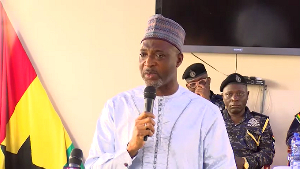
The call by the former Director-General of NaCCA to "decolonize Ghana's curriculum" has reignited an important national conversation about the purpose and direction of Ghana's education. The importance of this conversation lies not in pitting Western knowledge against African knowledge, but in challenging us to reflect on a much bigger question: What should Ghana’s education actually prepare our children for?
Many well-meaning Ghanaians have expressed concern that our curriculum reflects too much foreign influence. That concern is worth considering because societies preserve their identities, values, and visions through their education system. Yet, I believe we should broaden the conversation.
In addition to the query, "Whose knowledge are we teaching?" we should also ask, "What knowledge, skills, values, and character are required to build the Ghana we envision while thriving in the world?" I have lost count of the number of times I hear the phrase ‘world-class education’ in discussions about education reforms. But what does "world-class education" actually mean? More importantly, who gets to define it?
Britain's education system has evolved over centuries to reflect its social institutions, traditions, and national priorities. Through the years, the United States’ education has come to focus on innovation and diversity. Similarly, Finland has become known for its learner-centered approach to education and Singapore’s emphasis on excellence in mathematics and science is renowned. Canada has built an inclusive and flexible education system.
These systems are highly regarded not because they are identical, but because each reflects its country's history, culture, economic priorities, and national aspirations.
The lesson here is very deep— there is no single curriculum that can genuinely be described as universally ‘world class.’ What successful nations do is to constantly tune their education system to the needs and priorities of their people and strive to prepare them to confidently and resiliently find their usefulness in an ever-changing complex world. Ghana should do the same.
Long before today's curriculum debates, Dr Kwame Nkrumah envisioned education as an instrument of national development and self-determination. He meant Ghana’s education system to cultivate citizens with the knowledge, skills, and sense of purpose to positively transform societies in whatever form or shape they find them. Education was never meant merely to produce graduates with certificates.
Paulo Freire argued that education is never neutral; it either sustains the status quo or becomes a force for transformation. A nation’s education system will either reinforce existing behaviors or influence it towards positive transformations and renewal. The curriculum we design therefore reflects our aspirations, values, and the kind of citizens we hope to nurture. Thus, the question that should dominate these conversations about Ghana’s curriculum is ‘what education system fits Ghana’s future?’
Every curriculum, whether intentionally or not, answers one fundamental question: What kind of citizen do we hope to produce?
Certainly, responding to this question, ‘What kind of Ghana do we want to build over the next thirty to fifty years?’ should precede all textbooks or syllabi revisions. Do we aspire to become West Africa's technology hub? A leader in advanced agriculture? A manufacturing powerhouse? A center for research and innovation? A nation known for ethical leadership, efficient public institutions, and globally competitive businesses? Our answers to these questions should direct us towards the curriculum we choose.
Our education system should be deliberately aligned with our national purpose. We cannot wish for digital economy without desiring to equip our students with digital literacy, computational thinking, and responsible use of artificial intelligence from an early age.
Again, our desire for stronger democratic institutions will be an illusion without civic education, ethics, constitutional literacy, and critical and creative thinking. If we aspire for entrepreneurship then job creation, creativity, financial literacy, innovation, and problem-solving should be inculcated long before students reach the university level. Similarly, we must teach empathy, collaboration, emotional intelligence, and cultural sensitivity if we aim at social cohesion.
As illegal mining continues to threaten our environment, environmental stewardship and ethical decision-making should not be optional themes in our schools. Additionally, entrepreneurship, innovation, and financial literacy should no longer be treated as peripheral subjects as long as youth unemployment remains one of our greatest challenges.
This vision is not unique to Ghana. UNESCO continues to describe education as the foundation for sustainable development and responsible global citizenship. Likewise, the World Economic Forum consistently identifies analytical thinking, creativity, resilience, adaptability, collaboration, and lifelong learning among the skills that will define tomorrow's workforce. These are not ‘Western’ skills; they are the competencies every nation needs to prosper in an increasingly complex world.
Embracing global realities and competencies does not mean identity abandonment. Without reservation, the kind of curriculum we choose must teach our history, literature, constitutional development, indigenous knowledge systems, local languages, and cultural values. These are not simply relics of the past.
While these lessons develop our self-worth, they also shape our sense of belonging, deepen our understanding of our communities, and remind us that development is most sustainable and impactful when it reflects the identity, values, and lived realities of the people it is meant to serve.
As we empower the Ghanaian student to serve the national purpose, our education system must consciously make them ready to thrive on the global platform. Knowledge has never recognized geographical boundaries. Whatever individuals have discovered or invented belongs to the common human heritage.
Great ideas from the past often become the foundation for new discoveries and innovations. Considering this, Ghana’s education must reflect local realities and visions, but it must also equip students with the knowledge and skills to engage confidently with global best practices.
It is highly important to note that high-performing education systems in the world do not assume static perfection. For example, Singapore regularly updates its curriculum to serve the needs of its future workforce. Finland uses research and innovation to progressively refine its curriculum.
The common thread across these successful systems is their willingness to evolve. They do not treat curriculum as fixed; they continually refine it in response to changing realities. This philosophy can work in Ghana’s education system as well.
This suggests that curriculum change must be an ongoing national exercise informed by research, labor market trends, technological developments, and continuous consultation with stakeholders—educators, employers, parents, students, and industry. How best can we prepare our people for a dynamic world if the curriculum we design is incapable of evolving?
Curriculum reform cannot succeed unless assessment evolves alongside it. If our examinations continue to reward memorization rather than reasoning, teachers will inevitably teach to the test. We must assess the very competencies we claim to value—critical thinking, creativity, communication, collaboration, ethical judgement, and problem-solving.
Policymakers must also recognize that today's Ghanaian learner will live in a world far more interconnected than previous generations. Some will pursue higher education abroad. Others will work for multinational organizations or build businesses that compete globally. Our curriculum should prepare them to succeed in all these spaces without losing sight of their responsibility to Ghana.
The debate, therefore, is not whether Ghana's curriculum is sufficiently Western or sufficiently African. It is whether it is sufficiently Ghanaian—designed around our national aspirations, informed by global best practice, and flexible enough to prepare every generation for a future none of us can fully predict.
If we achieve that balance, we will have done more than decolonize a curriculum. That, to me, is what a truly world-class Ghanaian education should look like—not one that imitates the world, but one that prepares Ghanaians to shape it.
Opinions of Tuesday, 21 July 2026
Columnist: Daniel Dei
Beyond Decolonization: Rethinking the purpose of Ghana's education
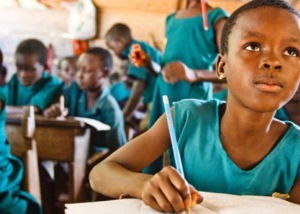 A new vision for Ghana's education