In the build-up to the New Patriotic Party’s (NPP) presidential primaries, a recurring talking point among the supporters of Dr. Mahamudu Bawumia is that he has achieved an impressive performance in his first attempt at a presidential race. The argument is presented as though “doing well on a first try” is a hallmark of exceptional political prowess.
However, a closer look at history, the political context, and electoral performance trends reveals that this assertion is not the strength it is claimed to be; in fact, it exposes a deeper political vulnerability.
The Historical Record
A review of the NPP’s presidential history shows a consistent pattern: no flagbearer of the party has ever won Ghana’s presidency on their first attempt. The data speaks for itself: 1992 – Prof. Albert Adu Boahen: 30.29% (Opposition), 1996 – John Agyekum Kufuor: 39.67% (Opposition), 2008 – Nana Addo Dankwa Akufo-Addo: 49.15% (Government; former Minister of Foreign Affairs, Regional Integration and NEPAD) and 2024 – Dr. Mahamudu Bawumia: 41.75% (Government; sitting Vice President, four-time running mate).
The historical context matters. Adu Boahen and Kufuor both contested from the opposition, lacking the inherent advantages of incumbency. Akufo-Addo, though unsuccessful in 2008, had the benefit of running from government, with a strong ministerial track record. In 2024, Dr. Bawumia contested not only from within government but as the sitting Vice President, a role that naturally comes with national visibility, policy influence, and state machinery support. Why the “First Attempt” Claim is Misleading
Projecting Dr. Bawumia’s 2024 performance as a first-timer’s triumph ignores several critical realities: Incumbency Advantage: Dr. Bawumia was not an unknown political newcomer. By 2024, he had been the NPP’s running mate for four consecutive elections (2008, 2012, 2016, and 2020), effectively giving him 16 years of national exposure before his own presidential bid.
Executive Authority: As Vice President for eight years, he was directly involved in policy implementation, governance decisions, and political campaigns; a vastly different starting point from candidates entering frothe m opposition.
Falling Short Despite Leverage: Given the significant advantages of incumbency, proximity to state power, and established political networks, a 41.75% outcome is not an indicator of unusual strength; it signals a worrying underperformance. Turning a Deficit into a Selling Point?
Political communication often reframes weaknesses as strengths, but the electorate must see through such packaging. In this case, the “first attempt” framing is an attempt to neutralize the fact that Dr. Bawumia, despite all the benefits of incumbency and political capital, failed to break the historical barrier of winning on the first try; a barrier that even his predecessors from the opposition naturally faced.
When contextualized, his 2024 performance is not a break from history but a continuation of a trend; one that suggests the NPP’s presidential victories have never come from a first attempt, and especially not when the candidate’s political experience and visibility are at their peak. The Numbers Tell a Different Story
Bawumia’s 2024 performance is, in fact, the weakest electoral outcome ever recorded by a candidate contesting on the ticket of a party whose government is the incumbent. Since the advent of the Fourth Republic, no sitting Vice President or ruling-party candidate with full incumbency advantage has polled as low as 41.75%. Even in 2008, when the NPP’s Nana Addo Dankwa Akufo-Addo ran for the first time from government, he secured 49.15% in the first round; nearly eight percentage points higher than Bawumia’s result.
In 2000, the NDC’s John Atta Mills, also a sitting Vice President making his first presidential bid, garnered 44.54% in the first round. The fact that Bawumia’s figure falls below both benchmarks, despite unprecedented name recognition, sixteen years of national political exposure, and the full weight of state machinery, is not just underwhelming; it is historically poor. Rather than signalling momentum, these numbers underscore a severe erosion of the ruling party’s electoral appeal under his candidacy.
A Call for Caution Among Delegates
As the NPP approaches its next presidential primaries, delegates must be vigilant and discerning. Campaign slogans and carefully crafted talking points can easily mask political weaknesses as strengths. The “first attempt success” narrative has no bearing on the decision that delegates must make; which is to choose the candidate with the strongest electoral prospects, proven voter appeal, and the capacity to unite the party and win the national election. Delegates must separate emotion from evidence and avoid being swayed by arguments that collapse under the weight of historical facts.
Projecting a Winnable Future: Why Bryan Acheampong Stands Out
In this critical moment, the NPP needs more than recycled campaign narratives; it needs a candidate with the proven ability to mobilize grassroots energy, consolidate the party base, and expand its reach into swing constituencies.
Hon. Bryan Acheampong has demonstrated exceptional organizational skills, strategic political thinking, and an unrelenting commitment to the party’s grassroots. His blend of youthful vigor, governance experience, and strong rapport with both the rank-and-file and national leadership makes him a formidable candidate with a genuine path to victory in 2028. For a party seeking not just participation but triumph, Bryan Acheampong offers a credible, unifying, and winnable choice. Conclusion
Political campaigns thrive on narratives, but narratives must be weighed against facts. In this case, the “strong first attempt” story is not supported by historical data or contextual reality. If anything, it should serve as a wake-up call for introspection within the party, rather than as a badge of honor. The Future Has a Name and Is BRYAN!
Meanwhile, watch the trailer to GhanaWeb’s yet-to-air documentary on teenage girls and how fish is stealing their futures below:
Opinions of Wednesday, 20 August 2025
Columnist: Daniel Twumasi Kankam
A weakness others are projecting as strength
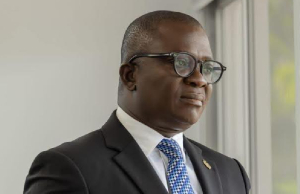 Bryan Acheampong, Member of Parliament for Abetifi