Lali X Lola came into the fourth edition of Fire & Flow with a bigger vision for what their annual concert could become. Held on August 1 at Alliance Française in Accra, Fire & Flow 4 – The KAMAKAZI Edition delivered on much of that ambition.
With Six Degrees Africa serving as the implementation partner, the fourth edition represented a noticeable step up in production, coordination, and overall execution. The result was more than a concert, combining music, games, visual installations, live performances, surprise appearances, DJs, lighting, and audience interaction. It was not, however, without its challenges.
The Good: Fire & Flow Felt Like an Experience
One of the strongest aspects of Fire & Flow 4 was the attention given to the experience beyond the main stage. From the entrance and photo areas to the branded spaces, games section, stage design, and lighting, the event established a deliberately curated environment.
The 4 p.m. to 6 p.m. games session was one of the event’s most distinctive additions. Guests participated in table tennis, Ampe, card games, musical chairs, and other childhood games. It was a simple idea but an effective one.
Yaa Bitha, MC Tokyo and Tim Jeezy Set the Tone
The energy of Fire & Flow 4 was established from the very beginning, with MC Tokyo and hype man Tim Jeezy opening the show and setting the tone for the audience.
When Yaa Bitha took over as the main host, she became the heartbeat of the evening. Her ability to keep the audience excited, engaged, and constantly curious helped sustain the energy throughout the night.
A Sonically Curated Line-Up
The musical experience at Fire & Flow 4 was carefully built from the opening moments, with DJ Lapel and the night’s official DJ, DJ Raya, playing important roles in shaping the atmosphere, while DJ Juicy delivered a surprise set.
The line-up featured Ess Thee Legend, Iveth Stunner, Aba Taylor, Brenny, Romeo Swag, Senti, 6CA, B Mario, Real Em Kay, and Bradley, with each act bringing a distinct sound and energy to the stage.
The programming created a sense of progression throughout the evening, allowing the event to move naturally between DJs, supporting performances, and the headline set rather than feeling like a collection of disconnected acts.
Surprise Performances
The evening was further elevated by surprise performances from Rcee, Camidoh, and DWP Academy.
The Lali X Lola Stage Entrance
The twins’ headline entrance and performance was one for the history books — and one for other artists to take notes from.
As blue light cut through the haze, Lali X Lola emerged for their opening song, creating an almost cinematic introduction. The Adorkor band contributed depth, dynamism, and a distinctly live dimension to Lali X Lola’s music and performance.
The twins delivered a captivating performance built around vocals, choreography, movement, and the chemistry that has become central to their identity as a duo. They used the entire stage.
The improved production allowed the performance to land more effectively, with lighting cues, stage presentation, and the overall visual environment giving Lali X Lola the setting required of headline performers.
The Six Degrees Africa Effect
One of the most noticeable differences in Fire & Flow 4 was the improvement in production and implementation quality.
The contribution of Six Degrees Africa was evident across the production. The improvement was not about one particular feature, but rather the cumulative effect of stronger coordination, more intentional production decisions, and greater attention to how the different elements of the event worked together.
The stage presentation, lighting, programme flow, audience engagement areas, and overall environment felt more polished. The result was a concert that increasingly felt like a live entertainment property in its own right.
The Bad: Ticketing Frustrations
Not every part of the experience worked as smoothly. The ticketing system presented challenges, with some guests experiencing difficulties during the arrival process.
For an event looking to grow its audience and scale future editions, a smoother and more intuitive ticketing process will be essential.
The Ugly: A Payment System That Created Friction
The most significant operational challenge appeared to be the vendor payment system.
The cashless system required guests to load money onto an app through a third-party process before connecting the funds to their tickets or wristbands for purchases at the venue.
Although designed to make transactions easier and reduce the need for cash, the execution appeared to create frustration for both guests and vendors.
Four Editions In, the Vision Is Getting Bigger
The ticketing and payment issues were noticeable, but they do not overshadow what Fire & Flow 4 achieved creatively.
The entrance was visually engaging. The games created genuine moments of nostalgia and interaction. The photo areas encouraged participation. The stage and lighting elevated the visual experience. The DJs strengthened the musical atmosphere, while the supporting acts added variety and energy.
The twins delivered a performance that demonstrated why Fire & Flow has become an important part of their artistic identity.
After four editions, the concept has clearly evolved. Growth, however, brings new challenges. Ticketing needs to become smoother, vendor payments simpler, audience communication clearer, and the operational infrastructure stronger.
Fire & Flow is increasingly becoming more than an annual concert. It is developing into an experience-led entertainment platform, with its own audience and creative culture.
The ambition was bigger. The community was growing. The execution was stronger. The experience was better.
Entertainment of Friday, 14 August 2026
Source: Lali X Lola
Fire & Flow 4: Lali X Lola turn up the heat with bigger ambition
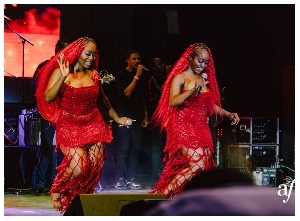 Ghanaian musicians Lali X Lola