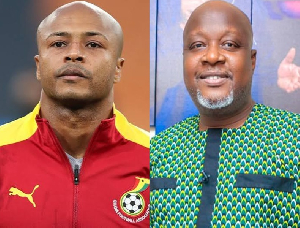
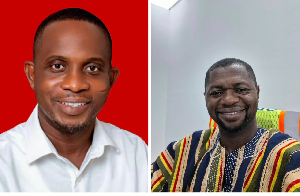
Astute broadcast journalist Akwasi Nsiah has called for a national conversation on Ghana’s constitutional two-term limit for Presidents, arguing that voters should be given the opportunity to re-elect leaders they believe still have the capacity to deliver.
Nsiah, in an opinion piece on Ghana’s democratic governance, said the country’s democratic maturity warrants a serious discussion about whether presidential term limits should remain in place.
Ghana has had five Presidents since the inauguration of the Fourth Republic in 1993, following the adoption of the 1992 Constitution.
According to Nsiah, the political experiences of successive administrations suggest that presidential popularity and public approval at the end of a leader’s tenure can significantly influence the prospects of a political comeback.
He cited the late Jerry John Rawlings and John Agyekum Kufuor as former Presidents who, in his assessment, might have had strong prospects of securing a third term had the Constitution permitted them to contest again.
In contrast, he argued that John Dramani Mahama in 2016 and Nana Addo Dankwa Akufo-Addo in 2024 faced circumstances in which another electoral victory would have been considerably more difficult, given the public dissatisfaction surrounding their respective administrations.
Nsiah also referenced the late Professor John Evans Atta Mills, who died in office in July 2012 during his first presidential term.
Voters should decide, Nsiah argues
The broadcast journalist believes Ghana should consider allowing Presidents to contest elections beyond two terms, provided they continue to satisfy the relevant legal requirements and secure the support of voters.
He maintained that the current arrangement could prevent the country from benefiting further from leaders who possess the vision, experience and commitment needed to drive national development.
“We risk losing the services of leaders who may have a genuine love for the nation, the vision to transform the economy and the capacity to deliver lasting development simply because they have exhausted their constitutionally permitted terms,” Nsiah argued.
He believes the electorate should have a decisive role in determining whether a sitting President deserves another opportunity to govern.
To support his argument, Nsiah drew a comparison with parliamentary representation, pointing out that some constituents may choose to retain a Member of Parliament for as long as 24 years.
“If Ghanaians can repeatedly elect a Member of Parliament to represent them for 24 years, why should they not have the same opportunity to retain a President who continues to enjoy their confidence?” he questioned.
A constitutional question for Ghana
Nsiah’s proposal raises a broader question about the relationship between democratic accountability, presidential performance and constitutional safeguards.
Under Article 66(2) of Ghana’s 1992 Constitution, a person cannot be elected President for more than two terms. Removing this restriction would therefore require constitutional reform, rather than a simple change in electoral practice.
Supporters of term limits often consider them an important safeguard against the excessive concentration of executive power and the entrenchment of political leadership. Those who advocate reconsidering the restriction may argue that voters should have greater freedom to retain experienced leaders who continue to command public support.
For Nsiah, the central issue is whether the electorate should have the ultimate say in determining how long a President remains eligible to seek office.
“Democracy is about the people’s choice. If the electorate has the power to elect a leader, it should also have the power to decide how long that leader remains in office,” he said.
His position is likely to generate further debate about whether Ghana should retain its existing presidential term limits or consider a constitutional arrangement that permits Presidents to seek additional terms, subject to electoral approval.
Politics of Thursday, 22 October 2026
Source: www.ghanaweb.com
Akwasi Nsiah calls for debate on presidential term limits in Ghana
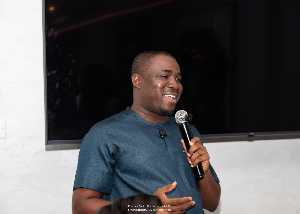 Akwasi Nsiah is a broadcast journalist