The New Patriotic Party (NPP) is laying the groundwork for what party insiders describe as one of the most structured and intellectually rigorous opposition policy frameworks in Ghana’s multi-party democratic history.
Under the leadership of the party’s flagbearer, Dr Mahamudu Bawumia, the NPP has formally announced the establishment of a comprehensive Policy Committee system, a multi-sectoral, data-driven structure designed to produce credible, costed and evidence-based policy alternatives ahead of the 2028 general elections.
Bawumia brings all four presidential primary competitors on board as co-Chairs of NPP policy committees
The initiative, which is already generating attention within political, academic and civil society circles, marks a significant departure from the conventional style of opposition politics in Ghana, where parties out of power have often focused primarily on criticising government actions without presenting detailed alternatives.
Political observers say the framework reflects Dr Bawumia’s intention to position the NPP not merely as an opposition party, but as a government-in-waiting equipped with practical solutions across key sectors of national development.
The Structure of the Policy Framework
At the centre of the initiative is the NPP Policy Committee, a high-level oversight body tasked with coordinating the work of several sector-specific subcommittees responsible for developing detailed policy recommendations.
The committee will be chaired by former Information Minister and Member of Parliament for Ofoase-Ayirebi, Kojo Oppong Nkrumah, whose reputation for policy communication and governance advocacy has made him a prominent voice within the party.
Serving as Secretary to the committee is respected technocrat Dr Kwasi Nyame Baafi, who is expected to provide intellectual and organisational leadership to the framework.
The newly established sector committees cover a broad range of policy areas, including:
Employment and Jobs
Energy
Decentralisation and Local Governance
Roads and Transport
Housing and Urban Development
Lands and Natural Resources
Education
Health
The Economy
Defence and Interior
According to party sources, each committee will draw expertise from professionals, researchers, policy analysts, and industry stakeholders to ensure that recommendations are grounded in research and measurable outcomes.
All policy proposals generated by the committees will undergo internal review processes before being submitted to the flagbearer for approval.
Bawumia’s Data-Driven Vision
Party officials say the initiative reflects Dr Bawumia’s long-standing commitment to data-driven governance and evidence-based policymaking.
As a trained economist and former Deputy Governor of the Bank of Ghana, Dr Bawumia has consistently advocated for digitisation, systems thinking, and technology-led governance throughout his political career.
A senior NPP official, speaking on condition of anonymity, disclosed that Dr Bawumia has instructed committee members to ensure every proposal is backed by credible evidence.
“He made it very clear that no committee should present policy proposals that are not backed by data,” the official said.
“He believes Ghanaians deserve more than political promises dressed up as policy. Every recommendation must be evidence-based, practical, and properly costed.”
Political analysts say this emphasis on measurable and implementable policies could distinguish the initiative from previous opposition policy efforts, which have often been criticised for lacking detail and feasibility.
Preparing for Governance
Observers also view the policy framework as a signal that the NPP is actively preparing for a return to power following its 2024 electoral defeat.
The inclusion of experienced former ministers, technocrats, and policy experts within the structure is seen as part of a broader effort to rebuild the party and restore confidence among supporters.
Sources within the party indicate that the committees are expected to begin work immediately, with stakeholder consultations and sector policy reviews scheduled in the coming weeks.
Dr Bawumia is also reported to have encouraged party executives to remain focused on rebuilding the NPP around ideas, competence, and policy innovation.
“We lost an election. We did not lose our ideas, our talent, or our commitment to Ghana,” he reportedly told party officials.
“When we return to the Ghanaian people in 2028, we will return with solutions — not just slogans.”
The establishment of the Policy Committee framework is already being interpreted by many within the political space as an attempt by the NPP to redefine opposition politics in Ghana by institutionalising policy development and long-term governance planning.
With the committees now formally constituted, attention is expected to shift toward the quality of the policy alternatives they produce and whether the framework can help reposition the NPP as a credible governing alternative ahead of the next general elections.
President Mahama reacts to Trump White House shooting incident
'I have forgiven her' — Pentecost Chairman responds to Dr Mary Awusi
Politics of Friday, 8 May 2026
Source: www.ghanaweb.com
Bawumia-led policy committee to deliver data-backed solutions across key sectors
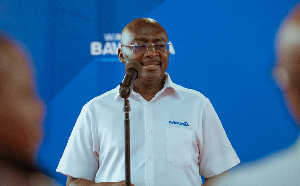 Dr Mahamudu Bawumia is a former Vice President of Ghana




Entertainment