Presidential Adviser on National Resilience and Emergency Preparedness, Ernest Brogya Genfi, has urged businesses and investors to seize opportunities presented by improving economic conditions and ongoing reforms to expand investment, create jobs and strengthen Ghana’s competitiveness.
Speaking on behalf of the Chief of Staff, Dr Julius Debrah, at the Ghana Converge Summit 2026, he said easing inflationary pressures, declining interest rates, relative exchange-rate stability and stronger external reserves were helping to improve confidence in the business environment.
BoG lists 20 mobile loan apps operating without licence
He said the government’s fiscal and structural reforms were aimed at creating a more predictable economy to support business expansion and encourage long-term investment.
“Businesses thrive not in uncertainty, but in stability. Investors commit capital not where risks are highest, but where confidence is strongest,” he said.
Brogya Genfi stressed that Ghana’s economic transformation required a strong partnership between the government and the private sector, noting that sustainable growth could not be achieved through public-sector efforts alone.
He cited the CEO-Government Compact 2026 as part of efforts to deepen engagement with businesses and ensure that private-sector concerns informed economic policy and implementation.
He said the government must create the right policy and institutional environment for businesses to thrive, while the private sector invests, innovates and expands responsibly.
On industrialisation and trade, he highlighted the government’s Accelerated Export Agenda, which seeks to position Ghanaian businesses to benefit from opportunities under the African Continental Free Trade Area (AfCFTA).
He called for a shift away from dependence on raw-material exports towards local processing, manufacturing and value addition to build competitive Ghanaian enterprises and create more jobs.
“We must increasingly process what we produce, manufacture what we consume, create value locally and build globally competitive Ghanaian enterprises,” he said.
He cited initiatives such as the Northshore Apparel Factory as examples of efforts to strengthen domestic production and move Ghanaian businesses higher up global value chains.
The presidential adviser also highlighted programmes such as Adwumawura, the National Apprenticeship Programme, the Women’s Development Bank and the One Million Coders Programme, which he said were designed to expand opportunities for young people, women and entrepreneurs.
He further underscored the importance of digital skills and innovation, describing the digital economy as an avenue for businesses to reach new markets, improve productivity and compete internationally.
“The future belongs to societies that invest in skills, innovation and knowledge,” he said, urging Ghana to equip its people with the skills needed to thrive in the economy of tomorrow.
ANAS/MA
How a Visit to GHACEM Inspired Ibrahim Mahama to Build Dzata Cement
Business News of Friday, 9 October 2026
Source: www.ghanaweb.com
Government calls for increased private sector investment amid economic reforms
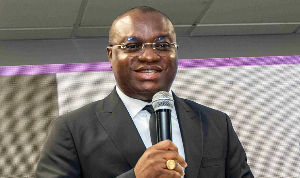 Ernest Brogya Genfi is the former Deputy Defence Minister