The Minerals Commission and the University of Mines and Technology (UMaT) are exploring a plan to bring more trained professionals into Ghana’s small-scale mining sector as part of efforts to improve mining standards and strengthen the fight against illegal mining.
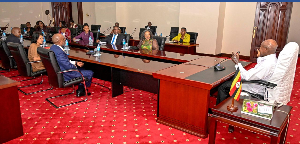
The proposal emerged during a meeting between the Commission and a UMaT delegation led by the University’s Vice-Chancellor, Professor Bernard Kumi-Boateng.
Under the proposed arrangement, small-scale mining operators could be required to engage appropriately trained personnel as part of the conditions for obtaining or renewing their mining licences.
Bank manager accused of using dormant account to divert GH¢1 million
Professor Kumi-Boateng said UMaT graduates and professionals licensed by the Minerals Commission could provide the technical expertise needed to improve operations within the small-scale mining industry.
He argued that increasing professional supervision in the sector could promote responsible mining practices, reduce environmental damage and create employment opportunities for graduates with specialised training in mining and related fields.
The proposal comes as Ghana continues to struggle with the environmental consequences of illegal and poorly regulated mining, particularly the destruction of water bodies and farmlands.
Chief Executive Officer of the Minerals Commission, Isaac Andrews Tandoh, welcomed the proposal, particularly the push to introduce stronger professional standards into small-scale mining operations.
He said requiring qualified professionals to take responsibility for mining activities could strengthen accountability and make it easier to hold individuals responsible when operators breach mining or environmental regulations.
Tandoh also called for deeper collaboration between UMaT and the Commission to ensure that academic research addresses practical challenges confronting Ghana’s mining industry.
He indicated that the Commission was prepared to support relevant research initiatives by UMaT, particularly studies that respond to national priorities and could attract government backing and funding.
“This should not be a one-time engagement. Let us work together, identify our common priorities and determine how both institutions can advance the development of Ghana’s mining sector,” he stated.
Deputy Minister for Lands and Natural Resources, Dr Yusif Sulemana, who attended the meeting, urged the two institutions to move quickly from discussions to implementation.
'We can't always be beggars' – Ibrahim Mahama pushes for Ghanaian-owned businesses
He pledged the Ministry’s support for the Minerals Commission and UMaT in developing practical frameworks to implement proposals arising from the engagement.
The collaboration is expected to strengthen the link between mining education, research, regulation and industry practice, while supporting Ghana’s efforts to develop its mineral resources in a more responsible and sustainable manner.
DR/MA
Inside Ghana’s Abandoned Engineering Powerhouse: What Went Wrong?
Business News of Wednesday, 7 October 2026
Source: www.ghanaweb.com
Minerals Commission, UMaT push plan to bring trained professionals into small-scale mining
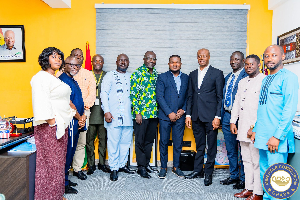 CEO of Mineral Commission with delegates from UMAT