Ghana’s financial portfolio investment community – and their counterparts abroad who still consider government’s sovereign bond issuances as having potential – have spent much of the last weekend mulling over whether or not to buy into the latest, cedi-denominated domestic sovereign bonds about to put on the market. Now however they are about to get the most important piece of information that will guide their subsequent investment decision.
The forthcoming four-year Government of Ghana Treasury bond is potentially attractive to institutional investors and high-net-worth individuals, but its investment case will depend heavily on where the Ministry of Finance sets the initial and final clearing yield. The book-build opens on Tuesday, September 1, 2026, with final pricing expected after the order book closes on September 3 and settlement on September 7. The bond will mature in 2030, carry senior unsecured sovereign status and repay principal on a bullet basis.
A likely yield range of 12–14%
Most bond analysts agree that a yield of 12.5–13.5 percent is the most plausible clearing range, with 13–13.5 percent representing the most attractive, but realistic, entry point for investors taking four-year duration risk. A yield below about 12.25 percent would look overly optimistic given the current short-end yield curve, while a yield above 14 percent would represent an unnecessarily high risk premium for government even though it would attract substantial institutional demand.
Bond market analysts are giving several reasons for this range. First, the government’s successful seven-year bond issued earlier this year cleared at a 12.5 percent coupon rate, after attracting GH¢3.1 billion of bids, with it accepting GH¢2.8 billion. A four-year instrument should normally command a lower yield than a seven-year bond because of its shorter duration and consequently lower interest-rate risk, although the difference need not be large in Ghana’s still-developing yield curve. However at the time of the last issue, the issuer and the markets were working with an inflation rate of 3.3 percent as at February 2026, this marking the 14th consecutive monthly decline in headline inflation, which had been 23.6 percent a year earlier. Since then inflation has not been linear. It rose each month over the three months from April to June and only experienced a resumption of its downward movement in July, after peaking at 5.3 percent in June.
On the other hand though, the Treasury-bill curve has fallen substantially. As at the August 31 auction, the 91-day, 182-day and 364-day bills were yielding approximately 4.95 percent, 6.86 percent and 10.78 percent, respectively. This implies that a four-year bond yielding 12.5–13.5 percent would offer a substantial premium over one-year government paper.
Added to that, inflation has become considerably less threatening. Ghana’s inflation rate has fallen from 5.3 percent in June to 4.6 percent in July, while the IMF’s current 2026 projection is 5.8 percent. Against inflation of roughly 5 percent, a 13 percent nominal bond yield would provide a potentially attractive real return of around 7–8 percent before tax, assuming inflation remains contained.
How competitive is that expected yield?
For conservative investors, the impending bond looks quite competitive.
The immediate alternative is the 364-day Treasury bill at about 10.8 percent. The four-year bond would therefore provide roughly 170–270 basis points of additional annual yield, albeit in exchange for substantially greater duration and liquidity risk. The trade-off becomes particularly attractive if the investor believes interest rates in Ghana will continue declining; locking in 12.5–13.5 percent for four years could prove valuable if future Treasury-bill rates fall materially below the current levels.
Bank deposits are less compelling on currently available evidence. Bank deposit pricing has been declining alongside the broader interest-rate environment, although negotiated wholesale fixed-deposit rates for large institutional or high net worth individuals (HNW) placements can differ materially from published retail rates. The Bank of Ghana’s interest-rate data and individual bank pricing illustrate the generally lower deposit-rate environment. Generally, mainstream commercial banks in Ghana currently offer between 5 percent to 8 percent on fixed deposits while savings and loans companies, correctly perceived as riskier havens for customer deposits offer between 12 percent and 15 percent.
Equities are the obvious higher-return alternative—but with dramatically greater risk. The GSE Composite Index was up 71.27 percent year-to-date by August 28, illustrating how much capital appreciation has been available to investors willing to accept equity price volatility. That performance should not, however, be extrapolated over four years. For an investor seeking predictable income rather than (potential, but not guaranteed) significant capital appreciation, the Treasury bond remains fundamentally less risky.
Corporate bonds can offer higher yields—the Ghana Fixed Income Market currently lists corporate instruments with coupons well above sovereign rates—but investors inevitably assume issuer-specific credit and liquidity risk that is absent, or at least substantially lower, with a Republic of Ghana bond servicing obligation.
The principal risks
Inflation is the first major risk. A 13 percent coupon looks excellent if inflation averages 5–6 percent, but much less attractive if inflation returns to double digits. A sustained inflation shock would erode the bond’s real return and could push market yields higher, thus reducing its secondary-market price.
Interest-rate risk is therefore significant. Investors holding the bond to maturity and receiving all contractual payments can largely ignore interim price movements, assuming no default. But investors who may need to sell before 2030 face mark-to-market risk. If monetary policy tightens and comparable four-year yields rise from 13 percent to, say, 16 percent, the bond’s market value could fall materially.
Conversely though, this creates an opportunity: if Ghana’s disinflation continues and market yields fall towards 9–10 percent, holders of a 13 percent bond could realize substantial capital gains before maturity.
For foreign investors and Ghana-based investors whose ultimate wealth is measured in dollars though, the cedi’s exchange rate is the primary risk. A 13 percent cedi return can be overwhelmed by currency depreciation. For example, a 15 percent cedi depreciation against the dollar over a year would approximately eliminate a 13 percent nominal cedi return in dollar terms. The cedi has nevertheless shown considerable recent stability compared with the extreme depreciation episodes of 2022–24; the US dollar/cedi rate was around 11.2 in late August.
An investment verdict from the experts
For an institutional portfolio or HNW investor with cedi liabilities or cedi-based investment objectives, bond market experts say the smart money is on a final yield of 13 percent or above as attractive, 12.5–13 percent as reasonable, and below 12.25 percent as requiring greater selectivity.
The key strategic attraction is not simply the coupon. It is the possibility of locking in a relatively high real yield just as Ghana’s disinflation and monetary normalization are pushing shorter-term rates down. The principal reservation is duration: investors should not treat a four-year bond as equivalent to a one year (or less) Treasury bill.
For investors whose ultimate benchmark is the US dollar, however, the decision should be made on an expected dollar-adjusted return, not the headline 12–14 percent cedi yield. For them, currency hedging—or limiting the position to the portion of the portfolio whose liabilities are cedi-denominated—is prudent.
Overall, a clearing yield around 13 percent would make the issue one of the more interesting conservative fixed-income opportunities currently available in Ghana, particularly for investors prepared to hold maturity.
Business News of Tuesday, 1 September 2026
Source: businesspostonline.com
Investors gear up for new GoG 4-year bond
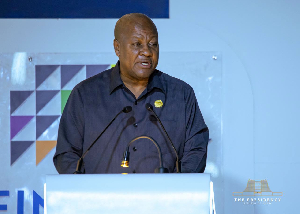
 Dr Cassiel Ato Forson, Minister of Finance