International investor interest in exploiting Ghana’s vast bauxite reserves has spiked in August, with the latest interest being shown through an announcement this week, by Coal India, the world’s largest coal producer, which is now evaluating bauxite opportunities in Ghana as the Indian state-controlled miner eyes expansion beyond coal and to secure overseas mineral assets. The Ghana interest is part of a wider plan to establish a base for mineral trading and potential acquisitions involving bauxite, lithium, iron ore, rare earths and other critical minerals.
To be sure Coal India’s Ghana interest remains at an early evaluation stage. No specific mine, deposit or company has been identified. Additionally, there is no indication that negotiations with Ghanaian authorities have begun. But the company’s interest in Ghana is being met with enthusiasm in Accra. It is valued at US$26 billion on the Indian stock market and as per its official database, the company produced 768.19 million tonnes of coal in its 2025-26 financial year. Its move into overseas minerals comes as India seeks to secure resources required for manufacturing, renewable energy, electric vehicles (EVs) and defence.
Ghana is estimated to hold around 920 million tonnes of bauxite, with major resources located in Awaso, Nyinahin and Kyebi.
However, the country currently does not have an operating refinery to convert locally mined bauxite into alumina. This leaves Ghana dependent on exports of raw bauxite while its aluminium industry imports alumina for smelting.
The Awaso mine produces around one million tonnes of bauxite annually, while the Ghana Integrated Aluminium Development Corporation (GIADEC) is targeting an expansion of production to five million tonnes per annum (MTPA). The corporation also plans an alumina refinery capable of producing around 1.6 MTPA of alumina.
GIADEC is separately working with Ghanaian mining company Rocksure International on a proposed mine and refinery at Nyinahin-Mpasaaso.
Another project involving Metlen Energy & Metals covers an estimated 300 MTPA of bauxite and could eventually produce up to 10 MTPA, alongside another proposed alumina refinery.
Coal India’s announcement of interest in Ghana’s bauxite has come closely on the heels of several proposals from an array of foreign enterprises.
Metalloïd Resources Investment , a UAE-based metalloid resources firm recently formalized a US$60 million facility agreement with GIADEC and the Ghana Integrated Bauxite Development Limited Company (GIBDLC). This phased capital injection explicitly targets scaling up extraction at the Nyinahin bauxite concession (Hills 1 to 3) in the Ashanti region.
In mid-2026, the Italian engineering giant, Danieli & C. Officine Meccaniche, signed a major 300 million euros Memorandum of Understanding (MoU) with GIADEC. Danieli plans to construct a state-of-the-art Aluminium Foil Rolling Plant in the Tema Integrated Industrial Park, aiming for an annual output of up to 45,000 tonnes of value-added products.
Following Ghana’s strategic cancellation of a previous legacy lease, the government has entered advanced, high-level negotiations with Dubai-based Emirates Global Aluminium (EGA) and select Chinese firms to develop a block of the country’s bauxite deposits.
During high-profile diplomatic engagements in Moscow in August 2026, Russia’s Ministry of Foreign Affairs explicitly listed geological surveys and mineral exploration as focal points for renewed bilateral investment with Ghana.
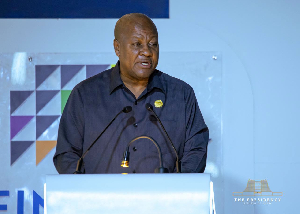
In an innovative cross-border initiative backing President John Mahama’s industrial agenda, active talks are underway with Jamaica Bauxite Mining (JBM). The proposed US$60 million arrangement involves shipping Jamaican bauxite to an Atlantic Alumina plant in Louisiana for refining, which will then be exported directly into Ghana to feed its expanding domestic smelting capabilities.
Local enterprises and institutions are determined not to be left behind in the accelerating race towards a full bauxite to aluminium value chain.
Operating under a newly solidified, parliament-ratified 30-year lease, Ghana Bauxite Company Ltd (the lone operator of the historical Awaso proven reserves) has advanced significantly. In mid-2026, GBC commissioned a full pre-feasibility study for Ghana’s first-ever local integrated alumina refinery. GBC has secured a 3,000-square-kilometer site at Awaso for the refinery and is finalizing land valuation assessments to compensate local stakeholders
Rocksure International, the prominent local mining company, remains a pillar of GIADEC’s strategy. Despite historical shifts in wider lease allocations, Rocksure retains co-development paths alongside GIADEC at the Nyinahin-Mpasaaso deposits, acting as a crucial vehicle for private-public Ghanaian participation.
In August 2026, the Ministry of Lands and Natural Resources officially inaugurated a definitive negotiating team to structure the expansion and retooling of the state-owned Volta Aluminium Company (VALCO) smelter. However this has sparked a heavy local response as the Industrial and Commercial Workers’ Union (ICU-Ghana) launched a formal protest against ceding a rumored 70% controlling equity stake to a private strategic partner, demanding transparent reviews to safeguard national assets.
Meanwhile established local firms like Western Rod and Wire Limited have actively petitioned GIADEC and the Ministry in late August 2026. They are demanding structural recognition and strict domestic-supply carve-outs for existing local manufacturers that already produce aluminum wire rods for West Africa’s electrical cable industry.
This momentum is driven by government through the state-led GIADEC. To transition from exporting raw ore to establishing a fully integrated domestic aluminum value chain, Ghana has enacted key policy moves, such as the abolition of VAT on mineral reconnaissance and prospecting in the 2026 budget and moving toward a structural ban on raw bauxite exports.
To transition Ghana from a raw material exporter to a global aluminum powerhouse, GIADEC is negotiating an estimated US$6 billion infrastructure overhaul. Building local alumina refineries requires immense, highly specialized logistical networks.
GIADEC is currently structuring negotiations around two foundational pillars: heavy-haul rail networks and high-capacity, sustainable power solutions.
Moving millions of tonnes of raw bauxite ore from inland concessions to refineries, and eventually transporting refined alumina to the Valco smelter or ports, cannot be sustained by roads. GIADEC, alongside the Ghana Railway Development Authority, is therefore negotiating the completion of the Western Rail Line with a focus on a standard-gauge upgrade spanning the Western Corridor route from Awaso and Nyinahin directly to the Takoradi Port with financing through long-term mineral off-take agreements with private investors.
At the same time to make Ghanaian aluminum competitive in a global market that increasingly taxes carbon footprints, GIADEC’s power negotiations focus heavily on massive capacity and sustainability.
GIADEC’s Master Plan dictates that the initial phase of the integrated aluminum industry requires a dedicated, uninterrupted baseline supply of at least 500 Megawatts (MW) of direct power. To avoid straining Ghana’s national grid GIADEC is evaluating independent power producer (IPP) models including proposals to deploy independent, multi-use solar and green energy solutions scaling up to 5,000MW to power industrial clusters sustainably.
Business News of Tuesday, 1 September 2026
Source: businesspostonline.com
Investor interest in emerging bauxite industry mounts
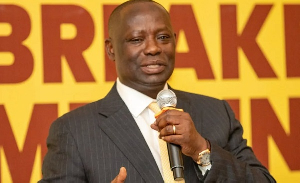 Minister for Lands and Natural Resources, Emmanuel Armah-Kofi Buah