African governments have been urged to adopt a new governance framework for critical minerals that prioritises transparency, democratic accountability, industrialisation, citizen participation and sustainable development.
The call was made at the High-Level Conference on Governance, Critical Minerals and Conflict in Africa, held from July 27 to 29, 2026, at the Kempinski Hotel Gold Coast City in Accra and convened by the Open Society Foundations (OSF).
The three-day conference brought together government officials, representatives of the African Union (AU) and Regional Economic Communities (RECs), parliamentarians, civil society organisations, traditional leaders, mining communities, researchers, development partners and private sector actors.
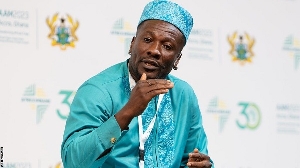
Africa must not repeat past mistakes with critical minerals - Goosie Tanoh
Closing the conference, Programme Manager for Transformative Peace in Africa at OSF, Tem Mbuh, said Africa’s success in the global critical minerals economy would depend less on its mineral wealth than on how those resources are governed.
“For me, the conversations we have had over the last three days have not been abstract debates about governance, critical minerals, or conflict. They have been a mirror held up to realities we know too well across our continent,” he said.
Citing Cameroon, Mbuh said official records showed that only 148 kilogrammes of gold were exported between 2021 and 2025, while more than 44 tonnes of Cameroonian gold were recorded in Dubai, representing an estimated US$3.4 billion in lost value.
“A strong consensus emerged from our deliberations, namely, that the future of Africa's critical minerals is not fundamentally a question of geology. It is a question of governance,” Mbuh stressed.
He also identified five priorities, including treating critical minerals as a governance issue, integrating peacebuilding into mineral governance, promoting value addition, placing communities at the centre of decision-making, and strengthening regional cooperation.
“We should remember that history rarely presents nations and continents with moments such as this. Africa's critical minerals must not become another chapter in the history of extraction. They must become the foundation of democratic renewal, transformative peace, and inclusive development,” he stated.
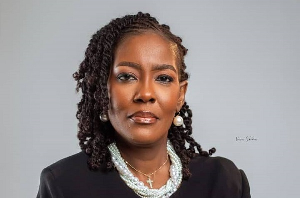
OSF Chief Operating Officer Leela Ramdhani said Africa’s mineral wealth could support renewable energy, digital technologies and advanced manufacturing, but warned that prosperity would depend on strong institutions and community participation.
“The benefits will ultimately depend on the integrity of governance systems, the strength of democratic institutions, and the meaningful participation of communities that have historically been marginalised in decisions concerning their natural resources,” she said.
Ramdhani continued, “We have been reminded of a simple truth: the so-called resource curse is not a natural fate but a consequence of power.”
“Minerals do not create conflict; unequal systems of extraction do,” she stressed.
She further described the global race for critical minerals as “a test of sovereignty, democracy, global cooperation, and our claims to equal humanity.”
“If Africa's mineral wealth is to become a blessing rather than another chapter in a history of extraction, we must look beyond ourselves and beyond the present moment. We do not inherit the earth and its resources from our ancestors; we borrow them from our children,” Ramdhani said.
Meanwhile, delegates endorsed a continental governance compact covering accountability, transparent resource management, conflict prevention, industrialisation, value addition and regional cooperation.
They also called for investment in refining, manufacturing, research and skills development, stronger community participation, action against illicit mineral flows, and improved cooperation through the African Continental Free Trade Area (AfCFTA).
MA
Business News of Thursday, 30 July 2026
Source: www.ghanaweb.com
Africa must turn critical minerals into foundation for development - OSF
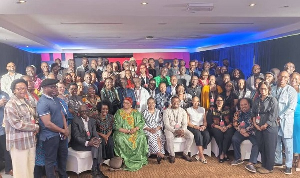 African governments have been urged to adopt a new governance framework for critical minerals