South African mining giant Gold Fields Ghana is facing mounting resistance in its bid to secure a 20-year renewal of its mining lease for the Tarkwa Mine in the Western Region, as traditional authorities and youth groups intensify demands for greater benefits and transformative development for local communities.
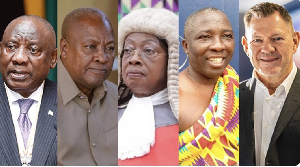
Information emerging from within the company suggests that Gold Fields may seek intervention from South African President Cyril Ramaphosa to lobby President John Dramani Mahama to renew the lease, which expires in April 2027.
The Tarkwa concession reportedly generated more than US$2.3 billion in revenue last year and recorded a net profit of about US$427 million.
However, concerns have been raised over how such diplomatic pressure would be received in Ghana, particularly in the wake of repeated xenophobic attacks against African nationals, including Ghanaians, in South Africa. This comes after some prominent Ghanaians have had difficulty lobbying the Ghanaian government to renew the lease.
The chiefs and traditional leaders of Awudua under the Apinto Divisional Council in the Tarkwa-Nsuaem Municipality, on whose lands the mine operates, have openly expressed frustration over what they describe as decades of neglect and underdevelopment despite the enormous mineral wealth extracted from the area.
According to them, mining activities involving gold, diamonds and manganese have left many communities environmentally degraded, economically deprived and socially neglected, with little to show in terms of infrastructure and livelihood improvement.
The lack of a working visit to the area by officials of Gold Field Ghana, including the current CEO, Mike Frazer, to appreciate the deterioration in infrastructure and living standards of the people, was also cited as one of the reasons behind the rejection of the company’s renewal request.
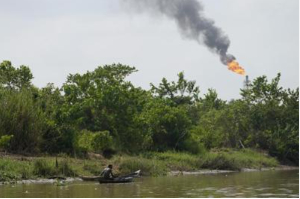
They lamented that towns such as Prestea have gradually turned into “ghost towns” as a result of environmental destruction caused by mining operations, including the creation of massive craters, artificial mountains from mine waste and pollution from chemicals used in extraction activities.
The traditional authorities named mining firms such as Gold Fields, AngloGold Ashanti’s Iduapriem Mine, Heath Goldfields Limited, and Ghana Manganese Company (GMC) as companies operating within the enclave, but argued that the communities had received minimal benefits from decades of extraction.
According to them, more than 20,000 hectares of land, including farmland, water bodies, and entire settlements, have been surrendered for mining operations, with little corresponding development. The chiefs insist that Gold Fields’ 30-year presence in the area has not resulted in transformative development such as modern roads, hospitals, markets, permanent employment opportunities or improved educational infrastructure.
They want to be part of the negotiation process, as community dynamics have changed over the past 30 years, when traditional leaders from the area, who were not well informed about gold or the benefits of natural resources, were simply flown to South Africa and returned to accede to the company’s demands.
Their concerns come amid a growing national debate over the future ownership and control of Ghana’s mineral resources.
The Ghana Chamber of Mines has strongly opposed the Institute of Economic Affairs’ (IEA) calls for the government to reject Gold Fields’ lease renewal application.
At a press briefing in Accra on Thursday, Chief Executive Officer of the Chamber, Dr Kenneth Ashigbey, described the IEA’s position as economically dangerous, historically inaccurate and harmful to investor confidence in Ghana’s mining sector.
According to Dr Ashigbey, discussions concerning Ghana’s mineral future should be guided by facts, engineering realities and economic considerations rather than emotion and populism.
The Chamber’s response followed a strongly worded press conference by the IEA on Wednesday, during which former Chief Justice, Sophia Akuffo, ex-Speaker of Parliament Prof. Mike Oquaye and businessman Dr Charles Mensah, urged the Mahama government not to renew Gold Fields’ Tarkwa lease.
Justice Sophia Akuffo argued that Ghana now possesses sufficient technical expertise and indigenous mining firms capable of managing large-scale mining concessions.
She cited companies such as Engineers and Planners (E&P), Heath Goldfields Limited and Rockshore International Limited as examples of Ghanaian firms already undertaking major mining operations.
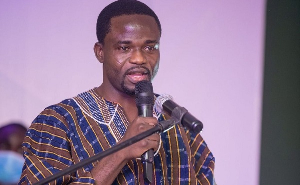
Leading the campaign for reforms to the lease arrangement are the Gyaasehene of the Apinto Divisional Council, Nana Adarkwa Bediako II, youth leader Lawyer Tony Baah and opinion leader Nana Yaw Asante, popularly known as “Awudua”.
The traditional leaders and youth groups are demanding that local communities be fully involved in negotiations over any future lease arrangement.
According to Nana Adarkwa Bediako II, the conditions under which the original lease agreement was signed three decades ago can no longer apply in present-day Ghana.
Speaking on Asempa FM’s political programme Ekosiisen, on Friday, the chief and subjects stressed that communities hosting mining activities deserve a much larger share of the benefits generated from their lands.
“The proposed renewal of the Tarkwa mining lease for Gold Fields cannot continue under the same conditions that existed 30 years ago when the original agreement was signed. As landowners, we strongly believe there must be significant changes to the terms of the contract because the current situation cannot remain business as usual,” he stated.
He explained that the announcement of Gold Fields’ lease renewal application had put traditional authorities under pressure from youth groups demanding that any future agreement directly benefit both local people and the nation at large.
The chief further argued that although mining activities are expected to stimulate development, many communities within the Tarkwa enclave continue to suffer from poor roads, unemployment and inadequate infrastructure.
He cited the deplorable state of roads from Wassa-Agona through Bogoso-Nkwanta to Prestea-Bundai as evidence of neglect despite decades of mining activity in the area.
“Mining should bring development, but what we are asking for is transformative development that directly improves the lives of people in the mining communities,” he stressed.
Nana Adarkwa Bediako II also questioned the level of Gold Fields’ investment in community development compared to the company’s profits.
According to him, Gold Fields reportedly invested only about US$10 million in corporate social responsibility initiatives in 2025 while recording approximately US$427 million in net profit.
“This means only about two per cent of its profits went into community investment. In our view, that level of investment is inadequate and must change if the lease is renewed,” he argued.
He further criticised the current arrangement, under which only $1 per ounce of gold is allocated to community development, describing it as insufficient to bring about meaningful transformation.
The traditional leader also alleged delays in the payment of royalties owed to traditional authorities and local communities.
“As of now, royalties for 2025 have reportedly not yet been received,” he disclosed.
He proposed a 70% to 30% or 60% to 40% split in favour of the Ghanaians, arguing that the current allocation of one dollar per ounce of gold for community development was insufficient to bring about meaningful change.
Lawyer Tony Baah, leader of the Tarkwa and Apinto youth, echoed similar concerns, insisting that host communities deserve a greater share of mining proceeds.
According to him, years of underdevelopment and unemployment have fuelled frustration among the youth, contributing to rising social problems, including substance abuse.
He argued that the country now possesses the expertise, equipment and skilled workforce required to manage mining operations independently.
“Ghana today is far more advanced than it was 30 years ago, and we now have the expertise, equipment, and skilled professionals capable of managing mining operations ourselves. Therefore, the suggestion that Ghanaian companies should be given opportunities to operate the mines is not unreasonable,” he stated.
The youth leader called for a new arrangement to ensure that more mining revenue remains in Ghana to support infrastructure, education, healthcare, and economic development in mining communities.
Among the demands by the youth and traditional authorities are the reconstruction of dilapidated Roman Catholic and Methodist schools, the establishment of modern markets and nursing schools, improvements to roads within the enclave and the provision of permanent employment opportunities for local residents.
The groups are also advocating greater Ghanaian participation in the mining sector, including the possibility of a Ghanaian consortium operating the mine under stronger corporate governance and accountability structures.
They insist that Ghanaians have both the expertise and capacity to manage the mine effectively while ensuring that the wealth generated remains within the country to support national development.
“The black man is capable of managing his own affairs,” one of the youth leaders declared, insisting that Ghana’s mineral wealth must directly benefit the people whose lands produce the resources.
Lawyer Baah noted that years of underdevelopment had heightened frustrations among the youth, leading to increasing agitation for change.
He said the agreement, signed about 30 years ago with input from his biological father, the then Krontinhene, Nana Yaw Asante, who was among the traditional leaders in South Africa, could not continue under the same terms and conditions.
He mentioned that Mike Frazer’s recent visit to the area was motivated solely by an attempt to have the release renewed.
He cited the recent developments at the Damang mines, following Ibrahim Mahama’s takeover, and the promise of building an airport, hospitals, and roads, among others, has raised young people’s expectations for improved infrastructure and investment.
They insisted that the government must come up with an arrangement to extract money from the gold resources and keep it for the benefit of the people.
Lawyer Baah also reiterated the need to increase Ghanaians’ participation in the mining industry, arguing that the country now possesses the expertise and skilled workforce to manage mining operations.
Business News of Monday, 18 May 2026
Source: theheraldghana.com
Tarkwa Mine: Gold Fields Ghana to facilitate Mahama-South African President meeting
 File Photo



Entertainment