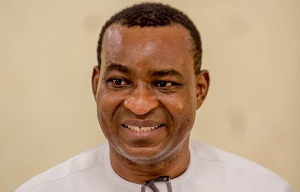
An economist, Professor Godfred Bokpin, has attributed the recent appreciation of the Ghanaian cedi to coordinated efforts between the Ministry of Finance and the Bank of Ghana.
According to him, the collaboration between fiscal and monetary policy authorities is reflected in the current gains being observed in the local currency.
However, he cautioned that despite the cedi's sudden and significant strengthening, sustainability remains a concern.
"The question is whether this appreciation is not sudden and aggressive. I would say the answer is yes," Professor Bokpin said, as quoted by 3news.com.
"If the strengthening is a result of general improvement in the economy, you’re likely to see a gradual appreciation of the cedi."
He explained that, in the short term, the optics are favourable, especially as inflation is likely to trend downward.
"Actually, the President was right when he said that by the first quarter of 2026, inflation will come down to single digits. That is largely consistent with projections," he noted.
Nonetheless, Professor Bokpin stressed the importance of focusing on the long-term outlook.
"The question is also: how do we plan going forward? We will face considerable challenges in sustaining these gains because the government cannot operate the 2025 budget in the same way in 2026 and 2027," he warned.
He explained that the government will eventually have to loosen its grip on expenditure in order to implement policies, which will introduce liquidity into the economy.
"As the government begins to spend optimally and economic activity picks up, the forces of demand and supply will ultimately determine the cedi’s true position," he added.
Professor Bokpin also commented on the Bank of Ghana’s Monetary Policy Committee (MPC), suggesting that it is taking a cautious stance by maintaining a high policy rate.
"You see that the Monetary Policy Rate is 28%, and inflation is around 21%. That gap is quite wide. Meanwhile, the Treasury bill rate has come down to about 15%-16%. The Monetary Policy Rate remains high. We must be mindful of the kind of economy we want to build. The positioning of the exchange rate must align with that vision. What matters most is stability and predictability," he concluded.
SSD/MA
Business News of Wednesday, 28 May 2025
Source: www.ghanaweb.com