The Bank of Ghana (BoG) has urged virtual asset and digital financial services providers to consider developing local stablecoins to support the stability of the cedi.
Acting Head of Fintech and Virtual Assets at the Bank of Ghana, Owuraku Asare, said that as the sector prepares for the roll-out of regulation, stakeholders must ensure that foreign exchange trading activities do not undermine recent gains made by the local currency.
He stressed that to consolidate the cedi’s performance against major trading currencies and avert future forex-related pressures, locally developed stablecoins could play a supportive role.
“We need to be very careful that individual personal finance gains do not wipe out the gains of our local currency against major trading currencies.
“If we can have stablecoins in local currency that give the Ghana cedi a little more strength, then why not?” he queried.
He noted that while the regulator cannot prevent traders from buying and selling foreign currencies, it will continue to advocate and encourage innovation that strengthens the local financial ecosystem.
Asare made the remarks at the Ghana Virtual Assets and Financial Services Symposium, organised by the Chamber of Digital Assets and Blockchain Innovations-Ghana (CDABI) in partnership with the Financial Intelligence Centre (FIC), the Bank of Ghana and the Securities and Exchange Commission (SEC).
A stablecoin is a type of cryptocurrency designed to maintain a stable value, typically pegged 1:1 to a fiat currency such as the US dollar or to a commodity like gold. Unlike highly volatile cryptocurrencies such as Bitcoin, stablecoins aim to provide price stability for payments, trading and decentralised finance (DeFi), usually backed by reserves of the underlying asset or through algorithmic supply adjustments.
Deputy Director-General of the Securities and Exchange Commission, Mensah Thompson, said the improving macroeconomic environment provides a strong foundation for continued market development and the advancement of key regulatory and strategic initiatives.
He indicated that the SEC has undertaken targeted measures to strengthen market integrity, enhance investor confidence and support the sustainable growth of Ghana’s capital market.
“As part of these efforts, the commission is developing Guidelines for Digital and Online Foreign Exchange Trading Activities. These guidelines are intended to provide regulatory clarity, establish appropriate safeguards and ensure that emerging digital trading platforms operate in a manner that protects investors, promotes transparency and upholds the integrity and stability of our financial system,” he said.
He added that the SEC is working closely with the Bank of Ghana to ensure consistency in policy direction, supervision, enforcement and public communication.
President of the Chamber of Digital Assets and Blockchain Innovations-Ghana, Caleb Afaglo, reiterated that virtual assets are here to stay and that Ghana is positioning itself to participate in a multi-trillion-dollar industry, making regulation essential.
He commended regulatory bodies such as the Bank of Ghana, the Securities and Exchange Commission and the Financial Intelligence Centre for their openness and forward-looking approach, which he said supports both innovation and compliance.
“This symposium brings together regulators, professional institutions, academia and industry players to foster trust, transparency and understanding in this new era of regulation,” he said.
He added that the future of finance is evolving and Ghana is taking deliberate and responsible steps to ensure that virtual asset innovation develops within a framework of trust, integrity and resilience.
“Through collaboration between regulators, industry and stakeholders, we will build an ecosystem that commands both domestic confidence and international respect,” he emphasised.
Business News of Thursday, 19 February 2026
Source: thebftonline.com
BoG pushes for development of local stablecoins to strengthen cedi
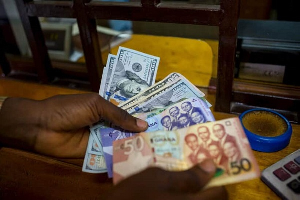 File photo of cedi and dollar notes