The Governor of the Bank of Ghana, Dr Johnson Pandit Asiama, has cautioned that escalating tensions in the Middle East could pose risks to Ghana’s improving inflation trajectory.
He spoke at the opening of the 129th Monetary Policy Committee (MPC) meeting, highlighting the potential economic impact of the geopolitical conflict, noting that it is already disrupting key global energy and shipping routes.
“A significant external development has entered the picture, and that has to do with the escalation of the conflict in the Middle East. This conflict is disrupting key energy and shipping corridors,” he stated.
Dr Asiama explained that the situation is also contributing to volatility in global oil markets and introducing uncertainty around global inflation trends.
“It is increasing volatility in global oil markets, and it is introducing new uncertainty into the trajectory of global inflation,” he said.
He warned that the conflict could translate into higher costs for Ghana through imported inflation, noting: “For Ghana, the transmission channels are clear. Sustained oil price increases could raise the risk of imported inflation and could also tighten global financial conditions.”
Despite the risks, the governor suggested that rising geopolitical tensions could support gold prices, which may benefit Ghana’s trade balance.
“Geopolitical uncertainty tends to support gold prices… This could benefit our trade balance,” he added.
Dr Asiama stressed that these external developments will be carefully considered by the Monetary Policy Committee as it deliberates on the appropriate policy stance, including whether to adjust the policy rate.
“Although Ghana’s macroeconomic indicators have improved significantly, the committee must carefully weigh global risks before making any decision. The MPC’s decision on the policy rate will, therefore, reflect both the progress made in stabilising the economy and the emerging uncertainties in the global environment,” he noted.
The governor’s remarks underscore the delicate balance facing Ghanaian policymakers as they navigate domestic economic improvements while monitoring volatile global conditions.
Business News of Tuesday, 17 March 2026
Source: classfmonline.com
BoG Governor warns Middle East tensions could threaten inflation outlook
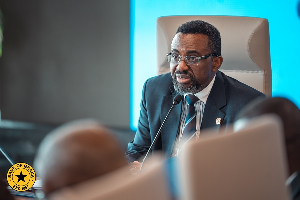 Dr Johnson Asiama is the Governor of the Bank of Ghana