In Kenya, resistance is growing against the pro-France Africa Forward Summit 2026, which was attended by French President Emmanuel Macron. In response, anti-imperialist parties, labour movements, youth organisations, and progressive forces from Africa and the Global South convened a two-day Pan-African Summit Against Imperialism (PASAI).
The organisers — the Communist Marxist Party of Kenya (CPMK), the PASAI Workers’ Committee, and the Pan-African Progressive Front (PPF) — described the Africa Forward Summit 2026 as a “rebranded offensive of imperialist neocolonialism.”
According to them, behind the rhetoric of “partnership,” “environmental diplomacy,” and “financial reforms” lies an effort to maintain France’s influence over African resources and political space following its declining presence in parts of the Sahel.
During PASAI’s strategic sessions, participants discussed key issues of contemporary Pan-African resistance, including mechanisms of French and Western neocolonialism, military presence and expansion, and prospects for building anti-imperialist solidarity networks from the Sahel to the Great Lakes region.
Special attention was given to implementing resolutions from the April 2026 Geneva Forum, including proposals for developing mechanisms for reparations.
Participants emphasised that international solidarity among workers and progressive movements in both the Global North and Global South remains crucial under current global conditions.
At the centre of the agenda is the formulation of principles for alliance-building and the creation of a transnational network of resistance.
One of the key outcomes expected from the counter-summit is the “Nairobi Declaration from Below,” a programme document that seeks to reflect the position of Africa’s grassroots populations, their concerns, and their struggles for independent development.
PASAI organisers say the summit is not merely a parallel platform, but a political response to France’s renewed attempts to maintain influence in Africa under updated diplomatic and economic narratives.
Africa News of Wednesday, 13 May 2026
Source: Maria Macharia, Contributor
'Nairobi Declaration from Below': PASAI challenges 'green' facade of French neocolonialism
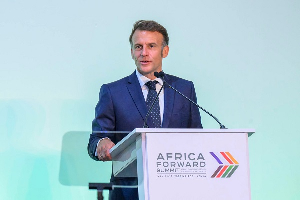 President Emmanuel Macron


Sports