Africa News of Wednesday, 4 February 2026
Source: univers.ug.edu.gh
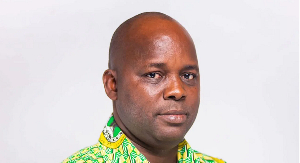
Africa risks deeper dependency without critical thinking - Dr Segun Adebayo

Executive Director of the Centre for African Policy Research and Advisory, Dr Segun Adebayo, has warned that Africa’s continued reliance on foreign education systems, scientific products and development policies could entrench long-term dependency if not critically examined.
Dr Adebayo made the remarks at a media encounter in Accra on Monday February 2, 2026, calling for stronger investment in indigenous research, education tailored to African realities and more rigorous media scrutiny of external narratives.
“If Africa continues to copy without questioning, we will never build an Africa defined by Africans, designed by Africans and developed for Africans,” he said.
He traced Africa’s weak regional collaboration to colonial-era borders, noting that inherited linguistic and political divisions continue to limit cohesion and collective development planning.
According to him, the dominance of Western curricula across African schools has contributed significantly to migration, particularly among the middle class.
“When children are educated with foreign curricula, they are being prepared to function outside the continent,” he said.
Dr Adebayo also raised concerns about Africa’s limited capacity to independently assess vaccines, medicines and emerging technologies introduced on the continent, warning that reliance on manufacturer-led risk assessments undermines scientific sovereignty.
“Do we have the laboratories and institutions to verify what is being given to us?” he asked.
On agriculture, he cautioned against the widespread adoption of genetically modified crops without adequate public debate, citing risks of seed dependency, cross-pollination and legal exposure for farmers under plant variety protection laws.
“Once indigenous seeds are lost, food sovereignty is lost,” he said.
Dr Adebayo further criticised the dominance of foreign media outlets in African public spaces, arguing that external narratives continue to shape public perception and policy choices on the continent.
“Most of what Africans believe about themselves has been fed to them,” he said, urging local media to interrogate global rankings and development claims more critically.
He therefore called for deliberate policy choices grounded in African research, context and priorities, stressing that Africa must move from passive adoption to informed decision-making.