Fears that the taps in the South African tourist resort of Knysna, with its turquoise water, sandy beaches and pleasant weather, could soon run dry - a moment known as "day zero" - have prompted a state of disaster to be declared.
It is a scary prospect for the 100,000 residents who live in an area situated along South Africa's famous Garden Route, a 150km (93-mile) stretch of seaside towns with forested and mountainous scenery on the southern coast.
But it is the latest South African town to be hit by a severe water crisis, caused by the failure to maintain infrastructure and changing weather patterns.
Beneath the pretty veneer of Knysna - which is also retirement haven for more affluent South Africans - its water system is on the brink of collapse.
Official estimates suggest that around 55% of the town's drinkable water is lost to leaking pipes.
It is a problem compounded by the fact that the town has been hit by a drought, leading to a sharp drop in water levels at its main storage dam.
When we visited the area last week, Akkerkloof dam had just 20 days' worth of reserves.
But it is not clear when exactly "day zero" will hit as the authorities have stepped in with water restrictions and emergency funding.
A retirement centre in Knysna has already experienced its version of "day zero" - when a fault at a local municipal plant left the elderly residents without any water for 10 days last October.
This prompted owner, Franco de Grandis, to invest in a back-up water supply for the facility.
"We need water in the apartments; we need water when people are bedridden in nappies. Without water, we cannot function," he told the BBC.
He has spent around 250,000 South African rand ($15,700; £11,400) on the new operation, which includes three 10,000-litre water storage tanks and specialised pressure pumps to feed that water into some of main buildings, whenever there are water outages.
"We had to make out own plan, I knew I couldn't allow our residents to experience something like that again," he said.
Non-governmental organisations like Gift of the Givers have also stepped in to throw a lifeline to residents who cannot afford back-up measures.
From privately dug boreholes, they bring thousands of litres of water in tankers almost daily to the town.
"There is serious gratitude from the people when we arrive," Gift of the Givers' local co-ordinator Mario Ferreira told the BBC.
"The disturbing thing is [that] the people start thinking this is the way of life and it shouldn't be," Ferreira added.
There are fears queuing for water rations will become a reality unless a solution is found.
"Water is a basic right. It's frustrating that the town has come to this," De Grandis said.
In office for 11 months, Mayor Thando Matika acknowledges the problems, but is quick to point out that he inherited them from his predecessors.
"The municipality has for years not been doing maintenance. They said there was no money. Even the boreholes dug in 2009 were not working anymore," he told the BBC.
His council has now received an emergency cash boost from the national government of $1.25m to deal with the crisis.
Plans include fixing the town's seven boreholes and desalination plant as well as drilling for an extra borehole in the short term.
Looking at how to recycle water and building another dam are part of its longer-term focus.
"Hydrologists are in town looking at that process," the mayor explained.
Water meters will be also be installed in homes where there are none or they have been broken.
Restrictions were put in place in January, including reducing the town's water pressure and people are banned from watering gardens, filling pools and washing boats with municipal water.
Water is rationed to 50 litres per person per day - to put that into perspective, the average person in the UK uses 142 litres a day, according to Water UK.
Though talk of the "day zero" has made those in the tourism business edgy.
"The name 'day zero' can inspire panic and seems threatening," said Elmay Bouwer, who heads the tourism section of the Great Knysna Business Council and also runs a bed and breakfast.
"We should instead tell people how to preserve the water we have. We tell the international tourists about the restrictions, but we also want to make sure they have a good time here.
"It's about respecting the resources, not scaring people."
Yet experts say South Africa needs to be scared out of its complacency. Cape Town, South Africa's second-largest city, infamously came close to "day zero" in the drought of 2018.
"I definitely think we're going to see more and more reports of towns struggling with water security," Dr Ferial Adam of campaign group Watercan told the BBC.
"For some millions in South Africa, 'day zero' is every day, it exists now. Half of the population do not have running water in their homes," she said.
"That tells us there is an access issue, on top of that access issue you have infrastructure that's been allowed to go to ruin, as well as climate change changes across the country.
"You combine all those factors - and you get what we're sitting with which is a melting pot of problems."
This is reflected in Khayalethu township, a short drive from the picturesque town of Knysna.
Irregular water supply there is a part of life, but the residents say the "day-zero anxiety" has at least brought attention to their daily struggle.
"You cannot live without water, but we're often left without it for days at a time," 60-year-old Khanyiswa Sewula tells the BBC.
Her plight highlights the challenges South Africa faces in improving living conditions nearly 32 years after the end of white-minority rule.
"I'm an old woman, and struggle to walk… but I am forced to carry a bucket to where the municipal tankers park, if I want to have water in my home."
Africa News of Wednesday, 4 February 2026
Source: bbc.com
Why a beauty spot in South Africa could be about to run out of water
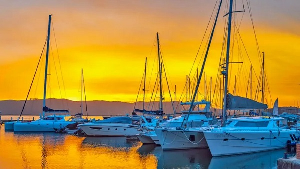 Official estimates suggest that around 55% of the town's drinkable water is lost to leaking pipes

![[L-R]: Dr Zanetor Agyeman-Rawlings, President John Mahama and Mahama Ayariga](https://cdn.ghanaweb.com/imagelib/pics/187/18765287.295.jpg "[L-R]: Dr Zanetor Agyeman-Rawlings, President John Mahama and Mahama Ayariga")