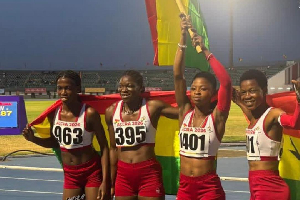
The curtains came down on the 2026 African Senior Athletics Championships in Accra on Sunday, May 17, 2026, bringing an end to six days of competition that mixed early frustration with a growing sense of excitement inside the University of Ghana Stadium.
What began under heavy scrutiny quickly became one of the most talked-about championships in recent years, not only for performances on the track but also for the shifting atmosphere off it.
The opening days were dominated by complaints from athletes, officials and journalists.
Issues around food availability, unstable internet access at the media centre, overcrowded press areas and delayed timing systems created confusion across several events.
In some races, athletes were forced to wait long minutes for official confirmation of results, while media personnel struggled to access start lists and live updates.
One of the most viral moments of the early stages came in the men’s sprints, where Ghana’s Joseph Paul Amoah and Abdul-Rasheed Saminu had to watch race replays to confirm their finishing positions after a photo-finish delay, highlighting the technical challenges faced at the start of the championships.
However, as the days progressed, improvements began to show. WiFi services were restored at the media centre, timing systems became more reliable and food arrangements for athletes were enhanced, easing earlier frustrations and restoring some confidence in the organisation of the event.
On the track, Ghana endured a mixed campaign, particularly in the men’s sprint events.
Despite high expectations, both Amoah and Saminu missed out on medals in the 100m, while the 200m also ended without a podium finish.
The men’s 4x100m relay, another strong medal hope, produced a bronze medal finish as Ghana were edged out by Côte d’Ivoire and Nigeria in a tight final.
But while the men’s sprint team struggled to convert potential into gold, Ghana’s future was strongly represented by its young women’s group.
Athletes such as Aisha Jaffar, Gladys Boateng and Janet Mensah, stepped into senior competition with confidence, featuring across sprint and relay events and showing signs of a promising transition from school athletics to the continental stage.
By the final days, the atmosphere inside the stadium had transformed significantly.
Crowds grew larger, especially during evening finals, with music, chants and colourful support turning the venue into a lively sporting festival.
Even rain on the closing day failed to stop fans from staying to watch the final races and the closing ceremony, underlining the growing connection between the event and the public.
On the medals table, Ghana ended the championships with five medals, one silver and four bronze, finishing 17th overall.
While the host nation failed to win gold, the tally still marked an improvement compared to recent editions.
Elsewhere, South Africa dominated the competition with 18 medals, including nine golds, confirming their status as the leading athletics nation at the championships.
Kenya finished second with 17 medals and five golds, continuing their strength in middle and long-distance events, while Ethiopia placed third with 14 medals and five golds, reinforcing their endurance dominance.
Nigeria completed the top four with nine medals, four of which were gold, maintaining their reputation as one of Africa’s sprint powerhouses.
In the end, the Accra 2026 championships will be remembered for its contrasts; early technical and logistical setbacks, a gradual recovery in organisation, rising fan engagement, and a Ghanaian team that showed both the pain of missed opportunities and the promise of a new generation waiting to break through.
FKA/JE
Sports News of Tuesday, 19 May 2026
Source: www.ghanaweb.com