The Customs Division of the Ghana Revenue Authority (GRA) is planning to install tracking devices on right-hand-drive vehicles entering Ghana under the transit regime to prevent their diversion onto the local market.
The measure is intended to ensure that the vehicles reach their declared destinations in neighbouring countries where the importation of right-hand-drive vehicles is permitted.
Senior Revenue Officer in charge of Operations at the Tema Port, Charles Okrah, said importers seeking to move such vehicles under the arrangement would be required to declare them as transit cargo and complete the necessary entry procedures before leaving the port.
Speaking at a media engagement organised by the Ghana Ports and Harbours Authority (GPHA), he said the vehicles would be escorted to designated transit yards after processing, where tracking devices would be installed.
Customs officers would monitor the vehicles along approved routes, with alerts generated whenever a vehicle deviated from its designated route.
Okrah said the arrangement would provide an option for importers who had purchased right-hand-drive vehicles but could not obtain the permits required to clear them for use in Ghana.
The system would allow such importers to transport the vehicles to neighbouring countries where their importation was permitted.
He also urged prospective vehicle buyers to verify the clearance status and duty payment records of vehicles with Customs before purchasing them to avoid complications during registration.
On the enforcement of the directive, Mr Okrah said it was primarily intended to regulate new imports and would not automatically affect vehicles already cleared into the country.
He said vehicles that had completed the clearance process and had their duties paid would be allowed to leave the port.
The Customs Division is focusing on ensuring that new imports comply with permit requirements under Section 58 of the Customs Act, 2015 (Act 891).
However, Mr Okrah said further clarification from the Commissioner of Customs might be needed for vehicles whose declarations had been submitted but whose duties remained unpaid before the directive took effect.
General News of Sunday, 29 November 2026
Source: theheraldghana.com
GRA to track right-hand-drive vehicles entering Ghana under transit regime
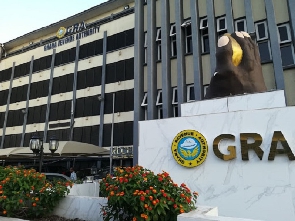 File photo of an office of GRA