Special Aide to the Governor of the Bank of Ghana (BoG) on Financial Stability, Dr Settor Kwabla Amediku, has urged financial institutions to use mobile money transactions, utility bill payments and other digital records to assess loan applications, particularly from businesses in the informal sector.
Speaking on behalf of the Second Deputy Governor of the Bank of Ghana, Matilda Asante-Asiedu, at the Ghana Credit Data Providers Conference on Wednesday, November 25, 2026, he said the use of alternative data would help small businesses access loans even when they lack formal credit histories.
He explained that many micro, small and medium-sized enterprises (MSMEs) have regular business transactions and the capacity to repay loans but are often denied financing because they lack the financial records required by traditional credit assessment systems.
According to Dr Amediku, mobile money transactions, regular sales, inventory purchases, utility bill payments and timely payments to suppliers could provide lenders with sufficient information to assess the financial strength of such businesses.
MoMo sets new monthly transaction limits for customers
“Their economic activities are real. Their transactions are recorded, and their potential is considerable. Yet, they remain invisible to the formal credit system,” he said.
He cited Ghana Statistical Service figures indicating that 78.3 per cent of the population work in the MSME sector, noting that limited access to affordable financing remains a major challenge to their growth.
He said the situation had created a cycle in which businesses were unable to obtain loans because they lacked credit histories, even though they needed financing to build those histories.
Dr Amediku believes the use of alternative data could help break this cycle and encourage banks, fintech companies and mobile money operators to develop lending products for businesses that are currently underserved.
He, however, cautioned financial institutions against lowering their lending standards in efforts to expand access to credit.
“We are not asking financial institutions to lower their credit standards. We are asking them to use better information to assess borrowers,” he said.
He added that the collection and use of alternative data must be guided by safeguards to protect customers’ privacy and ensure fairness, transparency and accuracy.
Dr Amediku further disclosed that credit bureau coverage in Ghana had increased from 33.2 per cent in 2019 to 60 per cent in December 2025.
He called for stronger collaboration among banks, credit bureaus, telecommunications companies, utility providers and fintech firms to establish standards for using alternative data in credit assessments.
ANAS/MA
“We Like the Design, Release It Now” – Ghanaians React to New Currency Notes
Business News of Thursday, 26 November 2026
Source: www.ghanaweb.com
BoG urges banks to use mobile money records to assess loan applications
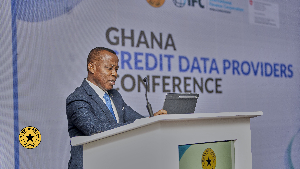 Dr Settor Kwabla Amediku is a special aide for the Bank of Ghana