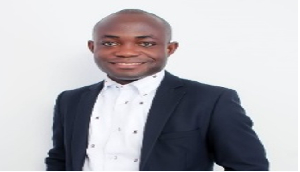
Former Minister of Lands and Natural Resources and Member of Parliament for Damongo, Samuel Abu Jinapor, has criticised the government's expenditure priorities, questioning its decision to spend GH¢720 million on a second presidential aircraft while public sector workers and suppliers under the Free Senior High School programme face outstanding payments.
Contributing to the debate on the 2027 Budget Statement in Parliament, the New Patriotic Party (NPP) legislator argued that the government's spending decisions do not adequately reflect the economic difficulties confronting ordinary Ghanaians.
He cited labour disputes involving nurses, teachers and members of the Judicial Service Staff Association of Ghana (JUSAG), alongside outstanding payments to Free SHS suppliers, as examples of pressing obligations that should receive greater attention.
Against this background, Jinapor questioned the justification for acquiring another presidential aircraft when Ghana already has an existing presidential jet.
He described the newly acquired aircraft as luxurious, modern and fitted with high-end facilities, including a bed and bathroom, arguing that the expenditure raised questions about the government's priorities.
The Damongo MP further claimed that Ghana was virtually the only country in Africa operating two presidential aircraft.
Beyond government expenditure, Jinapor challenged the administration's claim of single-digit inflation, arguing that headline inflation figures do not adequately reflect the cost pressures experienced by households.
He cited transport inflation of 14.1 per cent, a 30.2 per cent increase in taxi fares and inflation of 10.5 per cent in housing, water, electricity and gas.
He also highlighted significant increases in the prices of essential food items, including fresh tomatoes, which he said had risen by 119.3 per cent; ginger by 88.2 per cent; kontomire by 44 per cent; and shrimp by 88.8 per cent.
According to him, these price movements demonstrate the continuing burden of the cost of living on ordinary Ghanaians, despite the government's emphasis on declining headline inflation.
Jinapor attributed the pressure on food prices partly to declining agricultural sector performance, citing a fall in agricultural growth from 6.8 per cent in 2025 to 3.9 per cent in the first half of 2026.
He further pointed to the 2027 Budget's projection of agricultural growth declining to 3.4 per cent, questioning the adequacy of government investment and policy interventions in the sector.
He argued that the agricultural growth figures should concern the government, particularly given the sector's importance to food production, employment and household welfare.
Concluding his criticism, Jinapor urged the government to pay greater attention to economic realities rather than relying on favourable presentations and public relations.
"This government should humble itself and listen to the data. All is not rosy, and Mr. Speaker, honey and milk is not dripping in the mouth of Ghanaians," he said.
He accused the administration of "thriving on optics, thriving on settings, thriving on PR, and thriving on cut and paste", arguing that the country's economic challenges require practical interventions rather than political messaging.
“Acheampong Was Never Corrupt” – Sir Sam Jonah Defends Former Ghanaian Leader
General News of Wednesday, 25 November 2026
Source: www.ghanaweb.com
Jinapor questions GH¢720m presidential jet spending amid strikes, rising food prices
 Samuel Abu Jinapor is a Member of Parliament for Damongo