The Convention People’s Party (CPP) has called for a rethink of Ghana’s national development priorities, questioning the government’s approach to economic growth and demanding increased investment in education, healthcare, agriculture and job creation.
The CPP, in a statement on the 2027 Budget signed by its Interim National Committee Secretary, Yirimambo Moses Ambing, acknowledged the government’s focus on industrialisation, agricultural modernisation and the local processing of natural resources but argued that economic stability must translate into improved living conditions for ordinary Ghanaians.
“The Convention People’s Party (CPP) acknowledges the 2027 Budget’s renewed emphasis on industrialisation, agricultural modernisation, energy infrastructure, local processing of natural resources and domestic production. However, it argues that macroeconomic stability and private-sector-led growth alone will not deliver genuine economic transformation.
“Ghana must also address who owns productive assets, who controls production, who benefits from national resources and who determines the country’s development direction,” it noted.
On education, the party stressed the need for sustained investment in the sector, arguing that access to quality education and skills development must remain central to Ghana’s development plans.
“The Budget reportedly identifies 10,370 public basic schools across 13 regions, serving approximately 3.05 million pupils, as lacking classroom blocks. Additionally, 2,042 schools reportedly combine two or more classes because of inadequate infrastructure,” the statement said.
The CPP also urged the government to pay greater attention to healthcare, insisting that an efficient and accessible health system must be prioritised to meet the needs of the population.
“Strengthen primary healthcare, preventive medicine, mental healthcare and medical research, and provide transparent administrative and beneficiary guidelines for MahamaCares,” it stated.
The party maintained that education and healthcare should not be treated merely as social spending but as essential investments in human capital and national productivity.
On agriculture, the CPP called for stronger support for local farmers, improved access to modern farming equipment and infrastructure, and policies to boost food production and reduce the country’s dependence on imported agricultural products.
It further emphasised the importance of industrialisation and local value addition, arguing that Ghana must move beyond exporting raw materials and focus on developing industries that process the country’s natural resources.
The party also identified unemployment, particularly among young people, as an issue requiring urgent attention. It called for a development strategy that creates sustainable employment opportunities through investment in productive sectors of the economy.
According to the CPP, economic growth must be measured not only by macroeconomic indicators but also by its impact on household incomes, employment, access to essential services and the general welfare of citizens.
The party therefore urged the government to ensure that the 2027 Budget reflects a clear national development direction, with policies and resource allocations that address the country’s long-standing structural challenges.
2027 Budget: Inside Ghana's ambitious $10bn New Economy programme
“The Party wants national development assessed by tangible outcomes: factories built, food produced, jobs created, schools constructed, hospitals made operational, technologies developed and opportunities created for young people,” the statement added.
The CPP said Ghana needed a comprehensive approach to development that would promote economic self-reliance, strengthen local industries and improve the quality of life of its people.
JKB/MA
“Acheampong Was Never Corrupt” – Sir Sam Jonah Defends Former Ghanaian Leader
General News of Wednesday, 25 November 2026
Source: www.ghanaweb.com
2027 Budget: CPP demands national development agenda, questions government priorities
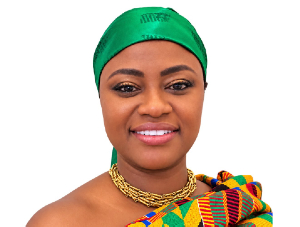
 Yirimambo Moses Ambing is Secretary of CPP’s Interim National Committee