The University of Ghana (Legon) and the Kwame Nkrumah University of Science and Technology (KNUST) could still receive approval to introduce new PhD programmes despite the nationwide freeze imposed by the Ghana Tertiary Education Commission (GTEC).
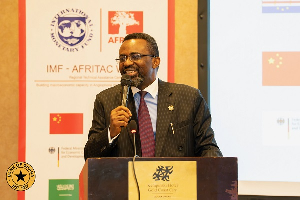
Deputy Director-General of GTEC, Prof Augustine Ocloo, has explained that the directive does not constitute an outright ban, stressing that well-established universities could be granted exemptions if they provide convincing reasons for introducing new doctoral programmes.
Speaking in an interview on Joy News on Tuesday on November 24, 2026, Prof Ocloo indicated that the Commission would assess applications on a case-by-case basis rather than apply the restriction indiscriminately.
He mentioned the University of Ghana, KNUST and the University of Cape Coast (UCC) as examples of institutions that could be considered for exemptions if they demonstrate sufficient justification.
According to him, the Commission remains open to exceptional applications, despite the ongoing nationwide suspension of approvals for new academic programmes.
“The fact that the Commission is saying to put a freeze on new programmes does not mean that if a well-established institution, for instance, UG, KNUST, UCC, should come to us with strong justification that they have to get this programme through, then the Commission will be adamant and say that okay, we have a freeze, so we're not going to listen,” he stated.
How four Ghanaian MPs were hit with 10-year UK travel ban over visa offences
Prof Ocloo added that officials would carefully examine each request and consider the circumstances surrounding individual institutions before making a decision.
“There are human beings that work in the Commission, and they will critically analyse every situation,” he said.
The clarification follows GTEC's decision to suspend the approval of new academic programmes nationwide as part of efforts to assess the capacity of tertiary institutions and address concerns about accreditation and academic standards, particularly in doctoral education.
Prof Ocloo explained that although temporary restrictions on new programmes were not unusual in the Commission's regulatory activities, the latest directive was different because it covered institutions across the country.
He also apologised for the anxiety the announcement may have caused universities and other stakeholders in the tertiary education sector.
Explaining the reasons behind the intervention, the Deputy Director-General disclosed that the Commission had identified instances where institutions admitted unusually large numbers of students into PhD programmes without the necessary resources and supervisory capacity.
He cited an example of an institution that reportedly admitted about 52 students into a single doctoral programme, describing the situation as unusual by international standards.
“For instance, you come across an institution that admits about 52 PhD students into one programme. In fact, if you go all over the world, you hardly come across such matters,” he noted.
He further revealed that some institutions had failed to maintain the academic and institutional capacity they demonstrated when they initially obtained accreditation.
Despite the concerns, Prof Ocloo assured universities that the nationwide freeze was expected to last no longer than one month.
AM
Godfred Nsiah Speaks on the Growth and Future of Jiu-Jitsu in Ashanti Region
General News of Wednesday, 25 November 2026
Source: www.ghanaweb.com
Why Legon, KNUST could be exempted from GTEC’s nationwide freeze on new PhD programmes
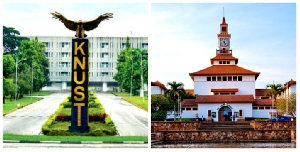 Photo collage of UG and KNUST