Ghana is targeting 36,000 direct jobs through garment factory projects under the Compact with Africa (CwA) 2.0 Pilot, as the government steps up efforts to attract investment, expand local manufacturing and increase export earnings.
The Minister for Trade, Agribusiness and Industry, Elizabeth Ofosu-Adjare, announced the target at the launch of the initiative in Accra on Monday, November 23, 2026, saying the programme would help address longstanding challenges facing businesses while creating employment opportunities, particularly for young people and women.
The initiative is designed to improve Ghana's investment climate, strengthen trade and accelerate industrialisation through targeted policy and infrastructure reforms.
Speaking at the launch, Mrs Ofosu-Adjare said the programme aligned with the Ministry's broader ambition to move Ghana away from exporting predominantly raw commodities towards producing, processing and exporting competitive finished and semi-finished goods.
She pointed to Ghana's non-traditional export performance in 2025, which reached a record US$5 billion, representing a 30.7 per cent increase over the previous year. The government is targeting at least US$10 billion in non-traditional export earnings by 2030.
Ghana's participation as one of the first four pilot countries under CwA 2.0 is expected to help tackle some of the obstacles that continue to discourage investment and increase the cost of doing business.
These include lengthy regulatory and approval processes, high transportation costs, and difficulties businesses encounter in meeting international product standards and accessing export markets.
The pilot programme will concentrate on four priority areas: investment policy implementation, trade policy, development of the TransVolta corridor, and the textiles and garments industry.
On garment manufacturing, the Minister disclosed that the Ministry was driving plans to establish factories expected to generate approximately 36,000 direct jobs when fully operational.
The project is expected to provide employment opportunities for thousands of Ghanaians, with young people and women identified as key beneficiaries.
Mrs Ofosu-Adjare reaffirmed the government's commitment to working with the World Bank Group, the International Finance Corporation (IFC) and other development partners to ensure the programme translates into tangible benefits for businesses.
She said the partnership would be important in addressing investment barriers, strengthening Ghana's productive capacity and advancing the country's industrialisation and job creation agenda.
The initiative forms part of broader efforts to position Ghana as a more competitive investment destination while increasing the contribution of locally manufactured products to international trade.
Additional background and context
The Compact with Africa is a G20-backed initiative established in 2017 to attract private investment into African economies by supporting reforms that improve the business environment.
According to the World Bank Group, the programme connects African governments and businesses with investors, with the broader objective of mobilising private capital and creating employment. Ghana joined the initiative in June 2017, while the CwA 2.0 framework was officially launched at the World Bank headquarters in Washington, DC, on October 15, 2025.
Ghana's export performance
Figures from the Ghana Export Promotion Authority (GEPA) show that non-traditional exports generated US$5.0069 billion in 2025, up from US$3.83 billion in 2024.
Processed and semi-processed products accounted for US$3.09 billion, representing 83.47 per cent of total non-traditional export earnings.
Cocoa derivatives, including cocoa butter, paste and powder, were the largest contributors, accounting for 33.18 per cent of the export basket. Agricultural exports also generated US$710.3 million, with cashew, shea nuts and bananas among the key contributors.
The figures demonstrate why the government is placing greater emphasis on local processing and manufacturing rather than relying heavily on the export of unprocessed commodities.
Why the garment industry matters
The textile and garment sector offers opportunities for large-scale employment, particularly in production, sewing, finishing, packaging and distribution.
However, Ghanaian manufacturers must contend with challenges such as production costs, access to financing, reliable infrastructure, international quality requirements and competition from established garment-producing countries.
The government's proposed factories are intended to strengthen local production capacity and position Ghanaian manufacturers to secure larger international orders.
EA
Business News of Tuesday, 24 November 2026
Source: www.ghanaweb.com
Ghana targets 36,000 garment jobs under Compact with Africa 2.0
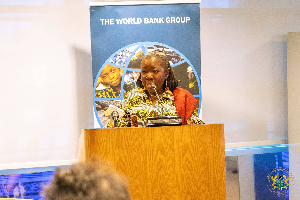 Minister of Trade, Agribusiness and Industry, Elizabeth Ofosu-Adjare






Opinions