Ghana’s controversial SIM card re-registration exercise was not only a telecommunications policy debate; it also became a test of citizens’ rights to privacy, data protection and access to communication services.
On November 24, 2021, a legal challenge was mounted against the mandatory biometric SIM card re-registration directive, bringing the National Communications Authority (NCA), the Attorney General and three major telecommunications companies into the dispute.
The case reflected growing concerns among sections of the public about the government's collection of personal information, the protection of subscribers' biometric data and the legal basis for compelling millions of Ghanaians to register their SIM cards again.
The SIM card exercise that ended up in court
The re-registration exercise, which began in October 2021, required mobile phone subscribers to link their existing SIM cards to the Ghana Card, the country's national identity document. The government defended the policy as a measure to improve the integrity of subscriber records, tackle mobile money fraud, curb criminal activities and strengthen national security.
However, the exercise raised questions about how much personal information telecommunications companies could demand from subscribers and what safeguards were in place to protect such information.
One of the strongest objections came from private legal practitioner Francis Kwarteng Arthur, who took the matter to the Accra High Court. His case challenged the collection, storage and use of subscribers' biometric information, including fingerprints, palmprints, iris scans and facial patterns.
Arthur argued that the directive threatened fundamental rights, including the rights to privacy, administrative justice, speech, information and property.
He was particularly concerned about the extent of information being demanded during the registration process and whether the telecommunications companies had sufficient legal authority to collect and retain such sensitive details.
In his application, he asked the court to restrain the NCA from directing mobile network operators to collect, store or use the information while the substantive case was being determined. He also wanted the three telecommunications companies to suspend the collection and use of subscribers' biometric details.
The case named the NCA, Ghana Telecommunications Company Limited, operators of Vodafone Ghana at the time, Scancom PLC, operators of MTN Ghana, and AirtelTigo Ghana Limited as respondents. The Attorney General was also put on notice.
A legal fight that did not stop the exercise
The court battle became an important moment in Ghana's debate over digital identity and personal privacy. It raised a question that remains relevant whenever governments introduce large-scale digital registration systems: how can the state pursue security and accountability without compromising citizens' fundamental rights?
The legal challenge, however, did not bring the exercise to a halt.
On December 9, 2021, the Accra High Court struck out Arthur's application for an interlocutory injunction after he withdrew it. The court had indicated that it could not grant the requested restraint before the application was properly heard, taking into account the wider public interest.
The substantive case continued, but on July 13, 2022, the Human Rights Division of the High Court dismissed the challenge. The court held that the NCA's directive was lawful and that the authority had not acted in violation of the law.
The registration deadline was subsequently extended several times, eventually reaching May 31, 2023. The exercise also became a major public concern as subscribers struggled with registration requirements and the threat of losing access to their mobile services.
Why the case still matters
Looking back, the November 24, 2021 legal challenge was about more than SIM cards. It brought the tension between national security, digital identification and individual privacy into the courtroom.
For millions of Ghanaians, a mobile phone number is more than a means of making calls. It is connected to mobile money accounts, banking services, business transactions, employment opportunities and everyday communication.
That makes the collection and management of subscriber information particularly important. The Data Protection Act, 2012 (Act 843), provides a legal framework for protecting personal information and regulating how organisations collect, process, retain and disclose such data.
Although the court ultimately ruled against the challenge, the questions surrounding biometric data collection, government surveillance, digital identity and citizens' privacy remain significant in Ghana's digital transformation journey.
The lawsuit filed by Francis Kwarteng Arthur therefore remains a notable chapter in Ghana's telecommunications history: a moment when the country's drive towards a digitally identifiable population was confronted with a legal challenge over how far the state could go in collecting citizens' personal information.
EA
General News of Tuesday, 24 November 2026
Source: www.ghanaweb.com
Today in History: The legal battle over Ghana’s SIM card re-registration
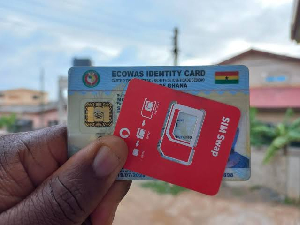 A picture of sim card and Ghana Card