The 2027 Budget could make government the biggest obstacle to cheaper credit for Ghanaian businesses, President of Africa Policy Lens (APL), Prof. Isaac Boadi, has warned.
In a critical assessment of the budget, Prof Boadi argues that the financing strategy underpinning the government's New Economy Programme contradicts its commitment to providing affordable loans for farmers, manufacturers and exporters.
"The state is now business' biggest rival for credit," he said.
GH¢85 Billion in Borrowing Against GH¢135.7 Billion in Private-Sector Credit
The figures underpinning his concerns, he says, are significant.
Total bank credit to the private sector stood at GH¢135.7 billion at the end of October 2026. Meanwhile, the 2027 Budget projects GH¢85 billion in net domestic borrowing.
This represents approximately 63 per cent of the total outstanding credit currently available to private businesses.
"When the state borrows that much from the same banks and savers, it pushes up interest rates and takes loanable funds away from businesses," Prof. Boadi said.
Borrowing to Support Businesses Could Hurt Businesses
The government's New Economy Programme has been allocated GH¢30 billion in its first year.
However, Prof. Boadi says approximately GH¢18 billion of the funding is expected to come not from additional revenue but from a reduction in the primary surplus, potentially requiring increased government borrowing.
"By borrowing to protect enterprise, the government risks crowding out the businesses it means to support," he warned.
He explained that the situation presents a difficult choice for banks. With government securities offering returns of around 15 per cent with relatively low risk, lending to small-scale farmers and manufacturers becomes a less attractive option.
"Cheaper credit cannot reach businesses while government is the biggest borrower in the same market," he said.
Three Demands to Government
To prevent the potential crowding-out of private-sector investment, Prof. Boadi and Africa Policy Lens are urging the government to reconsider its borrowing strategy.
They are proposing three key measures:
Maintain the primary surplus at 1.5 per cent of GDP until public debt falls below the 45 per cent debt anchor.
Finance the New Economy Programme exclusively from verified additional revenue, rather than relying on increased domestic borrowing.
Publish quarterly reports comparing government domestic borrowing with private-sector credit growth, allowing Ghanaians to assess whether government borrowing is supporting or restricting access to credit for businesses.
Prof. Boadi stressed that the government must make a clear choice: act as a partner to businesses by borrowing less and creating room for banks to finance the real economy, or become a competitor by borrowing GH¢85 billion from the same pool of funds on which private enterprises depend.
"You cannot promise businesses cheaper credit while competing with them for the same money," he said.
Godfred Nsiah Speaks on the Growth and Future of Jiu-Jitsu in Ashanti Region
Business News of Monday, 23 November 2026
Source: www.ghanaweb.com
2027 budget borrowing will push up interest rates and starve businesses - Prof Isaac Boadi
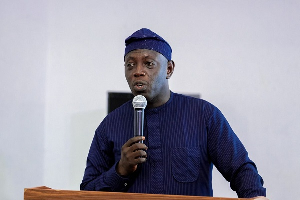 Prof Isaac Boadi, Executive Director of Institute of Economic Research and Public Policy (IERPP)




Entertainment