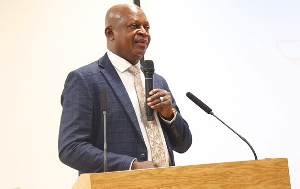
Justice Gabriel Scott Pwamang could become Ghana’s first Chief Justice from the North if reports of his emergence as the preferred successor to Justice Paul Baffoe-Bonnie materialise.
The possible appointment of Supreme Court Justice Gabriel Scott Pwamang as Ghana’s next Chief Justice could mark a historic moment for the country’s Judiciary, with the Navrongo-born jurist potentially becoming the first person from northern Ghana to occupy the country’s highest judicial office.
The development, if confirmed, would represent a significant moment in the representation of northern Ghana in the country's top judicial leadership, an office that has been occupied by several distinguished legal figures since the establishment of the position.
According to a report by The Law Platform, the Presidency has settled on Justice Pwamang as the preferred successor to the incumbent Chief Justice, Paul Kwadwo Baffoe-Bonnie. However, the reported decision is yet to be established through a formal presidential nomination and the constitutional appointment process.
Justice Pwamang, who hails from Navrongo in the Upper East Region, is currently the most senior serving Justice of the Supreme Court, a position that has placed him in line to assume the responsibilities of the Chief Justice whenever the substantive officeholder is unavailable.
He is currently acting as Chief Justice following Justice Baffoe-Bonnie's absence from the country between November 12 and November 24, 2026. The incumbent is expected to resume duty on Wednesday, November 25.
Why Pwamang's possible appointment is historic
If appointed, Justice Pwamang would break new ground as the first person from northern Ghana to lead the country's Judiciary.
The significance goes beyond his geographical background. His possible elevation would place a jurist whose professional and public-service journey cuts across private legal practice, constitutional review, partisan politics and judicial administration at the helm of Ghana's justice system.
For many people from the northern part of the country, the appointment could also carry considerable symbolic importance, particularly in discussions about regional representation in some of Ghana's most influential national institutions.
Justice Pwamang's legal career has been built across different areas of the profession. Before joining the Supreme Court, he spent approximately 26 years in private legal practice and founded Pwamang and Associates, where he worked on legal matters involving land and natural resources, human rights and criminal law.
He also served on the Constitution Review Commission between 2010 and 2011, contributing to discussions and proposals concerning possible reforms to Ghana's 1992 Constitution.
His experience in constitutional matters, private legal practice and the administration of justice is among the considerations cited by The Law Platform in explaining why he is reportedly being considered for the position.
From opposition politics to the Supreme Court
Another defining aspect of Justice Pwamang's career is his involvement in partisan politics before his elevation to the Supreme Court.
He was a prominent member of the People's National Convention (PNC), serving first as Deputy General Secretary and subsequently as General Secretary between 1998 and 2007.
He also contested the Navrongo Central parliamentary seat on the PNC ticket, seeking to represent his home constituency in Parliament.
His political experience gave him exposure to party administration, political organisation and the workings of Ghana's multiparty democratic system before he transitioned fully into judicial service.
President John Dramani Mahama nominated him to the Supreme Court in 2015, and he assumed office in June that year.
His appointment came after more than two decades in private legal practice, giving him a professional background that differs from that of judges who spend most of their careers within the traditional judicial hierarchy.
His role in the Torkornoo removal proceedings
Justice Pwamang has also played a significant role in one of the country's recent high-profile judicial developments.
He chaired the committee that examined petitions seeking the removal of former Chief Justice Gertrude Torkornoo under Article 146 of the 1992 Constitution.
The committee recommended her removal following its consideration of the petitions, a process that attracted considerable public and legal attention.
His involvement in the proceedings placed him at the centre of a major constitutional and judicial episode, further adding to his experience in matters concerning the administration and accountability of the Judiciary.
What happens next?
Despite the reported presidential preference, Justice Pwamang cannot automatically become substantive Chief Justice simply because he is the most senior Justice of the Supreme Court.
Article 144(1) of Ghana's 1992 Constitution provides that the Chief Justice is appointed by the President in consultation with the Council of State and with the approval of Parliament.
This means a formal nomination, consultation with the Council of State and parliamentary approval are required before he can assume the substantive position.
Justice Pwamang's current acting role is therefore separate from any prospective appointment as Chief Justice.
If the reported choice is confirmed and he successfully goes through the constitutional process, his elevation would mark a historic chapter in Ghana's judicial history: a Navrongo-born jurist becoming the first Chief Justice from northern Ghana.
EA
General News of Monday, 23 November 2026
Source: www.ghanaweb.com
Pwamang’s possible CJ appointment: Why Ghana could make history with Navrongo-born judge
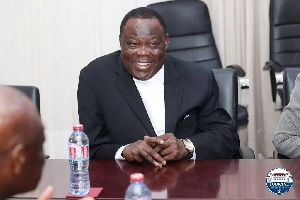 A picture of Justice Gabriel Scott Pwamang