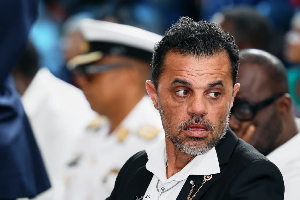
A resurfaced video of North Tongu MP Samuel Okudzeto Ablakwa speaking in Parliament in June 2021 has reignited discussions about his position on the procurement of a new presidential aircraft.
In the video, Ablakwa, who was then the Ranking Member of Parliament’s Foreign Affairs Committee, appears to suggest that Ghana could save money by purchasing a new aircraft rather than continuing to spend heavily on chartered flights for presidential travels.
Speaking during the 13th Sitting of the First Session of the Eighth Parliament on June 16, 2021, he questioned the cost of the government’s arrangements for President Nana Akufo-Addo’s foreign trips.
“Mr Speaker, from 19th March 2008, this House approached with over $100 million for these two aircraft. President Mills cancelled one of them. But this costs about $35 million,” he said.
Ghanaians descend on Mussa Dankwah over 24-Hour Economy poll
He urged the Defence Minister to consider the financial implications of the expensive charter arrangements, arguing that acquiring another aircraft could be a more economical option.
“Wouldn’t a minister say it is better for Ghana if the President believes he wants a bigger aircraft? Two years ago, when we reviewed the budget, the President had spent GH¢69 million on presidential travels and all these chartered arrangements,” he added.
Ablakwa further questioned whether purchasing a new aircraft would ultimately save the country money.
“Wouldn’t we be saving money if the President were to acquire a new aircraft instead of this expensive £50,000-an-hour arrangement?” he asked.
The resurfaced footage has drawn attention because of his subsequent public opposition to the Akufo-Addo administration’s plans to procure a new presidential jet.
In 2021, Ablakwa repeatedly criticised the government’s spending on chartered aircraft, insisting that Ghana’s existing Dassault Falcon 900EX presidential jet was airworthy and should be used instead.
He also argued that the country should in economic challenges rather than spend public funds on presidential comfort.
Background
In September 2021, following announcements that procurement processes for a new presidential jet were underway, he declared that the NDC Minority would not support the proposed acquisition.
However, the debate has taken a different dimension following the NDC's return to power and Parliament's approval of a new aircraft procurement programme in December 2025.
Under the programme, Parliament approved a $60.68 million agreement with French aircraft manufacturer Dassault Aviation for the acquisition of a Falcon 6X executive jet for the Ghana Air Force. It also approved a €125.97 million agreement with Airbus Helicopters for four helicopters, comprising one H160 and three H175 aircraft.
The government has defended the procurement as part of a broader effort to retool and modernise the Ghana Armed Forces, arguing that a significant portion of the military's aviation fleet had become ageing, with several aircraft grounded because of maintenance challenges.
Presenting the Defence and Interior Committee's report to Parliament, its then Chairman, James Agalga, invoked Article 210 of the 1992 Constitution, which requires the Ghana Armed Forces to maintain operational readiness in terms of personnel and equipment.
He argued that acquiring modern aircraft was necessary to improve safety, operational efficiency and strategic mobility for both national leadership and military operations.
The new Falcon 6X arrived in Ghana on November 16, 2026, replacing the ageing Falcon 900EX, which had been in service since 2010.
Government Communications Minister Felix Kwakye Ofosu has explained that the decision was influenced by recurring technical problems with the existing aircraft, including fuel tank corrosion, fuel leaks and engine-related defects discovered during extensive maintenance in France in 2025.
The aircraft reportedly spent about eight months in France undergoing maintenance, raising concerns about its reliability and the cost of keeping it operational. Government has also argued that acquiring a replacement would reduce the need for expensive chartered flights whenever the state aircraft was unavailable.
Interestingly, the government has maintained that the decision was not primarily driven by improvements in Ghana's economic conditions but by operational and financial considerationsn surrounding the existing aircraft and the broader needs of the Air Force.
The acquisition has, however, attracted criticism from the NPP Minority, which questioned the government's spending priorities and the financial implications of the wider aircraft procurement programme.
The debate therefore raises an important question about the consistency of political positions on public expenditure, particularly when parties move from opposition into government.
While Ablakwa's 2021 arguments were made against the backdrop of the economic conditions and procurement proposals of the Akufo-Addo administration, the current government has presented a different justification, emphasising military preparedness, the ageing state of the aviation fleet and the long-term operational needs of the country.
At the same time, the improvement in Ghana's macroeconomic conditions under the NDC administration provides a different economic context from the difficulties confronting the country in 2021. However, economic recovery alone does not eliminate the need for transparency, value for money and accountability in major public procurement decisions.
The central issue is whether the current acquisition meets the standards of necessity, affordability and responsible public spending that Ablakwa himself demanded when he opposed the previous administration's plans.
Ultimately, the public will expect the government to demonstrate that the investment goes beyond executive convenience and delivers measurable improvements in the operational capacity of the Ghana Armed Forces.
Watch the video below:
FKA/MA
General News of Sunday, 22 November 2026
Source: www.ghanaweb.com
Here's what Ablakwa actually said about the presidential jet in 2021
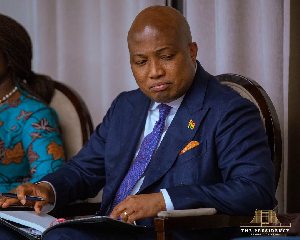 Samuel Okudzeto Ablakwa is the Minister of Foreign Affairs