Before becoming Ghana’s first President and one of Africa’s most influential Pan-Africanist leaders, Dr Kwame Nkrumah had ambitions of becoming a Catholic priest.
Historian Yaw Anokye Frimpong has recounted some fascinating details about Nkrumah’s birth, religious upbringing and the experiences that eventually redirected his ambitions towards politics.
According to Frimpong, Nkrumah’s mother, Elizabeth Nyaniba, struggled to have a child and sought help from traditional priests.
One of the priests reportedly gave her medication and instructed her to treat a doll as her baby, sleeping beside it and caring for it as though it were a real child.
Ghanaians descend on Mussa Dankwah over 24-Hour Economy poll
“She should sleep and cater for the doll as her baby,” Frimpong recounted.
Less than two years later, Nyaniba gave birth to Nkrumah.
Frimpong explained that the arrival of Liberian evangelist William Wade Harris in the Nzema area subsequently changed his mother’s religious outlook.
Harris was preaching against the worship of traditional deities, prompting Nkrumah’s mother to ask what she should do about the doll she had received from the priest.
“He told her the baby was a gift of God, so they threw that doll away,” the historian said.
Nkrumah later became uncomfortable with his mother’s revelation about the circumstances surrounding his birth, according to Frimpong.
Despite the traditional religious background surrounding his birth, Nkrumah was raised in the Catholic faith and developed a strong interest in becoming a priest.
After completing his studies at Achimota, he pursued his religious ambitions through his work and studies at a Catholic seminary in Amissano.
However, his understanding of Africa’s challenges gradually changed his outlook.
Frimpong explained that Nkrumah came to appreciate that religious service alone would not secure the liberation of the continent.
“He learned that the pastoral deeds cannot help save Africa unless politics. That’s why he travelled to America,” he explained.
Nkrumah left the Gold Coast for the United States in 1935, enrolling at Lincoln University in Pennsylvania. He studied sociology, economics and theology before pursuing further studies at the University of Pennsylvania.
His American experience exposed him to Black intellectual movements, anti-colonial thinking and the ideas that would eventually shape his Pan-Africanist philosophy.
Frimpong believes that education played a decisive role in Nkrumah’s transformation.
“What pushed him to achieve what he had was his American education,” he said.
Nkrumah eventually abandoned the prospect of priesthood for political activism, returning to the Gold Coast in 1947 with an ambition to liberate Africa.
FKA/VPO
General News of Sunday, 22 November 2026
Source: www.ghanaweb.com
How Nkrumah abandoned priesthood to became Ghana’s first President, Pan African figure
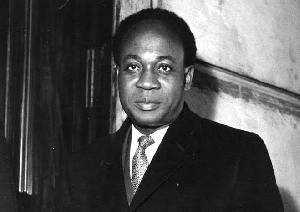 Dr Kwame Nkrumah was the first president of Ghana