NPP Director of Communications Dennis Miracles Aboagye has expressed frustration over being publicly labelled the “GH¢55 million man” amid an ongoing Economic and Organised Crime Office (EOCO) investigation, insisting that he has not been found guilty of any offence.
Speaking on TV3’s The Key Points on Saturday, November 21, 2026, during a discussion on the Attorney-General’s directive to investigative bodies, Mr Aboagye said the public perception surrounding the alleged GH¢55 million financial scandal had taken a toll on his reputation.
He said he was particularly troubled that people had come to associate his name with the alleged amount despite the absence of a conviction.
“As we sit here today, no one at EOCO has ever discussed the alleged GH¢55 million they claim I stole from the state. I am pained because people walk around, look at me and point at me as the ‘GH¢55 million man’,” he said.
Mr Aboagye's comments come against the background of EOCO's investigations into alleged financial and procurement irregularities at the Inter-Ministerial Coordinating Committee on Decentralisation (IMCCoD), where he previously served as Executive Secretary.
The investigation concerns suspected misappropriation, misapplication, diversion and theft of public funds estimated at GH¢55 million. EOCO announced in July 2026 that Mr Aboagye, former IMCCoD accountant Gerald Appiah and other persons were being investigated in connection with the alleged irregularities.
The case followed a petition from the committee's current Executive Secretary seeking further investigations into a forensic audit covering the period from August 1, 2022, to February 2, 2025.
Mr Aboagye was subsequently arrested in July as part of the investigation and granted bail in the sum of GH¢50 million with three sureties, two of whom were required to justify their sureties.
In August, an Accra High Court also granted an application to freeze five bank accounts and four landed properties belonging to him as investigators continued their inquiries.
However, the NPP communicator maintains that the investigation and the allegations surrounding the GH¢55 million must not be treated as proof of criminal wrongdoing.
His latest comments have brought renewed attention to the distinction between an ongoing investigation, an allegation and a conviction, particularly as the Attorney-General's directive to investigative bodies comes under public discussion.
During the programme, Mr Aboagye also questioned the basis for the GH¢50 million bail condition imposed on him, arguing that bail requirements should not be determined by the amount of money investigators allege was lost.
He maintained that investigative bodies must respect the rights of suspects and avoid creating public impressions of guilt before the courts have determined the cases against them.
“I have personally asked four occasions, ‘When are you discussing the 55 million cedis you say I have stolen with me?’” he said.
He further argued that the Attorney-General must move beyond public statements and take practical steps to address what he considers excessive bail conditions and other alleged abuses by investigative agencies.
“The point we are making this morning is that the Attorney General should step his feet on the ground and curtail this thing that is rearing its head. It is dangerous. It is inimical to the rights of the Ghanaian,” he stated.
Mr Aboagye welcomed the Attorney-General's intervention, saying the concerns surrounding investigative procedures should not be viewed solely as a political issue because ordinary Ghanaians without access to legal representation could also suffer from such practices.
He also called on the judiciary to scrutinise applications for excessive bail conditions, insisting that the legal process must protect the rights of individuals while allowing investigations to proceed.
The Attorney-General's directive has consequently provided an opportunity for renewed discussions about the conduct of investigative agencies, the rights of persons under investigation and the need to ensure that law enforcement institutions operate within the confines of the law.
EA
General News of Saturday, 21 November 2026
Source: www.ghanaweb.com
Dennis Miracles Aboagye 'cries' over GH¢55m tag
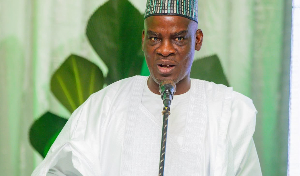
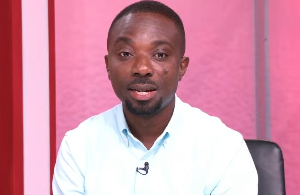 A photo of Dennis 'Miracles' Aboagye