Every cedi in a Ghanaian's pocket is, in a real sense, cocoa money.
For much of the 20th century, cocoa helped finance Ghana's harbours, roads, schools and dams. It also contributed significantly to the economic foundation upon which the country's independence struggle was built.
In 1879, Tetteh Quarshie introduced cocoa seeds to Mampong-Akuapem. But introducing a crop is one thing; building an industry around it is another.
The man credited with helping transform cocoa into a major commercial enterprise, organising farmers, exporting their beans to England and challenging foreign trading companies over unfair pricing, was another son of Mampong-Akuapem: Nana John Kwame Ayew.
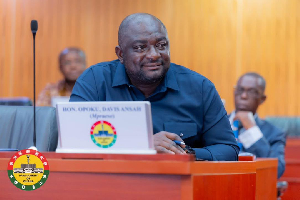
He was the great-grandfather of Dr Nana Ayew Afriye, Member of Parliament for Effiduase-Asokore.
The family lineage runs as follows:
Nana John Kwame Ayew → Emma Apofowaa Ayew → Edmond Afriye Addo → Nana Kwame Ayew Afriye.
Who was Nana John Kwame Ayew?
Beyond the family's account of his legacy, historical accounts attribute several significant contributions to Nana John Kwame Ayew's role in the development of Ghana's cocoa industry.
1. Founder of the Gold Coast Cocoa Farmers' Association
Historical accounts credit him with establishing the Gold Coast Cocoa Farmers' Association shortly after the First World War. The association sought to organise cocoa farmers and protect their interests against the buying dominance of foreign trading companies (Kuusaana et al., citing Professor A. Adu Boahen).
2. Leader of the great cocoa hold-ups
He is associated with the major cocoa hold-ups of 1920–1921 and 1930–1931 in Larteh, Dodowa, Akuapem and Akyem Abuakwa.
These organised protests and boycotts were part of farmers' resistance against prices imposed by European trading companies, including UAC and SCOA.
3. One of the leading figures in the cocoa struggle
Historians identify Nana John Kwame Ayew alongside Winifried Tetteh Ansah of Manya Krobo as two prominent figures in the farmers' resistance movement between 1920 and 1940.
4. An African cocoa exporter to England
According to R. J. Southall, Nana Ayew operated a trading enterprise that supplied cocoa directly to Cadbury in England.
This was significant at a time when much of the cocoa trade was controlled by European commercial intermediaries.
5. Leader of the Farmer Chiefs (Akuafohenfo)
He is also associated with the leadership of the Farmer Chiefs, an organised body representing cocoa farmers across the Gold Coast.
His leadership in this movement is central to the historical basis of his recognition as Chief Cocoa Farmer.
Historical accounts also place him among the prominent figures of the early nationalist movement, alongside personalities such as Dr J. B. Danquah.
Other achievements credited to him by family and oral tradition
Beyond the contributions documented in historical accounts, family records and oral tradition attribute several other achievements to Nana John Kwame Ayew:
He was the first Chief Cocoa Farmer and the first indigenous cocoa merchant in the Gold Coast.
He constructed what is described as the first cocoa shed in the Gold Coast, working with his secretary, Teacher Botchwey.
He helped spread cocoa cultivation from Akuapem into the Eastern, Ashanti and Central regions and beyond.
He purchased cocoa harvests from farmers and arranged their shipment to England for sale.
He reportedly committed personal resources to cocoa control arrangements in the late 1930s. These developments preceded the establishment of the Cocoa Marketing Board in 1947 and the eventual creation of COCOBOD in 1979.
He was also a major financier of the United Gold Coast Convention (UGCC), according to family accounts.
These claims deserve further documentary investigation to establish their full historical basis.
In essence, while Tetteh Quarshie is widely celebrated for introducing cocoa to Ghana, Nana John Kwame Ayew is credited with helping commercialise and organise the industry.
This is why many regard him as the Father of the Cocoa Business in Ghana.
Why Nana John Kwame Ayew deserves consideration for a place on Ghana's currency
There are compelling historical, economic and national reasons why Nana John Kwame Ayew deserves consideration for a portrait on a future Ghanaian cedi note.
1. Cocoa helped build Ghana's economy
Between 1910 and 1980, Ghana was the world's leading cocoa exporter for significant periods. Cocoa generated enormous foreign exchange earnings and helped finance the country's economic development.
Few agricultural commodities have contributed as significantly to Ghana's economic history.
Honouring Nana Ayew would therefore mean recognising the industry and the farmers who helped build the nation.
2. Ghana's currency should also recognise the producers
Since the introduction of the current family of banknotes in 2007, Ghana's currency has prominently celebrated the country's political and independence leaders, particularly the Big Six.
While their contributions deserve recognition, the nation's currency could also tell a broader story by celebrating the people who built its productive economy.
Nana Ayew would represent the millions of cocoa farmers whose labour and sacrifices helped finance Ghana's development.
3. He reportedly helped finance the movement represented on our currency
Family accounts credit Nana Ayew with providing substantial financial support to the United Gold Coast Convention (UGCC), the political movement associated with the Big Six.
If substantiated through historical records, this would establish an important connection between his economic contributions and the political movement whose leading figures are already celebrated on Ghana's currency.
4. He championed economic independence
Long before today's discussions about fair cocoa pricing, Nana Ayew was associated with efforts to challenge the dominance of foreign trading companies and demand better conditions for cocoa farmers.
Today, Ghana and Côte d'Ivoire continue to push for improved earnings for cocoa producers through initiatives such as the Living Income Differential.
The struggle for economic fairness that defined his era remains relevant.
5. The timing presents an opportunity
As Ghana approaches its 70th anniversary of independence in 2027, discussions about national identity, historical recognition and the country's achievements present an opportunity to reconsider the personalities celebrated on its currency.
A commemorative banknote celebrating Ghana's cocoa heritage would be a fitting tribute to the farmers and pioneers who helped build the industry.
Addressing the controversies
Any proposal to honour Nana John Kwame Ayew must be open to historical scrutiny. There are legitimate questions that deserve clear answers.
"Isn't Tetteh Quarshie the Father of Cocoa in Ghana?"
Tetteh Quarshie's contribution to the introduction of cocoa into Ghana must be acknowledged and protected.
However, introducing cocoa and developing it into a commercial industry are two different contributions.
The argument for Nana Ayew is not that he should replace Tetteh Quarshie in history, but that his contribution to the commercial development of cocoa deserves equal recognition.
Indeed, even aspects of the early history of cocoa introduction have attracted historical debate, reinforcing the need for a more comprehensive account of the pioneers of the industry.
Ghana could even consider a joint commemorative tribute to both men as pioneers of its cocoa heritage.
"Was he a merchant rather than a farmer?"
Being a merchant does not diminish his contribution. Rather, it strengthens the case for his recognition.
His involvement in farming, purchasing, trading and exporting cocoa gave him an understanding of the entire value chain.
That experience positioned him to understand the challenges facing farmers and advocate for better commercial conditions.
"Where is the evidence for the claims about his achievements?"
This is perhaps the most important question the campaign must address.
Claims that Nana Ayew built the first cocoa shed, financed cocoa control arrangements in the 1930s and provided financial support to the UGCC must be supported by credible documentary evidence.
Relevant records should be sought from the Public Records and Archives Administration Department (PRAAD) in Accra and Koforidua, the Cadbury archives at Bournville and colonial administrative records at the UK National Archives.
A credible campaign must distinguish between documented historical facts, scholarly interpretations and family oral tradition.
"Is this simply a family-driven campaign?"
The proposal will carry greater national credibility if it is championed by a broad coalition rather than by his descendants alone.
Cocoa farmers' associations, COCOBOD, the Akuapem Traditional Council, historians, academics and other stakeholders should be involved in examining and supporting the proposal.
This must be presented as a national heritage initiative, not merely a family recognition project.
Getting the historical timeline right
Historical accuracy is essential.
The 1937–1938 cocoa hold-up led to the establishment of the Nowell Commission. Wartime cocoa control arrangements followed from 1939–1940, while the Cocoa Marketing Board was established in 1947.
Consequently, it is more historically responsible to argue that Nana Ayew's agitation and the wider farmers' resistance contributed to the developments that paved the way for state involvement in cocoa marketing.
Similarly, claims that he personally financed these arrangements should remain attributed to family accounts until documentary evidence confirms them.
Our appeal to the Bank of Ghana
We therefore call on the Bank of Ghana to consider Nana John Kwame Ayew for recognition on a future Ghanaian cedi note.
A portrait of Nana Ayew on one side, accompanied by a cocoa pod and a traditional cocoa shed on the reverse, would be a powerful way to celebrate Ghana's cocoa heritage.
Such a banknote would not simply honour one individual. It would recognise generations of cocoa farmers, traders and industry pioneers whose hard work helped build the Ghana we know today.
Tetteh Quarshie brought the cocoa seed to Ghana. Men such as Nana John Kwame Ayew helped turn that seed into an industry of national importance.
He helped give Ghana one of its greatest industries.
It is time Ghana considered giving him a place on its money.
Godfred Nsiah Speaks on the Growth and Future of Jiu-Jitsu in Ashanti Region
General News of Saturday, 21 November 2026
Source: www.ghanaweb.com
The Man Who Made Cocoa Ghana's Fortune: Why Nana Kwame Ayew deserves a place on the cedi
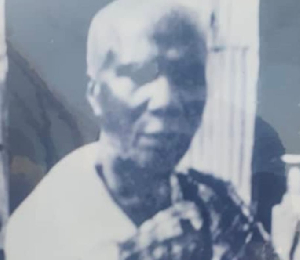 Nana John Kwame Ayew