Dr Susan Barbara Gyankorama Ofori-Atta made history as the first female doctor and the first Ghanaian woman to earn a university degree in the Gold Coast.
Born in 1917 in Kyebi, in the Eastern Region, she was the fourth West African woman to qualify as a medical doctor.
She feat followed Nigerians Agnes Yewande Savage and Elizabeth Abimbola Awoliyi, and Sierra Leonean Irene Ighodaro.
Ofori-Atta was the daughter of Nana Sir Ofori Atta I, the Okyenhene and Paramount Chief of the Akyem Abuakwa Traditional Area, and Nana Akosua Duodu.
She belonged to the prominent Ofori-Atta royal family.
She started her education at St Mary's Convent in Elmina around 1921 before enrolling at Achimota School in 1929.
She was among the school's pioneer students and served as the Girls' School Prefect in her final year. She also sat for the Cambridge School Certificate examination.
After completing her secondary education, she trained as a midwife at the Korle-Bu Midwifery Training School, graduating in 1935.
She later received further midwifery training in Scotland before returning to work at Korle-Bu Teaching Hospital.
She eventually pursued medical studies at the University of Edinburgh Medical School in Scotland, where she obtained her MBChB degree in 1947.
She later received professional qualifications from the Royal College of Obstetricians and Gynaecologists in 1949 and the Royal College of Paediatrics and Child Health in 1958.
During her career, Ofori-Atta worked as a medical officer at the Princess Marie Louise Hospital, where she earned the nickname "mmofra doctor", meaning children's doctor, because of her work with children.
She later left the hospital to join the University of Ghana Medical School, where she was among the founding members of its Department of Paediatrics.
She subsequently established her own private practice at the Accra Clinic, providing medical care for women and children. In 1960, she also volunteered her services at an understaffed hospital in the Congo.
At the time, she was one of only about 210 doctors practising in the Gold Coast.
Her achievement was a major milestone for women in Ghana's medical and academic history.
Beyond her medical career, Ofori-Atta also contributed to national decision-making.
She campaigned for the inheritance rights of spouses and children, an effort that contributed to the passage of the Intestate Succession Law in 1985.
Susan Ofori-Atta died of natural causes in July 1985 in the United Kingdom.
MAG/VPO
General News of Saturday, 21 November 2026
Source: www.ghanaweb.com
Meet Ghana’s first female doctor and woman to earn a university degree
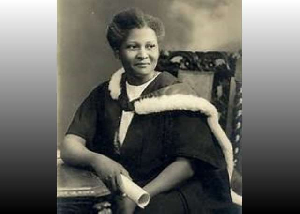 Dr Susan Barbara Gyankorama Ofori-Atta was the first female doctor in the Gold Coast now Ghana