The Minister of Works, Housing and Water Resources, Ahmed Ibrahim, has called for greater recognition of the engineering profession.
Ahmed has urged Ghana to invest in technical expertise, innovation and professional development to accelerate national development.
He said no country could achieve meaningful socioeconomic transformation without a strong engineering sector, stressing that engineers play a critical role in developing roads, buildings, water systems, energy infrastructure and other essential services.
Speaking at the 40th Annual General Meeting (AGM) and Engineering Conference of the Institution of Engineering and Technology Ghana (IET-GH) on November 19, 2026, the minister expressed concern about the relatively low number of engineers compared with professionals in other fields, arguing that the situation reflected the need to make engineering more attractive to young people.
He cited China as an example of a country that had prioritised engineering and technical education to accelerate its development and strengthen its global standing.
Ibrahim urged stakeholders to promote the engineering profession and encourage young people to pursue careers in the field. He also challenged engineering graduates to put their knowledge into practice rather than rely solely on conventional employment opportunities.
Benjamin Danso unseats NDC’s Greater Accra Regional Chairman Ashie Moore
According to him, engineers must occupy a central position in national development, particularly at the district and local government levels, where their technical expertise is essential for effective infrastructure planning and delivery.
He further emphasised the need to develop professional human resources capable of designing, constructing, and maintaining resilient infrastructure that can withstand climate change and other environmental pressures.
"I think the time has come to glamorise the engineering profession…What did you learn when you were in school? Go and practise it. If you do that, you have the commanding height of the country and not the politicians," he stated.
The three-day conference was held under the theme, "Engineering Excellence for Sustainable National Development: Innovation, Technology and Professional Responsibility," and brought together engineering professionals, policymakers, traditional authorities and other stakeholders to deliberate on the contribution of engineering, innovation and technology to Ghana's sustainable development.
The National President of IET-GH, Engineer Wonder Davor, said the conference theme was timely, particularly as Ghana continued to grapple with challenges such as the housing deficit, flooding in Accra, illegal mining, which is destroying water bodies and energy constraints.
Engineer Davor argued that the country must look inward for innovative solutions rather than rely excessively on imported technologies.
He challenged engineers to explore the use of locally available materials, including bamboo and clay, as alternatives in construction, emphasising the need to develop affordable and sustainable building materials suited to Ghana's needs.
He also cautioned that technological advancement without professional responsibility could endanger lives and undermine public confidence in engineering practice.
The IET-GH President expressed concern about engineering projects being designed without the involvement of qualified professionals, construction works proceeding without proper professional supervision and completed projects receiving approval without the required certification.
He described these practices as unacceptable and called for stricter enforcement of engineering laws and regulations, including action against individuals practising engineering without the necessary professional authorisation.
The Guest of Honour, Engr Yao Gomado, Member of Parliament for Akan Constituency in the Oti Region, called on Ghanaian engineers to move beyond being consumers of foreign technology and become innovators capable of developing solutions to local challenges.
Delivering the keynote address, he observed that technological developments, including artificial intelligence, renewable energy, smart grids, 3D printing and drones for surveying, were rapidly transforming the engineering profession.
However, he cautioned that technology alone was insufficient without the right mindset and commitment to innovation.
He explained that innovation did not necessarily require expensive imported equipment but could involve practical solutions such as converting plastic waste into paving blocks, designing drainage systems suited to Accra's rainfall patterns and developing affordable housing for ordinary Ghanaian workers.
"A bridge designed with innovation but built without integrity will still collapse. A building supervised without conscience will still fail," he cautioned.
Speaking on behalf of the Ga Mantse, King Nii Teiko Tackie II, a representative emphasised the importance of professional integrity and accountability in engineering practice.
The message urged engineers and allied professionals not to remain silent whenever technical standards were compromised.
It further warned that engineers who knowingly approved substandard work, overlooked unsafe construction, or sacrificed professional judgement for personal or commercial interests undermined public confidence and placed human lives at risk.
The anniversary celebration also featured the recognition of distinguished personalities for their contributions and service.
Among those honoured were President John Dramani Mahama, the Ga Mantse, Minister for Works, Housing and Water Resources Ahmed Ibrahim, Multimedia Group journalist Kodwo Mensah Aboroampa, also known as Amos Kwofie and the immediate past President of IET-GH, Engineer Henry Kwadwo Boateng.
AM
Godfred Nsiah Speaks on the Growth and Future of Jiu-Jitsu in Ashanti Region
Business News of Friday, 20 November 2026
Source: www.ghanaweb.com
Ghana must glamourise engineering to accelerate national development – Ahmed Ibrahim
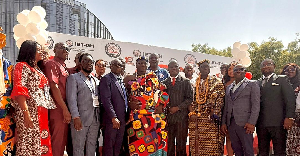 Some of the stakeholders at the event