Ghana’s newly unveiled New Economy medium-term economic plan deserves a strong welcome for its recognition of what has arguably been the country’s most persistent structural economic weakness: its inability to generate sufficient foreign exchange to pay for its appetite for imports, external debt obligations and other international commitments.
Indeed, Ghana’s economic difficulties have too often been diagnosed and treated primarily as problems of fiscal indiscipline and excessive public expenditure. While these are undoubtedly important, the underlying foreign exchange imbalance deserves at least equal attention. The economic crisis of 2022/2023, in particular, was arguably more a foreign exchange crisis than a straightforward fiscal crisis. Government’s inability to meet external debt obligations, the dramatic depreciation of the cedi and the eventual suspension of external debt payments were all manifestations of a deeper shortage of foreign currency.
The roots of this vulnerability stretch back to the period following Ghana’s attainment of substantial debt relief under the Highly Indebted Poor Countries initiative and the Multilateral Debt Relief Initiative approximately two decades ago. The improved debt position, coupled with new access to international capital markets, encouraged successive governments to borrow extensively from foreign commercial lenders. Yet the foreign exchange earnings needed to service these obligations did not expand sufficiently. Consequently, debt servicing itself became an additional and increasingly burdensome claim on the country’s limited foreign currency resources, perpetuating the very imbalance that external borrowing was supposed to help address.
It is therefore particularly encouraging that the New Economy proposals seek to confront this structural weakness through a fundamental restructuring of Ghana’s production and international trade patterns.
The unprecedented emphasis on import substitution is especially welcome. Ghana cannot indefinitely sustain an economic model in which it exports relatively limited quantities of largely unprocessed commodities while importing substantial volumes of food, industrial inputs, manufactured products and consumer goods that it has the potential to produce domestically.
The proposed phased withdrawal from the commercial importation of selected commodities, including rice, sugar and vegetables, in favourof domestic production represents a potentially important departure from decades of excessive import dependence. Predictably, such policies may provoke objections from advocates of unbridled trade liberalization. But economic openness should not be confused with economic vulnerability. No country is obliged to sacrifice the development of its productive capacity on the altar of unrestricted imports, particularly when those imports perpetuate a chronic foreign exchange deficit.
This is not an argument for indiscriminate protectionism. Import substitution must be commercially viable, competitive and carefully sequenced. Domestic producers must be capable of supplying reliable quantities at prices and quality levels acceptable to consumers. Government must therefore complement its trade policy with investments in agricultural mechanization, irrigation, storage, processing, industrial infrastructure, affordable financing and technology.
Equally significant is the plan’s emphasis on adding value to Ghana’s abundant natural resources before exporting them. Whether in gold, cocoa, bauxite, manganese, timber or other commodities, Ghana must increasingly capture the additional economic value currently surrendered by exporting raw materials and importing finished products derived from them.
Local processing would not only increase the potential foreign exchange earnings from exports but also create industrial employment, deepen domestic supply chains, stimulate technology transfer and broaden the country’s productive and tax bases.
Ultimately, Ghana’s economic resilience cannot depend indefinitely on borrowing foreign currency to finance consumption and repay earlier foreign borrowing. It must be built on the capacity to produce what it needs domestically and earn foreign exchange sustainably through competitive production and higher-value exports.
Business News of Thursday, 19 November 2026
Source: economytimesnews.com
New Economy plan could cut imports and ease dollar shortages - Report
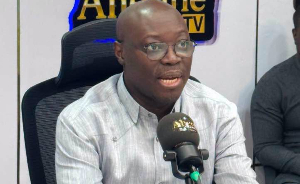 Dr Cassiel Ato Forson is the Minister of Finance