The General Secretary of the Tabital Pulaaku International (Funalis), Ghana Chapter, Alhaji Yakubu Musah Barry, has appealed to President John Dramani Mahama and the government to review the 1992 Constitution to provide greater clarity on citizenship and prevent people from being discriminated against on the basis of their ethnic or religious backgrounds.
According to him, members of ethnic groups such as Fulanis, Hausas, Moshies, Zabrama and Wangaras are increasingly being subjected to accusations of being non-Ghanaians simply because of their tribal and religious identities.
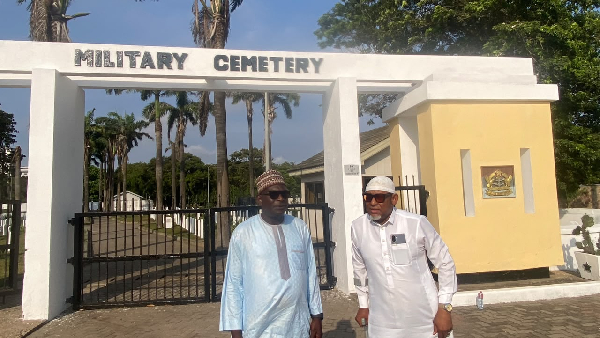
In an emotional demonstration of their ancestral ties to Ghana, Barry visited the Osu Military Cemetery on November 17, 2026, to trace his family roots and pay homage to his grandfather, a military serviceman who died in 1954 and was buried at the cemetery.
Barry, who also serves as a board member of the Ghana International Trade Fair Company Limited, said it was painful that people whose families had lived and served in Ghana for generations were being questioned about their nationality because of their ethnic backgrounds.
He argued that the military cemetery held evidence of his family's contribution to the country, stressing that the very people who could establish their ancestral roots were now buried there.
Benjamin Danso unseats NDC’s Greater Accra Regional Chairman Ashie Moore
“People are accusing us, the Fulanis, Hausas, Moshies, Zabrama of not being Ghanaians and it pains me when people make such statements. Sometimes, I wonder whether such people have read their history. That is why I want to educate the public,” he said.
“These are our grandfathers who served in the military for this country and died in 1954. So, if they say we are not Ghanaians, the same people who can show us our roots are the ones buried in this Osu Military Cemetery. Where do we go from here?
“We were born and bred here but simply because of our tribe, we are being accused of not being Ghanaians. We do not know anywhere else to go because this is where we have lived all our lives,” he added.
Barry further argued that Ghana's Constitution does not make ethnic affiliation the basis for determining citizenship, insisting that the country's laws must be clearly understood and applied without discrimination.
He therefore appealed to President Mahama to consider reviewing the Constitution to address any ambiguities surrounding citizenship and ensure that people are not unfairly treated because of their ethnic identities.
“The Constitution does not say that one's tribe is the basis for determining whether that person is a Ghanaian. So, we are appealing to the President to review the Constitution to ensure that people are not treated unfairly,” he said.
“The same people who will show us the way are the ones sleeping at this Osu Cemetery.”
Also speaking during the visit, Amadu Baba Kamara called for an end to what he described as the unfair treatment of people from these communities, emphasising that their forebears were born, raised and served in Ghana before dying in service to the nation.
He cited his biological father, Mohammed Amadu Malador Kamara, also known as Ustaz, who served in the Ghana Armed Forces and attained the rank of Warrant Officer Class II (WOII) before his death on January 5, 1968.
Kamara said the sacrifices made by their parents and grandparents should be recognised as part of Ghana's history and should not be overlooked because of their ethnic or religious identities.
He maintained that families whose ancestors contributed to the country's development and national security deserve to be treated with dignity and recognised as part of Ghanaian society.
AM
Godfred Nsiah Speaks on the Growth and Future of Jiu-Jitsu in Ashanti Region
General News of Wednesday, 18 November 2026
Source: www.ghanaweb.com
‘If we are not Ghanaians, where do we go?’ - Fulanis challenge critics at Osu Military Cemetery
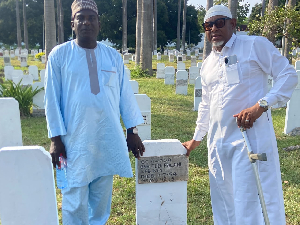 Alhaji Yakubu Musah Barry and Mohammed Amadu Malador Kamara at the cemetery