A Ghanaian gay man seeking asylum in Sweden over fears of persecution because of his sexuality has said he could be killed if he is forced to return to Ghana.
Samuel Asiamah, 33, who left Ghana in November 2024, has been held at a detention centre in Åstorp, about an hour north of Malmö, for the past six months while awaiting a decision on his asylum application.
According to a report by The Irish Times, Samuel Asiamah was detained after leaving an asylum camp, despite having valid asylum documents.
His lawyer has reportedly struggled to get an explanation from Swedish authorities about why he is still being held.
Samuel Asiamah has also refused to assist Swedish officials with arrangements for his return to Ghana, insisting that doing so would put his life at risk.
“There is a difference between co-operation and placing your life in jeopardy. If people in prison know you are homosexual, you will be brutalised and assaulted, and you could lose your life,” he said.
His situation has brought renewed attention to the challenges facing asylum seekers in Sweden, particularly as the country continues to tighten its immigration policies.
Asiamah told The Irish Times that his problems started at home after his mother began suspecting that he was gay.
He spent his early years living with his grandmother in a rural community before moving to Accra at 18 to stay with his mother.
According to him, his mother struggled to accept the possibility that he was homosexual and regularly took him to church services for prayers and blessings in the hope that his sexuality would change.
“She was upset, then furious and gradually started to neglect me, making comments about me being a shame to her and the family,” he recounted.
The tension at home eventually forced him to leave when he was 19.
He later received support from Solace, a local LGBTQ+ group, but his challenges continued after he entered a relationship with his first boyfriend.
He said people subjected him to insults and repeated physical attacks because of his sexuality. One of the assaults left him with a scar that he still carries.
His decision to leave Ghana came after he met a man known as “Brother Kofi”, who offered to help him relocate to Europe.
Chairman Wontumi's bail application thrown out
Asiamah reportedly took GH¢60,000 from his mother's savings to pay for the journey.
He was taken through Mauritius and France before arriving in Sweden in November 2024. However, the man who arranged the trip allegedly abandoned him after he arrived.
With nowhere to stay, Asiamah spent a week on the streets before a woman offered him accommodation. She later asked him to leave after discovering that he was gay.
He eventually received assistance from Swedish police after they found him outside on a snowy day.
Asiamah formally applied for asylum in Malmö in February 2026, hoping to secure protection from the discrimination and violence he says he experienced in Ghana.
However, his application has not been resolved.
The Irish Times reported that during a meeting with his case officer in May, Asiamah raised concerns about a Bill passed by Ghana's Parliament seeking to criminalise the promotion of LGBTQ+ activities.
He reportedly pointed to proposed prison terms of up to 10 years and a provision that would require friends and relatives to report people involved in same-sex relationships or LGBTQ+ activities.
However, his case officer reportedly considered the development irrelevant to his application, arguing that he had not personally experienced the proposed law.
Asiamah remains worried about what could happen if he is sent back to Ghana, particularly the possibility of imprisonment and physical abuse if other inmates discover his sexuality.
Swedish authorities have reportedly directed him to contact the Ghanaian Embassy to help arrange his return, but he has declined.
The Irish Times said neither the Swedish Migration Agency nor the country's Migration Ministry responded to questions about his continued detention.
Asiamah's case comes at a time when Sweden is taking a tougher approach to immigration and asylum applications.
The country was previously considered a major destination for people escaping persecution, but immigration has become a major political issue, leading to stricter policies.
According to The Irish Times, asylum applications in Sweden dropped by 96 per cent from their peak in 2015 to 6,737 in 2025.
The country's asylum approval rate was also about 23 per cent, less than half the average across the European Union.
Sweden has also increased financial support for migrants who agree to leave the country voluntarily.
The resettlement grant has been raised to 350,000 Swedish kronor, equivalent to about €31,371, for adults willing to return to their home countries.
The changes have attracted criticism from groups supporting asylum seekers and human rights advocates, who are concerned about the treatment of vulnerable migrants.
An organiser of a Malmö-based group providing support to asylum seekers, which has also assisted Asiamah, told The Irish Times that Sweden's attitude towards migrants seeking protection had changed considerably.
“It used to be seen as a victory in Sweden to protect people here from unsafe situations, but these people have been so dehumanised now that getting rid of them quickly is the new victory,” the organiser said.
The prolonged detention and uncertainty about his future have also affected Asiamah emotionally.
He told the newspaper that he shares a room with two other detainees and has to follow strict meal schedules, with limited time to go outside.
He also claimed that some of the people held at the facility were violent criminals.
However, he said the lack of information about his future was what troubled him most.
“Sometimes I feel very empty. I used to cry a lot,” he said, revealing that he had previously experienced suicidal thoughts.
His anxiety has also increased following discussions among European countries about setting up facilities known as “return hubs” outside the EU to accommodate people whose asylum applications have been rejected.
The Irish Times reported that Nigeria and Uganda were among the countries being considered to host such facilities.
Both countries impose the death penalty for certain offences involving same-sex activity, according to the newspaper.
Asiamah said the proposals worried him because they could expose people seeking protection to further danger.
“They are mixing up people who really need help from the authorities and safety, from bad people, religious extremists and Islamist gangs,” he said.
He remains particularly afraid of being deported to Ghana, where he believes his life would be in danger.
Asiamah told the newspaper that he sometimes thinks about his former boyfriend, who also left Ghana and has since settled in Canada.
“They let him stay,” he said.
Unlike his former partner, however, Asiamah is still waiting for a decision on his asylum application while remaining in Swedish detention.
“We Like the Design, Release It Now” – Ghanaians React to New Currency Notes
AK/AM
General News of Tuesday, 17 November 2026
Source: www.ghanaweb.com
‘I could be killed’ - Ghanaian gay held in Sweden says as asylum case faces delays
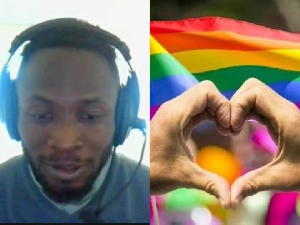 Asiamah fears deportation to Ghana, where he believes his life is at risk