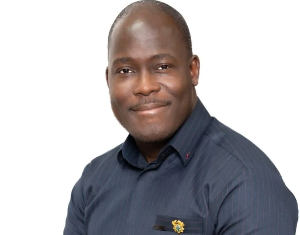
The Ranking Member of Parliament's Economic Committee, Kojo Oppong Nkrumah, has challenged Finance Minister Dr Cassiel Ato Baah Forson to account for approximately GH¢650 billion in public funds appropriated for various government programmes in the 2025 and 2026 fiscal years before introducing what he describes as a new economic framework.
The Ofoase-Ayirebi Member of Parliament expressed concern over what he considers the Finance Minister's failure to provide a comprehensive account of the resources previously approved by Parliament.
He argued that presenting a new economic agenda should not take precedence over accountability for existing budgetary commitments.
Speaking on the Ekosii Sen afternoon programme on Asempa FM, hosted by 2025 GJA Journalist of the Year Philip Osei Bonsu, Oppong Nkrumah said the Finance Minister had an obligation to report on the utilisation of funds and the implementation of programmes for which Parliament had already approved funding.
He invoked the principles of the Public Financial Management Act, 2016 (Act 921), particularly its provisions on accountability, fiscal transparency and the responsible management of public resources, insisting that the Finance Minister must account to Parliament and the Ghanaian people for commitments undertaken under previous budgets.
He argued that the Minister's failure to address these outstanding obligations in the budget presentation undermined the country's public financial management framework.
According to him, Parliament approved substantial financial allocations based on specific programmes and policy commitments presented by the Finance Minister, making it imperative for the government to provide an account of their implementation.
"What has become of the 800,000 jobs that were promised, for which about GH¢460 million was approved? Where is the 24-hour economy, which initially received an allocation of about GH¢110 million? The Women's Development Bank received GH¢50 million and GH¢400 million in the 2025 and 2026 budgets respectively. Tell us how many women have actually accessed loans from that bank," he queried.
Oppong Nkrumah also questioned the implementation status of the proposed US$500 million oil palm development initiative, which was expected to create employment opportunities for young people.
He further demanded an explanation for the GH¢690 million allocated to the Farmer Services Centres initiative, asking the Finance Minister to provide an update on the programme's implementation and measurable outcomes.
On the government's Agenda 111 hospital project, the Ranking Member questioned the status of the 10 facilities for which, according to him, GH¢100 million had been earmarked for completion.
He expressed concern that the Finance Minister was now announcing plans to complete 35 Agenda 111 facilities without first accounting for the previous allocation and providing an update on the 10 facilities originally targeted.
Oppong Nkrumah maintained that the government must demonstrate what had been achieved with the resources already committed before announcing additional targets and financial commitments.
"What I observe is that he went around engaging stakeholders, shifting the goalposts, and now he is touting the New Economy when he has not accounted for the money he has already taken," he stated.
Accountability is not optional
When the host, Philip Osei Bonsu, sought to establish whether the Finance Minister had succeeded in mobilising the revenue required to finance the expenditure commitments, Oppong Nkrumah argued that any revenue shortfall should have been openly disclosed to Parliament.
He explained that the Finance Minister had presented the programmes and their financing arrangements to Parliament, upon which the House considered and approved the associated appropriations.
According to him, even if the government had been unable to mobilise the projected revenue, the appropriate course of action was to return to Parliament and explain the circumstances rather than remain silent on the status of the commitments.
He stressed that accountability was an essential component of the social contract between the government and citizens, adding that the Finance Minister had a responsibility to demonstrate fidelity to the commitments made to Parliament and the Ghanaian public.
New Economy is a repackaged Ghana CARES programme – Oppong Nkrumah
Turning his attention to the Finance Minister's proposed New Economy agenda, the Ranking Member questioned its originality, arguing that several of its policy components appeared to have been drawn from the previous administration's Ghana CARES Obaatanpa programme.
He recalled that Ghana CARES was introduced under former Finance Minister Ken Ofori-Atta as an economic recovery and transformation programme in response to the economic challenges confronting the country.
Oppong Nkrumah also referenced elements of the previous administration's economic recovery initiatives and the 24-hour economy policy documents, arguing that aspects of these existing policy frameworks had been repackaged and presented under the New Economy agenda.
He cited similarities between the policy proposals contained in the respective documents and challenged the government to demonstrate what was genuinely new about its latest economic framework.
He maintained that introducing new policy labels and development frameworks without providing a comprehensive account of previous budgetary commitments risked shifting public attention away from the government's outstanding accountability obligations.
The Ranking Member insisted that before the government embarks on another economic policy agenda, it must first demonstrate what has been achieved with the resources Parliament has already authorised.
Business News of Saturday, 14 November 2026
Source: www.ghanaweb.com
Ato Forson must account for GH¢650 billion in approved funds – Oppong Nkrumah
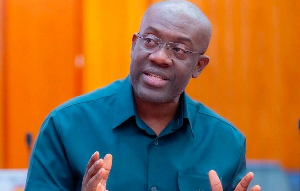 Ranking Member of Parliament's Economic Committee, Kojo Oppong Nkrumah