Ghana must increasingly finance its next phase of industrial transformation through domestic revenue mobilisation, savings and private enterprise rather than excessive reliance on borrowing, Commissioner-General of the Ghana Revenue Authority (GRA), Anthony Kwasi Sarpong, has said.
He argued that stronger domestic revenue mobilisation was not merely a fiscal exercise but a development imperative that would provide government with the financial capacity to invest in infrastructure, energy, transport and skills needed to support industrial expansion.
Speaking at the 15th Ghana Economic Forum in Accra, Sarpong said the country’s transition from macroeconomic stabilisation to industrial growth required a sustainable financing framework anchored in its own resources.
He noted that while improved macroeconomic stability had created better conditions for investment, stability alone could not build factories, expand production lines or create jobs.
"Every cedi mobilised efficiently and fairly reduces financing pressure, supports public investment and strengthens Ghana’s ability to set its own development priorities,” he said.
The Commissioner-General explained that excessive government borrowing from the domestic financial market could crowd out private businesses seeking financing for productive investments.
When government borrows heavily to finance expenditure, he said, manufacturers, agro-processors and small businesses compete with the state for limited funds, potentially facing higher borrowing costs and restricted access to credit.
A broader and more efficient tax system, therefore, would reduce government’s borrowing requirements and free up financial resources for businesses to invest in production, technology and expansion.
He described fiscal space as investment space, arguing that stronger revenue mobilisation would enable government to finance the public infrastructure on which industrial development depends without undermining private-sector access to domestic capital.
Sarpong said the GRA collected GH¢153 billion in 2024 and GH¢182 billion in 2025, with a target of GH¢237 billion for 2026, including ESLA collections.
As at October this year, the Authority had collected GH¢185.5 billion against a period target of GH¢184.4 billion.
It is targeting approximately GH¢310 billion in annual collections by December 2028, representing more than double its 2024 outturn.
Achieving this ambition, he said, would depend largely on broadening the tax base, improving compliance, deploying technology, strengthening data systems and reducing revenue leakages rather than continually increasing tax rates.
He highlighted the implementation of ITAS, the Sentinel system for real-time VAT collection on digital services and the use of Publican AI for customs classification and valuation as important interventions supporting the revenue drive.
The GRA is also advancing the pilot of fiscal electronic devices, with full implementation expected in 2027, alongside legislative reforms covering customs, excise and other tax laws.
Beyond revenue collection, Sarpong stressed that formalising more businesses would help create a fairer competitive environment and enable SMEs to access credit, attract equity investment and participate in larger commercial opportunities.
He also called for efficient customs administration to protect domestic manufacturers against smuggling, undervaluation and misclassification of imported goods.
The Commissioner-General said Ghana’s next industrial wave would require coordinated efforts from government, financial institutions and businesses, supported by reliable energy, modern infrastructure, affordable capital and a skilled workforce.
He maintained that domestic revenue mobilisation must ultimately be viewed as the foundation of sustainable industrial development, rather than a burden on economic growth.
“The goal is not simply to collect more from Ghana’s economy. It is to help Ghana’s economy produce more, invest more, employ more and prosper more,” he said.
Business News of Saturday, 14 November 2026
Source: businesspostonline.com
Ghana must fund industrial growth with taxes, not excessive borrowing – GRA boss
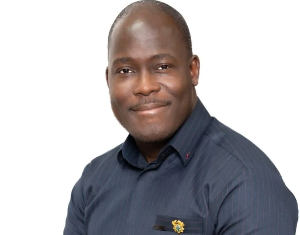
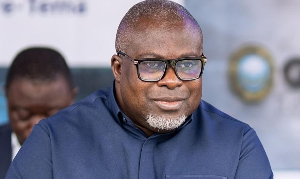 Anthony Kwasi Sarpong is the GRA Commissioner-General