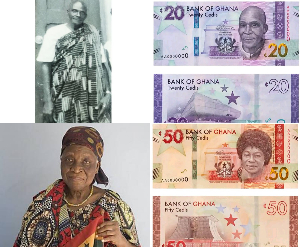
The Bank of Ghana (BoG) has unveiled the new Ghana Cedi Heritage Series, featuring eight prominent personalities whose contributions have shaped the country’s history, culture and development.
The redesigned banknotes, launched on Thursday, November 12, 2026, celebrate Ghana’s heritage through themes including education, commerce, religious freedom, justice, nationalism, peace and sovereignty.
Each denomination tells a different story about Ghana’s development and honours individuals who have made significant contributions to the country.
Here is a breakdown of the eight banknotes, the personalities featured on them and what they represent.
GH¢1 – Agnes Oforiwa Tagoe-Quarcoopome (Commerce)
The GH¢1 note features Agnes Oforiwa Tagoe-Quarcoopome, a pioneering textile trader whose business success inspired generations of Ghanaian women entrepreneurs.
She is recognised for her contribution to commerce and her confidence in formal banking at a time when many traders relied on traditional methods of saving.
The back of the note features Makola Market, one of Ghana’s historic trading centres, highlighting the contribution of market women to the economy.
GH¢2 – Cardinal Peter Porekuu Dery (Religious Freedom)
The GH¢2 note honours Cardinal Peter Porekuu Dery, a respected Catholic leader and educator who promoted religious tolerance, education and community development.
His inclusion highlights Ghana’s commitment to peaceful coexistence among people of different religious backgrounds.
The back of the note features the historic Larabanga Mosque, one of Ghana’s oldest Islamic places of worship.
GH¢5 – James Emman Kwegyir Aggrey (Education)
The GH¢5 note features James Emman Kwegyir Aggrey, a renowned Ghanaian educator who championed education, particularly for women.
Aggrey believed education was essential to the development of individuals and society. His work helped shape educational thinking across Africa.
The back of the note features Achimota School, which he helped establish, highlighting the importance of education in national development.
GH¢10 – Annie Jiagge (Justice and Equality)
The GH¢10 note honours Annie Jiagge, Ghana’s first female judge and a prominent advocate for women’s and human rights.
She is recognised for breaking barriers in the legal profession and promoting equality and fairness.
The back of the note features the Supreme Court of Ghana, representing justice, the rule of law and equality before the law.
GH¢20 – Dr Ephraim Amu (Arts and Entertainment)
The GH¢20 note features Dr Ephraim Amu, a celebrated Ghanaian composer, musicologist and educator.
He played an important role in preserving Ghanaian music and promoting the country’s cultural identity through his compositions, including the patriotic song “Yɛn Ara Asaase Ni”.
The back of the note features the National Theatre, representing Ghana’s creative arts and entertainment industry.
GH¢50 – Theodosia Salome Okoh (Nationalism)
The GH¢50 note honours Theodosia Salome Okoh, the woman who designed Ghana’s national flag.
She also contributed to sports development, particularly hockey, leaving a lasting mark on the country’s history.
Her inclusion celebrates national pride, unity and patriotism.
The back of the note features Jubilee House, the seat of Ghana’s Presidency and a symbol of democratic governance.
GH¢100 – Kofi Annan (Peace)
The GH¢100 note features Kofi Annan, former Secretary-General of the United Nations and Nobel Peace Prize laureate.
He is recognised for his efforts to promote peace and resolve conflicts around the world.
The back of the note features the Kofi Annan International Peacekeeping Training Centre, highlighting Ghana’s contribution to global peace and security.
GH¢200 – Dr Kwame Nkrumah (Sovereignty)
The GH¢200 note honours Dr Kwame Nkrumah, Ghana’s first Prime Minister and President, who led the country to independence in 1957.
He is recognised for his leadership in Ghana’s independence struggle, his contribution to national development and his promotion of African unity.
The back of the note features the Kwame Nkrumah Mausoleum, a national monument that honours his legacy and Ghana’s independence journey.
What makes the new banknotes different?
Beyond the new personalities and designs, the Heritage Series comes with improved security features aimed at making counterfeiting more difficult.
These include colour-changing numbers, security threads, cocoa pod watermarks and raised prints to help visually impaired persons identify the different denominations.
DR/MA
Who Is Responsible for Stray-Bullet Injuries and Deaths?
General News of Thursday, 12 November 2026
Source: www.ghanaweb.com
Cardinal Dery, Kofi Annan, Kwame Nkrumah: Meet the personalities on Ghana's new cedi notes
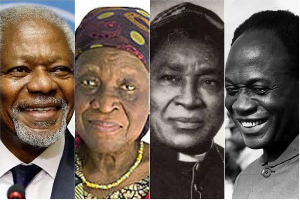 Some of the personalities on new Ghana Cedi Heritage Series notes