The government has announced an ambitious US$10 billion New Economy programme, a four-year investment framework designed to move Ghana beyond economic recovery towards sustained growth, job creation and improved living standards.
The programme, which will run from 2027 to 2030, is expected to set a new direction for Ghana's economic development, with an emphasis on expanding domestic production, creating employment opportunities and increasing the country's capacity to process its raw materials locally.
2027 Budget: Mahama's US$10 billion 'New Economy' plan explained in 6 points
Finance Minister Dr Cassiel Ato Forson is expected to provide details of the programme when he presents the 2027 Budget Statement to Parliament on Thursday, November 12, 2026.
What is the New Economy programme?
The New Economy programme is intended to strengthen Ghana's productive capacity, expand local industries and reduce the country's reliance on exporting raw materials without processing them.
Under the programme, the government intends to increase domestic production, encourage more local processing of raw materials and support Ghanaian businesses to expand their operations and reach wider markets.
The programme is organised around seven priority pillars:
1. Macroeconomic stability
2. Commercial agriculture and agro-processing
3. Energy sector reform
4. Critical minerals and value addition
5. Cotton and textiles
6. Tourism and the creative economy
7. Pharmaceuticals manufacturing
The 2027 Budget is expected to provide further details on the government's priorities under the New Economy programme.
Among the issues Ghanaians will be looking out for are the investments planned for 2027, the sectors expected to receive attention and the measures intended to translate economic growth into employment and improved incomes.
The budget is also expected to explain how the government intends to finance the programme while maintaining the economic gains achieved during the recovery period.
Ghana's 'New Economy' Policy: What it is about and when it will be introduced
Another issue of interest will be how the New Economy programme will align with the government's 24-Hour Economy initiative, particularly in areas where both programmes seek to expand production, create jobs and improve economic activity.
How could it affect Ghanaians?
The programme is expected to create jobs, improve opportunities for farmers, support local industries and boost tourism and the creative economy. Its impact will depend on how effectively the government implements the planned investments.
With the programme scheduled to run until 2030, its implementation will form an important part of the government's economic agenda over the next four years.
JKB/BAI
Who Is Responsible for Stray-Bullet Injuries and Deaths?
General News of Thursday, 12 November 2026
Source: www.ghanaweb.com
2027 Budget: Inside Ghana's ambitious $10bn New Economy programme
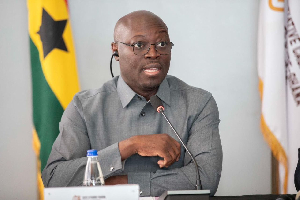 Dr Cassiel Ato Forson is the Minister of Finance