Ghana has experienced several political and public-sector scandals since the era of former President Jerry John Rawlings, with successive administrations facing allegations of corruption, financial mismanagement, procurement irregularities and abuse of office.
From controversial judgement debt payments and alleged corruption in public procurement to the controversial sale of government contracts and the expenditure of public funds, these incidents have repeatedly raised questions about accountability and transparency in public service.
While some cases resulted in prosecutions, others generated parliamentary investigations, public inquiries and political controversies, with several remaining unresolved.
Here are some of the major scandals and controversies that have shaped Ghana's political and governance landscape from the Rawlings era to 2026.
1. Mabey & Johnson bribery scandal in 2009
One of the major corruption controversies linked to the Rawlings era involved British construction company Mabey & Johnson, which admitted in a UK court in 2009 that it had paid bribes to Ghanaian public officials to secure government contracts.
Several former government officials were named in the proceedings, including former ministers and other senior public figures. Among those mentioned were Kwame Peprah, Ato Quarshie and Sipa Yankey.
linNotable corruption scandals that hit the Akufo-Addo governmentk text
According to a report by myjoyonline.com, the case raised questions about corruption in the award of public contracts during the PNDC administration and the early years of the Fourth Republic.
2. Ghana@50 celebrations scandal in 2007
Ghana's 50th anniversary of independence in 2007 was expected to be a major national celebration. However, the event became embroiled in controversy over expenditure, procurement and the management of funds allocated for the celebrations.
Questions were raised about the cost of projects, contracts awarded and the use of public resources during the anniversary celebrations.
The controversy attracted criticism from sections of the public and political opposition, who demanded greater transparency over the expenditure.
3. Woyome judgement debt scandal in 2012
The Alfred Agbesi Woyome judgement debt scandal remains one of Ghana's most prominent corruption controversies.
Woyome received approximately GH¢51 million in judgement debt payments after claiming compensation over a financial engineering arrangement connected to preparations for the 2008 Africa Cup of Nations.
The payments sparked public outrage and questions about how the government approved the compensation despite concerns about the contractual arrangements.
The scandal also led to a major political confrontation, with then Attorney-General Martin Amidu pursuing the matter and subsequently losing his position in January 2012.
According to a report by citinewsroom.com, the Supreme Court later ordered Woyome to refund the money, although recovering the full amount became a prolonged legal and political issue.
4. GYEEDA scandal in 2013
The Ghana Youth Employment and Entrepreneurial Development Agency (GYEEDA) scandal exposed alleged financial irregularities in a government programme established to create employment opportunities for young people.
Investigations raised concerns about questionable contracts, payments to service providers and the management of public funds.
A committee chaired by Professor William Ato Essuman examined the operations of the programme and identified several irregularities.
The controversy generated public debate about whether a programme designed to tackle youth unemployment had instead become a channel for financial mismanagement.
5. SADA scandal in 2014
The Savannah Accelerated Development Authority (SADA) scandal became another major controversy involving the management of public funds.
SADA was established to promote development in northern Ghana through interventions in agriculture, infrastructure and other economic activities.
However, questions emerged over the implementation of some projects, including a controversial tree-planting initiative and the expenditure of millions of cedis.
The controversy prompted investigations and renewed calls for accountability in the management of development funds intended for deprived communities.
6. Brazil 2014 World Cup cash scandal in 2014
Ghana's participation in the 2014 FIFA World Cup in Brazil was overshadowed by a financial controversy involving the transportation of approximately US$3 million in cash to the tournament.
The money was flown to Brazil to settle outstanding appearance fees and bonuses owed to Black Stars players.
The decision attracted widespread criticism, with many Ghanaians questioning why the government could not use conventional banking channels to transfer the funds.
The incident became a symbol of the financial and administrative challenges surrounding Ghana's World Cup campaign.
7. Airbus bribery scandal in 2020
The Airbus bribery scandal concerned the procurement of military transport aircraft by Ghana from European aircraft manufacturer Airbus.
Investigations in the United Kingdom and the United States established that Airbus had engaged in bribery involving intermediaries in several countries, including Ghana, in connection with aircraft sales.
The case generated controversy in Ghana because of allegations involving intermediaries connected to former President John Dramani Mahama.
However, Ghana's Office of the Special Prosecutor (OSP), after its independent investigation, reported in August 2024 that it found no evidence that Mahama was involved in or facilitated the intermediary relationship.
The case remains one of the most politically debated corruption investigations involving a former Ghanaian president.
8. PPA Contracts for Sale scandal in 2019
An investigative documentary by journalist Manasseh Azure Awuni in August 2019 exposed alleged irregularities involving the then Chief Executive Officer of the Public Procurement Authority (PPA), Adjenim Boateng Adjei.
The documentary, titled Contracts for Sale, alleged that a company linked to the PPA boss secured government contracts and subsequently sold them to other companies for execution.
The revelations prompted President Akufo-Addo to suspend Adjei and refer the matter to the relevant investigative bodies.
The Commission on Human Rights and Administrative Justice (CHRAJ) later found that Adjei had placed himself in a conflict-of-interest situation.
The case became one of the most significant procurement-related controversies of the Akufo-Addo administration.
9. PDS power concession scandal in 2019
The controversial concession agreement between the government of Ghana and Power Distribution Services (PDS) Limited became a major national issue in 2019.
PDS had been selected to take over the operations of the Electricity Company of Ghana (ECG) under the government's Power Compact programme.
However, the agreement was suspended after concerns emerged about the validity of the payment security guarantee provided by the company.
The government subsequently terminated the concession agreement, citing fundamental and material breaches.
The controversy raised questions about due diligence, procurement procedures and the government's handling of the power sector reform programme.
10. Agyapa Royalties scandal in 2020
The Agyapa Royalties deal attracted intense public criticism following the government's proposal to monetise a portion of Ghana's future gold royalties through a special-purpose company.
Under the arrangement, Agyapa Royalties Limited was expected to list 49 per cent of its shares on the London Stock Exchange, while the government retained a 51 per cent stake.
Critics questioned the transparency of the arrangement, the valuation of the country's mineral royalties and the offshore registration of the company in Jersey.
The Office of the Special Prosecutor conducted a corruption risk assessment and identified several potential corruption risks and breaches in the structuring of the deal.
Following the controversy, the government suspended the proposed listing.
11. Sputnik V vaccine procurement scandal in 2021
Ghana's attempt to procure Russia's Sputnik V COVID-19 vaccines through private intermediaries generated controversy over the prices and procurement arrangements.
The government had entered into an arrangement involving a private company to procure the vaccines at a reported price of US$19 per dose, significantly higher than the reported price at which Russia supplied the vaccines.
The agreement attracted parliamentary scrutiny, with questions raised about the role of intermediaries, the procurement process and the potential financial implications for the country.
The controversy eventually contributed to the cancellation of the vaccine supply agreement.
12. Charles Adu Boahen and the 'cash for seats' controversy in 2022
Former Minister of State at the Finance Ministry, Charles Adu Boahen, became embroiled in controversy following revelations from an investigative documentary by Anas Aremeyaw Anas and the Tiger Eye PI team.
In the documentary, Adu Boahen was captured allegedly suggesting that individuals seeking access to the Vice-President could make financial contributions.
The revelations triggered public outrage and calls for his removal from office.
President Akufo-Addo subsequently terminated his appointment, while the Office of the Special Prosecutor investigated the matter.
The case reignited discussions about influence-peddling, access to political officeholders and ethical standards in public service.
13. Cecilia Dapaah's alleged stolen cash scandal in 2023
The former Minister of Sanitation and Water Resources, Cecilia Abena Dapaah, became the centre of a major national controversy after reports emerged that two domestic workers had allegedly stolen large sums of money and valuable items from her residence.
Court proceedings involving the domestic workers brought to public attention claims that US$1 million, €300,000 and millions of cedis had allegedly been stolen from the residence.
The reported amounts generated widespread public debate, particularly over how a public official could keep such substantial sums of money at home.
The Office of the Special Prosecutor subsequently arrested and questioned Dapaah over suspected corruption and corruption-related offences.
She resigned from her ministerial position in July 2023. The case also sparked wider conversations about asset declaration, public officials' wealth and accountability.
14. Strategic Mobilisation Ghana Limited (SML) scandal in 2023
The SML controversy emerged following investigations into contracts awarded to Strategic Mobilisation Ghana Limited by the Ghana Revenue Authority (GRA).
The company had been engaged to provide revenue assurance services, including monitoring activities in the petroleum and other revenue-generating sectors.
However, concerns were raised about the procurement process, the justification for the contracts and the significant financial commitments involved.
The controversy intensified after the Fourth Estate published an investigative report questioning the value and effectiveness of the services provided.
The Office of the Special Prosecutor subsequently investigated the arrangements and, in October 2025, announced findings of procurement breaches and alleged collusion between private individuals and state actors.
President John Dramani Mahama ordered the cancellation of the contracts, while the OSP later filed corruption-related charges against several individuals and the company.
The case has become one of the major public procurement controversies spanning two administrations.
15. National Service Authority ghost names scandal in 2024
The National Service Authority (NSA) payroll scandal exposed alleged massive irregularities in the payment system for national service personnel.
Investigations revealed that tens of thousands of purported ghost names had allegedly been inserted into the authority's digital system, resulting in payments being made for individuals who were not legitimately serving.
The scandal raised serious questions about the authority's payroll management, supervision and internal controls.
It also sparked public concern over the possible diversion of funds meant for young graduates undertaking their mandatory national service.
The case became a major test of the new administration's commitment to investigating alleged financial misconduct in public institutions.
16. Kwabena Adu-Boahene and National Signals Bureau scandal in 2025
Former Director-General of the National Signals Bureau (NSB), Kwabena Adu-Boahene, became the subject of a major corruption investigation involving funds intended for the procurement of cyber defence software.
The Attorney-General alleged that funds earmarked for the purchase of the software were diverted into private accounts and accounts associated with a company allegedly linked to Adu-Boahene and his wife.
In March 2025, Adu-Boahene, his wife and other accused persons were charged with several offences, including stealing, money laundering, conspiracy and causing financial loss to the state. The accused persons pleaded not guilty.
The case continued through the courts into 2026, with legal proceedings raising further questions about the handling of classified security-related procurement and public funds.
17. Mustapha Abdul-Hamid and alleged GH¢291 million NPA extortion scandal in 2025
Former Chief Executive Officer of the National Petroleum Authority (NPA), Mustapha Abdul-Hamid, became embroiled in a major corruption case involving alleged extortion and money laundering.
According to the Office of the Special Prosecutor, the alleged scheme involved unlawfully collecting and diverting about GH¢291.6 million from petroleum transporters and oil marketing companies between 2022 and 2024.
The OSP accused Abdul-Hamid and other officials of involvement in the alleged scheme, which investigators said also involved using corporate entities to launder proceeds.
The accused persons were charged, and the case entered the prosecution stage.
The allegations have raised questions about oversight within the petroleum sector and the accountability of officials entrusted with regulating the industry.
NA/BAI
Who Is Responsible for Stray-Bullet Injuries and Deaths?
General News of Tuesday, 10 November 2026
Source: www.ghanaweb.com
From Woyome to SML: 17 major scandals that have rocked Ghana since the Rawlings era
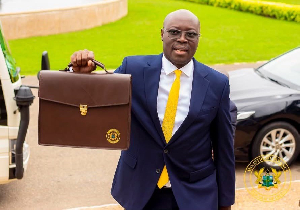
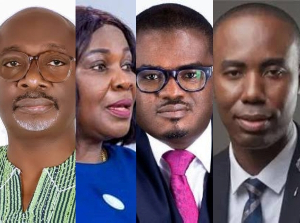 L-R Alfred Agbesi Woyome,Cecilia Dapaah,Charles Adu Boahen and kwabena adu-boahene