Ghanaian firms absorbed rising fuel costs in October without being able to pass them on, as new orders stalled and pushed a key gauge of business health fractionally below the 50.0 mark.
The S&P Global Ghana Purchasing Managers’ Index (PMI) fell to 49.8 in October from 51.3 in September. That ended two straight months of improvement and signaled a marginal deterioration in business conditions.
The main drag was demand. New orders were unchanged in October after two months of growth. Some firms reported that marketing and customer recommendations helped them win new work, but others said their clients’ purchasing power had weakened.
Costs, meanwhile, accelerated. Purchase prices rose for a seventh successive month, markedly and at a faster pace than in September, as higher fuel costs fed through to businesses. Some firms also said unstable exchange rates had contributed to inflationary pressures, and staff cost inflation picked up to a solid rate.
Firms had limited room to pass those costs on. Output prices rose for the seventh month running, but only slightly, as some companies offered discounts to secure new orders in a competitive market.
That squeeze, with costs rising faster than selling prices, is the clearest warning in the survey. It points to thinning margins just as demand flattens.
“Increased fuel prices had a sizeable impact on purchase costs, driving up inflationary pressures,” said Andrew Harker, Economics Director at S&P Global Market Intelligence. “Relatively muted demand conditions, however, meant that companies only raised their own selling prices slightly.”
The survey is not a picture of retreat, however. Business activity rose for the third consecutive month, although only modestly and more softly than in September, with growth centered on manufacturing and construction. Firms used the lull in new orders to clear backlogs, which fell for a seventh successive month.
Companies also kept investing in capacity. Employment rose for the 21st month in a row, although at the weakest pace since February, and purchasing activity increased marginally for a third month. Stocks of inputs fell for the first time in three months as firms drew on existing materials to support output.
Confidence is the strongest signal of all. Sentiment improved to a nine-month high in October, supported by hopes of renewed demand driven by marketing activity, and by expectations of stable exchange rates and prices.
“While the recent spell of new order growth came to an end in October, this will hopefully just be a temporary blip,” Mr Harker said. “Indeed, companies were confident enough in the future to continue expanding their business activity, employment and input buying despite the stabilisation of new work.”
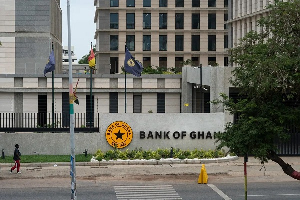
Mr Harker added that the PMI price data “remained at a level which suggests that the Bank of Ghana will leave interest rates unchanged at their upcoming monetary policy meeting.”
Ghana’s experience contrasts with Kenya’s. There, the Stanbic Bank Kenya PMI rose to 52.5 in October, its strongest reading of 2026, even though Kenyan firms faced input cost inflation at a near three-year high from the same fuel and transport pressures.
The October data were collected between October 12 and 28, before the International Monetary Fund (IMF) announced a staff-level agreement on the first review of Ghana’s Policy Coordination Instrument
(PCI). In that announcement, IMF mission chief Dr Ruben Atoyansaid macroeconomic stability was “becoming entrenched”.
For businesses, that stability has yet to show up in new orders. The 2027 Budget on November 12 is now the next test of whether demand recovers before the year ends.
Business News of Monday, 9 November 2026
Source: economytimesnews.com
Ghanaian businesses struggle as fuel costs rise
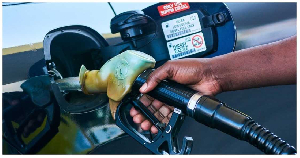 File photo of a fuel pump







Opinions