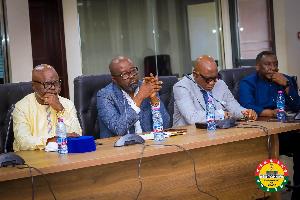
The Governor of the Bank of Ghana (BoG), Dr Johnson Pandit Asiama, has disclosed that the Monetary Policy Committee (MPC) decided to maintain the policy rate at 14.0 per cent in May 2026 in response to rising global oil prices.
He noted that earlier in the year, the committee had reduced the policy rate as inflation continued to decline and economic conditions improved.
However, in May 2026, rising oil prices triggered by the conflict in the Middle East prompted the committee to maintain the rate to guard against inflationary pressures and protect the credibility of its monetary policy.
BoG Governor pushes for cheaper, faster money transfers from abroad
“At its January meeting, the Committee reduced the Monetary Policy Rate by 250 basis points, from 18.0 per cent to 15.5 per cent. In March, it reduced the rate by a further 150 basis points to 14.0 per cent. These decisions reflected the sustained decline in inflation, improving macroeconomic fundamentals and the assessment that real interest rates remained high. However, in May, the Committee decided to hold the policy rate at 14.0 per cent. This was a deliberate and forward-looking decision in response to emerging inflationary risks.
“The escalation of the conflict in the Middle East had pushed up global crude oil prices, utility tariffs had been adjusted, and inflation had begun to edge up from its March low of 3.2 per cent. The Committee considered it prudent to pause the easing cycle, preserve the credibility built through the disinflation process and allow the effects of earlier policy reductions to work through the economy,” he wrote in a statement to Parliament's Committee on Economy and Development on November 6, 2026.
Dr Asiama explained that the decision was necessary because the policy rate is determined through a data-dependent approach that allows the committee to respond to prevailing economic conditions.
“The policy rate is an important anchor for inflation expectations, and the management of expectations is as important as the rate itself in shaping inflation outcomes. The Committee subsequently maintained the policy rate at 14.0 per cent at its July and September meetings. These decisions, taken unanimously, underscore our commitment to a data-dependent approach in which policy responds to the evolving outlook rather than follows a predetermined path,” he added.
SB/EB
Ghana’s Military Displays Combat Strength in Major Firepower Exercise
Business News of Saturday, 7 November 2026
Source: www.ghanaweb.com
Dr Asiama details how BoG responded to inflation risks amid rising global oil prices
 Dr Johnson Pandit Asiama is the BoG Governor