The International Monetary Fund (IMF) is set to conclude its first review of Ghana’s economic performance under the Policy Coordination Instrument (PCI) this week, following engagements with key stakeholders on the country’s fiscal position, monetary policy and ongoing economic reforms.
The review is assessing Ghana’s progress against agreed economic targets, particularly for the period ending September, as well as the policies needed to sustain recent improvements in the economy.
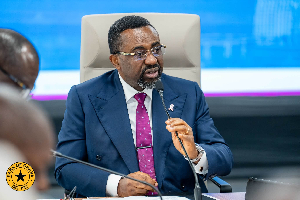
The IMF mission, led by Dr Ruben Atoyan, has held discussions on several areas of the economy, including revenue mobilisation, expenditure management, the banking sector, energy and Ghana’s debt position.
Sources close to the meetings say the team is also expected to hold further discussions with Finance Minister Dr Cassiel Ato Forson and Bank of Ghana Governor Dr Johnson Asiama before wrapping up its engagement.
Here is what we know so far about the review:
1. Ghana’s fiscal performance under assessment
Fiscal performance has been a major part of the discussions, with the IMF team examining the country’s economic results during the first nine months of the year.
The mission has reviewed progress towards agreed fiscal targets, domestic revenue mobilisation and policies to maintain recent economic gains.
Discussions have also touched on expenditure management for the remainder of 2026 and the government’s spending plans for 2027.
The upcoming 2027 Budget is expected to prioritise infrastructure investment, making the government’s expenditure plans and commitment to fiscal discipline important issues in the review.
2. Inflation and foreign exchange arrangements
The mission has also examined Ghana’s monetary policy framework, including its inflation-targeting approach and foreign exchange arrangements.
Sources close to the meetings say the team has assessed the Bank of Ghana’s financial position, the country’s international reserves and measures aimed at protecting the central bank’s independence.
These issues form part of the broader assessment of Ghana’s macroeconomic stability and the policies needed to sustain it.
3. Banking and energy sectors feature in discussions
Beyond fiscal and monetary policy, the IMF team has held discussions on developments in the banking and energy sectors.
Ghana’s debt position and ongoing reforms at selected state-owned banks have also featured in the engagements.
The mission’s visit to the Tema Oil Refinery also form part of its wider assessment of developments and challenges within the economy.
4. Engagements with civil society and Parliament
As part of the review, the IMF team has engaged civil society organisations to gather perspectives on Ghana’s economic policies and reform programme.
The team is also expected to meet members of Parliament, including the Finance Committee.
Further discussions are expected with Finance Minister Dr Cassiel Ato Forson and Bank of Ghana Governor Dr Johnson Asiama before the mission concludes its work.
5. What is the Policy Coordination Instrument?
The Policy Coordination Instrument is an IMF framework that allows countries to maintain close policy engagement with the Fund without receiving direct financial assistance under the arrangement.
It is designed to support the development and implementation of economic reforms, strengthen macroeconomic stability and help countries address economic imbalances.
Although the PCI does not provide loans, participating countries are expected to implement policies that meet standards comparable to those under IMF-supported lending arrangements.
The IMF assesses progress through scheduled reviews, typically conducted every six months.
Unlike a Staff-Monitored Programme, which is an informal arrangement between IMF staff and a member country, the PCI requires approval by the IMF Executive Board.
6. What the review means for Ghana
The first PCI review provides an opportunity for Ghana to demonstrate progress on its economic policy commitments and reinforce confidence among investors and development partners.
The outcome will also offer an indication of the IMF’s assessment of the country’s fiscal and monetary performance, as well as the reforms required to sustain economic stability.
MA
Business News of Monday, 2 November 2026
Source: www.ghanaweb.com
What we know so far about IMF's first PCI review of Ghana
 The IMF mission is led by Dr Ruben Atoyan [in handshake with Dr Ato Forson]