Long before Ghana's independence struggle reached its defining moment, a wealthy businessman from the western coast was quietly putting his fortune behind the dream of self-government.
His name was George Alfred Grant, popularly known as Paa Grant, a man whose financial commitment and political vision helped lay the foundations of the movement that eventually ended British colonial rule.
On October 30, 1956, Paa Grant died in Axim at the age of 78. His death came barely five months before Ghana attained independence on March 6, 1957, leaving behind a remarkable story of sacrifice, political ambition and an enduring contribution to the country's liberation.
Perhaps one of the most poignant moments of his final days was a visit by Dr Kwame Nkrumah, who travelled to Axim on October 28, 1956, to see the ailing nationalist. It was reportedly their last meeting, bringing together two men whose political paths had once converged in the struggle for the Gold Coast's freedom.
The significance of that encounter becomes clearer when one considers the role Paa Grant played in bringing Nkrumah back to the Gold Coast and supporting the political organisation that gave the independence movement an early national platform.
The businessman who financed Ghana's independence struggle
Born on August 15, 1878, Paa Grant built his reputation first as an entrepreneur before becoming one of the most influential figures in the Gold Coast's nationalist movement.
His journey into business began modestly. After completing his education at Methodist mission schools in Cape Coast in 1894, he moved into the timber trade. He initially worked for C.W. Alexander and Company, a timber and general merchandise firm, before venturing into business independently.
His early commercial success transformed him into one of the Gold Coast's wealthiest African merchants. He expanded his timber operations, acquired shipping interests and established business offices in Europe, including London, Liverpool and Hamburg. His commercial activities also extended across several parts of the Gold Coast.
However, Paa Grant's ambitions went beyond building a business empire. By the late 1920s, he had become increasingly concerned about the political and economic conditions under British colonial administration.
In 1926, he entered the Gold Coast Legislative Council as a nominated member representing Sekondi. He also belonged to the Aborigines' Rights Protection Society, an organisation that advocated for the interests of Africans under colonial rule.
His most consequential political intervention came in 1947 when he brought together prominent nationalists, including Dr J.B. Danquah, R.A. Awoonor-Williams and R.S. Blay, to discuss establishing a political organisation capable of demanding self-government.
Those discussions eventually led to the formation of the United Gold Coast Convention (UGCC) on August 4, 1947, at Saltpond, with Paa Grant becoming its first president.
The convention adopted a clear political objective: to ensure that control of government would pass into the hands of the people and their chiefs through legitimate and constitutional means.
Its formation marked an important turning point in the organised struggle against British colonial rule.
The £100 that helped change Ghana's history text
One of Paa Grant's most significant contributions was his financial support for Kwame Nkrumah's return to the Gold Coast in 1947.
Following a recommendation by Ebenezer Ako-Adjei, the UGCC leadership agreed to invite Nkrumah, who was then in England, to become the organisation's general secretary.
Paa Grant reportedly paid £100 for Nkrumah's passage back to the Gold Coast, enabling him to take up the position and organise the convention's political activities.
That financial commitment would have consequences far beyond the organisation's immediate ambitions.
Nkrumah's arrival brought a new dimension to the nationalist movement, particularly through his emphasis on mass political mobilisation. His relationship with the UGCC leadership, however, eventually deteriorated over differences in political strategy and the pace of the independence campaign.
In 1949, Nkrumah broke away from the convention and established the Convention People's Party (CPP), which subsequently became the principal vehicle for his campaign for independence.
Although Paa Grant was saddened by the division and reportedly made efforts to reconcile the two sides, he remained with the UGCC.
Despite their political differences, his relationship with Nkrumah did not completely end.
Nkrumah's final visit to Axim
By 1955, Paa Grant's health had deteriorated, limiting his involvement in public and political activities.
In October 1956, with Nkrumah serving as Prime Minister of the Gold Coast, he travelled to Axim to visit the ailing nationalist. According to a Daily Graphic account based on the biography written by Dr Ako Adjei, the visit in the middle of October was the last meeting between the two men.
On October 30, 1956, Paa Grant died in Axim at the age of 78.
His death came at a defining moment in the Gold Coast's political history. The independence movement he had helped organise was approaching its ultimate objective, although he would not live to witness its achievement.
On March 6, 1957, less than five months after his death, Ghana became an independent nation under Nkrumah's leadership.
Paa Grant's story remains a reminder that the struggle for independence was not built by political speeches and demonstrations alone. It also depended on businessmen, financiers and individuals who committed their resources to a cause larger than themselves.
While Nkrumah became the face of Ghana's independence, Paa Grant's contribution was rooted in the financial and organisational groundwork that helped bring the nationalist movement to life.
His legacy is therefore not simply that of a wealthy businessman who entered politics. It is that of a man who used his wealth, influence and political connections to help set Ghana on the path to independence.
On this day, October 30, Ghana remembers George Alfred Paa Grant, the man whose money helped bring Nkrumah home and whose political vision helped set the independence struggle in motion.
EA
General News of Friday, 30 October 2026
Source: www.ghanaweb.com
Today in History: How Paa Grant’s £100 helped change Ghana's history
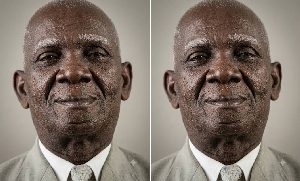 George Alfred Paa Grant aka Paa Grant