The cost of living in Accra varies with a person's lifestyle, accommodation, transportation, and income, with monthly expenses ranging from about GH¢4,000 for modest living to more than GH¢35,000 for an expensive lifestyle.
Housing remains one of the biggest expenses for residents, with rent, food, utilities and transportation adding to the financial pressure, particularly for people earning local salaries.
Living in East Legon, Cantonments, Trassaco: See how much you need each month
Cost-of-living estimates shared by OwnKey suggest that a person living modestly in Accra may need between GH¢4,000 and GH¢8,000 monthly to cover basic expenses, including local food, shared transportation, and modest accommodation outside prime neighbourhoods.
For those seeking a more comfortable lifestyle, the estimated monthly budget rises to between GH¢10,000 and GH¢18,000. This covers expenses such as a one- or two-bedroom apartment, a mix of local and imported groceries, and occasional dining out.
People who prefer furnished apartments in high-demand areas and an international standard of living may spend between GH¢18,000 and GH¢35,000 or more monthly.
Rent takes a big chunk of income
Accommodation is a major factor determining how much residents spend in the capital.
A basic one-bedroom apartment outside central Accra may cost between GH¢2,200 and GH¢3,250 monthly, while properties in areas such as Airport Residential, Cantonments, Labone and East Legon can attract significantly higher rents.
Some properties in these prime locations cost between GH¢6,000 and GH¢30,000 or more monthly.
Another challenge for tenants is the demand for advance rent payments, with landlords commonly requesting one or two years' rent upfront.
Food and utilities add to expenses
Food costs also depend on where residents shop and eat. Local markets such as Makola and Madina offer relatively affordable options, while a basic street meal of rice, stew and meat may cost between GH¢25 and GH¢40.
However, meals at mid-range restaurants can cost GH¢150 to GH¢300 or more per person.
Utilities, including electricity, water and waste collection, may cost between GH¢1,500 and GH¢3,000 or more monthly, depending on consumption and the use of air conditioners.
Internet services can add another GH¢400 to GH¢800 to monthly expenses.
Transportation costs vary depending on whether residents use tro-tros, ride-hailing services such as Uber and Yango, or private vehicles.
Accra's cost versus local salaries
The rising cost of living presents a challenge for workers whose earnings are relatively low.
With estimated formal-sector gross monthly salaries ranging from GH¢3,800 to GH¢5,000, some workers may find it difficult to cover rent, food, transportation and other essential expenses from their earnings alone.
For families with children attending international schools, monthly household expenses can rise to between GH¢40,000 and GH¢70,000 or more.
The figures highlight how the cost of living in Accra depends largely on individual circumstances, with housing choices and lifestyle playing a major role in determining how much residents need to earn to live comfortably.
NA/VPO
General News of Monday, 26 October 2026
Source: www.ghanaweb.com
Cost of Living: How much do you really need to survive in Accra?
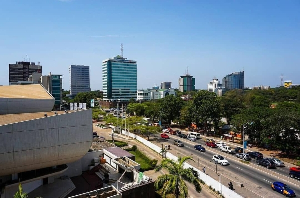 Photo of some buildings in Accra