The government is preparing to introduce a new economic policy aimed at creating jobs, supporting local businesses and boosting domestic production to reduce Ghana’s dependence on imported goods.
Known as the New Economy Policy, the initiative is expected to focus on strengthening local industries, creating opportunities for businesses to expand and ensuring that economic growth translates into improved living conditions for Ghanaians.
The policy is expected to be outlined in November 2026, when Finance Minister Dr Cassiel Ato Forson presents the 2027 Budget to Parliament. The budget is expected to provide details on how the programme will be implemented, the sectors that will benefit and how the government intends to finance the planned investments.
Ghana must move beyond stability to lasting growth – Ato Forson
What is the New Economy Policy?
The New Economy Policy is a government initiative designed to transform Ghana's economy by increasing local production, supporting businesses and creating employment opportunities.
President John Dramani Mahama has announced plans to invest US$10 billion in nine key sectors of the economy over five years. This translates into an intended investment of approximately US$2 billion annually.
According to the President, the programme will be funded with domestic resources rather than through additional borrowing. The proposed investment is intended to strengthen local industries, increase production and create more opportunities for Ghanaians to earn a living.
Finance Minister Dr Cassiel Ato Forson has also emphasised the need to ensure that improvements in the economy translate into tangible benefits for households and businesses.
The policy is therefore expected to complement efforts to stabilise the economy by focusing on job creation, higher incomes and stronger domestic businesses.
Which sectors are expected to benefit?
The government has identified nine key sectors for investment, with agriculture, textiles and garments, pharmaceuticals and tourism among the areas highlighted.
The broader objective is to strengthen productive sectors of the economy, encourage investment and reduce reliance on imported goods.
1. Agriculture and food production
Agriculture is expected to be a major focus of the policy.
The government intends to support farmers, improve irrigation and encourage investment in food processing. These measures could help increase agricultural output, reduce post-harvest losses and create employment opportunities along the agricultural value chain.
Expanding local food production could also reduce the need to import certain food products and strengthen food security.
2. Textiles and garment manufacturing
The textiles and garment industry is another sector expected to benefit.
The government wants to encourage local production of clothing and other textile products, potentially creating opportunities for manufacturers, garment producers and businesses involved in the supply chain.
Expanding domestic manufacturing could create jobs while helping Ghanaian businesses compete with imported products.
3. Pharmaceuticals
The pharmaceutical industry is also expected to receive attention as the government seeks to strengthen local production.
Supporting pharmaceutical manufacturers could help Ghana produce more medicines locally, reduce dependence on imported pharmaceutical products and create jobs in manufacturing and related services.
However, the extent of the benefits will depend on the investments made, the capacity of local manufacturers and the implementation of the programme.
4. Tourism
Tourism is another sector identified for investment.
The government is expected to pursue opportunities to strengthen the industry, attract visitors and support businesses that benefit from tourism-related activities.
Growth in the sector could create jobs in hospitality, transportation, entertainment and other services.
Why does the government want to reduce imports?
One of the central objectives of the New Economy Policy is to encourage Ghana to produce more of the goods it consumes.
The country imports a range of products that could potentially be produced or processed locally. This creates opportunities for domestic businesses to expand into areas where local production can meet market demand.
By supporting local industries, the government hopes to reduce import dependence, create jobs and retain more economic value within the country.
The policy also aligns with the government's broader objective of processing more of Ghana's natural resources domestically instead of exporting them mainly in their raw form.
Processing more raw materials in Ghana could create additional jobs, encourage industrial development and increase the value the country earns from its natural resources.
Ghana targets GH¢15.38 billion in domestic borrowing in fourth quarter
How will the policy be funded?
President Mahama has said the planned US$10 billion investment will be financed through domestic resources rather than additional borrowing.
The proposed funding arrangement is intended to support investment without increasing the government's reliance on debt.
However, further details are expected in the 2027 Budget, including how the annual investment will be allocated, which financing mechanisms will be used and how the government will ensure that the resources are available.
The details will be important in determining how the programme can be sustained over its five-year period.
What role will private businesses play?
The government is expected to rely on private businesses to help achieve the policy's objectives.
Dr Forson has stressed the importance of supporting businesses to invest, expand their operations and employ more people, recognising that the government alone cannot create all the jobs Ghana needs.
Private-sector participation will therefore be important in expanding production, establishing new businesses and strengthening existing industries.
The success of the policy will partly depend on whether businesses can access the financing, infrastructure and other support needed to increase production and create sustainable employment.
Who will monitor the implementation?
The National Development Planning Commission is expected to play a role in monitoring the programme to ensure that planned projects are implemented.
Further details on the monitoring arrangements, investment priorities and implementation timelines are expected to be provided in the 2027 Budget.
Effective monitoring will be important to determine whether the investments are delivering the intended results, particularly in job creation, domestic production and business expansion.
What does the policy mean for ordinary Ghanaians?
For ordinary Ghanaians, the policy is intended to create more employment opportunities, strengthen local businesses and increase the availability of goods produced in the country.
Farmers could benefit from greater support for agricultural production and processing, while workers could find opportunities in manufacturing, pharmaceuticals, tourism and related industries.
Consumers could also benefit from increased domestic production if it improves the availability and affordability of locally made goods.
However, these outcomes are not guaranteed. They will depend on how the policy is financed and implemented, the level of private-sector participation and the ability of local businesses to produce goods competitively.
When will the New Economy Policy be introduced?
The policy is expected to be formally outlined in November 2026, when Finance Minister Dr Cassiel Ato Forson presents the 2027 Budget to Parliament.
The budget is expected to provide further information on the proposed investments, the sectors involved, the financing arrangements and the government's implementation plans.
Until those details are announced, questions remain about how the US$10 billion investment will be distributed across the nine sectors and how its impact will be measured.
CAGG petitions Attorney General to investigate Sammy Gyamfi
Ultimately, the New Economy Policy seeks to build an economy that produces more goods locally, creates sustainable jobs and derives greater value from Ghana's resources. Its success will depend on whether the government's investment plans translate into tangible improvements in the lives of Ghanaians.
DR/MA
Inside Ghana’s First 950,000-Barrel Sankofa Oil Shipment | Exclusive Tour
Business News of Sunday, 25 October 2026
Source: www.ghanaweb.com
Ghana's 'New Economy' Policy: What it is about and when it will be introduced
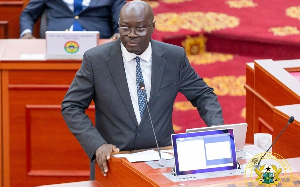 Dr Cassiel Ato Forson is the Finance Minister



Entertainment