Ghana is weighing if local companies are best suited to take over some of the big mines in Africa’s largest gold producer as it decides whether to renew leases for a major Gold Fields Ltd. operation, a top government official said.
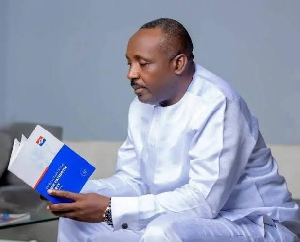
“Even where we are trying to empower Ghanaians to take up large scale mining operations, we are very careful to understand that there are those that can raise money and will take the risk which many indigenous firms cannot take,” Emmanuel Armah-Kofi Buah, the country’s minister for lands and natural resources, said in an interview.
Since President John Dramani Mahama returned to power in early 2025, the West African nation has been phasing out the near-automatic renewal of mining rights held by international investors and introducing a more case-by-case system.
The new approach was demonstrated six months ago when Gold Fields was required to transfer its mature Damang mine back to the state. The government then organized a tender limited to Ghanaian-owned companies, which was won by a firm belonging to the head of state’s brother.
The global mining industry is closely monitoring the unsure future of Gold Fields’ much larger Tarkwa mine as Ghana aims to remain an attractive destination for outside capital during a period of high bullion prices, while also hiking royalty rates, overhauling key legislation and carving out spaces exclusively for domestic firms.
Asked about the Johannesburg-listed miner’s chances of renewing leases for Tarkwa, which expire in April, Buah said the considerations are different than they were with Damang, suggesting some big gold mines with many years of life remaining might be best run by an international company.
“It’s not a policy of government to go and take a mine from any foreign companies, which have taken years to build, for any Ghanaian,” the minister said.
Gold Fields was processing stockpiles at Damang rather than actively mining the site when the Mahama administration moved to shift the asset to local control. In contrast, the company has submitted to the authorities a 20-year plan for Tarkwa, which is the firm’s second-biggest source of gold.
Bloomberg News reported in June that Ghana was considering transferring ownership of Tarkwa to local firms at the end of the leases, citing people familiar with the government’s thinking.
Gold Fields has also said the mine’s future represents “a material uncertainty” for its investors. Chief Executive Officer Mike Fraser told Bloomberg in August the company “will do whatever is required, including under law, to protect the rights that we have available to our shareholders.”
Ghana’s parliament, in which Mahama’s party holds a commanding majority, has in recent months ratified lease extensions for operating mines owned by Australia’s Perseus Mining Ltd. and China’s Chifeng Jilong Gold Mining Group Ltd.
“When there are clear opportunities in the case of marginal fields or something like that, then Ghanaians get those opportunities,” Buah said.
Gold Fields finds itself at loggerheads though with Engineers and Planners Co. Ltd, a company belonging to the president’s brother, Ibrahim, which holds a mining contract at Tarkwa and used to at Damang. E&P has initiated arbitration proceedings against its client, seeking more than $700 million for alleged underpayment from both operations. Gold Fields has said it rejects the claims.
Buah said he expects parliament to approve revised mining legislation by the end of the year. If passed, the law will reduce the length of leases, grant the government greater discretion over renewals and abolish bespoke agreements which lock in fiscal terms for fixed periods.
Business News of Sunday, 25 October 2026
Source: bloomberg.com
Ghana weighs local mine ownership as Gold Fields renewal looms
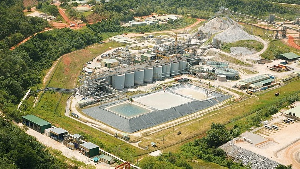 The global mining industry is closely monitoring the unsure future of Gold Fields' Tarkwa mine