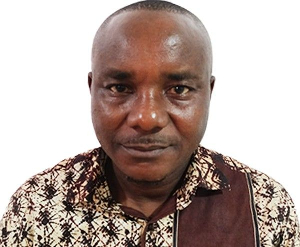
The Chief Executive Officer of the Ghana Tourism Authority (GTA), Maame Efua Houadjeto, has responded to her deputy, Gilbert Abeiku Aggrey, popularly known as Abeiku Santana, over claims that she is difficult to reach for important official meetings.
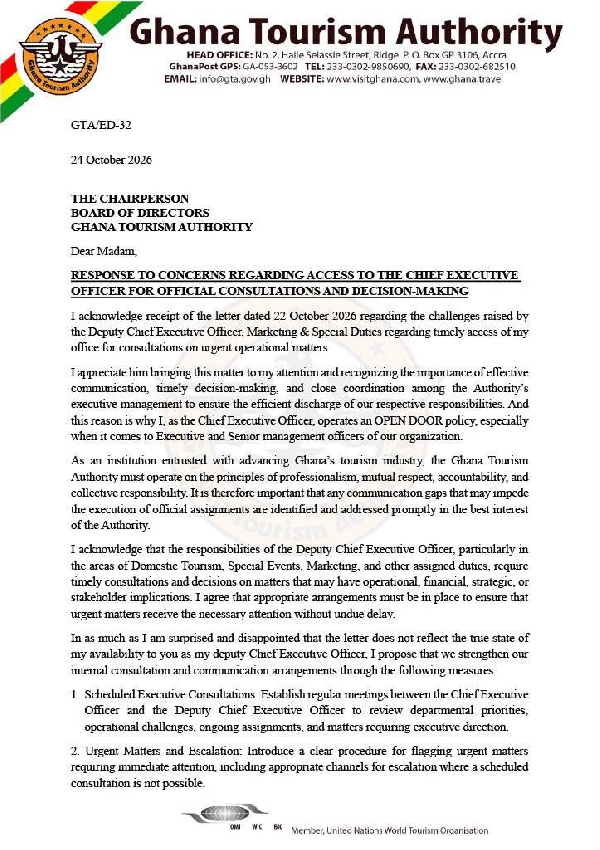
In a letter to the Authority’s Board Chairperson dated October 24, 2026, Maame Efua Houadjeto said she maintained an open-door policy, particularly for executive and senior management staff.
She added that she was surprised and disappointed by her deputy’s claims about difficulties in meeting her.
“In as much as I am surprised and disappointed that the letter does not reflect the true state of my availability to you as my Deputy Chief Executive Officer, I propose that we strengthen our internal consultation and communication arrangements through the following measures,” she stated.
Her response came after Abeiku Santana wrote to the Minister of Tourism, Culture and Creative Arts, Abla Dzifa Gomashie, seeking her intervention in what he described as repeated difficulties in accessing the GTA CEO for urgent discussions.
In his letter dated October 22, 2026, Santana, who is responsible for Marketing and Special Duties, said he had made several attempts to arrange meetings through the CEO’s secretary or personal assistant but was informed that she was unavailable.
He explained that the situation had made it difficult for him to obtain timely guidance, approvals and decisions needed to perform his duties. These challenges, he said, affected areas such as domestic tourism, special events and marketing.
In her reply, Maame Efua Houadjeto acknowledged the importance of timely discussions and decisions, particularly in matters involving operations, finances, planning and stakeholder relations.
Abeiku Santana seeks minister's intervention over 'unreachable' GTA CEO
She proposed five measures to improve communication and cooperation between her office, her deputy and the Authority’s executive management team.
One of the measures is the introduction of regular executive meetings where departmental priorities and operational challenges can be discussed.
She also proposed a system for identifying urgent matters and escalating them when scheduled meetings cannot take place.
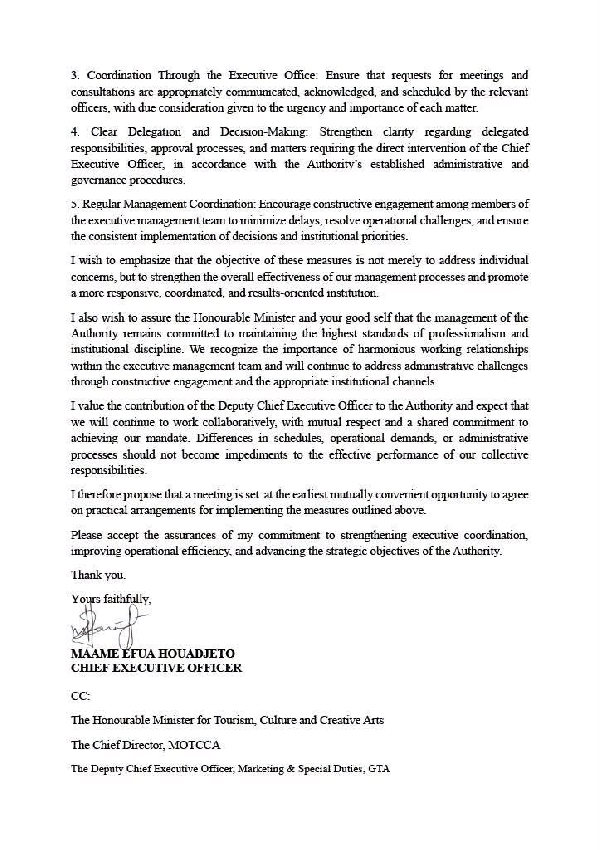
Maame Efua Houadjeto further recommended that meeting requests should be properly communicated, acknowledged and scheduled by the officers responsible.
She said the urgency and importance of each request should be considered when arranging such meetings.
Other proposals include clearly defining the duties delegated to officials and the procedures for obtaining approvals.
She also called for more regular engagement among executive management members to prevent delays and ensure that decisions are properly implemented.
According to the GTA CEO, the proposed measures are intended to improve the Authority’s overall management rather than simply address the concerns raised by her deputy.
“I wish to emphasize that the objective of these measures is not merely to address individual concerns, but to strengthen the overall effectiveness of our management processes and promote a more responsive, coordinated, and results-oriented institution,” she said.
Maame Efua Houadjeto also reaffirmed her commitment to professionalism, discipline and good working relationships among members of the executive team.
She expressed confidence that she and her deputy could continue to work effectively together despite differences in schedules, workloads and administrative procedures.
“I value the contribution of the Deputy Chief Executive Officer to the Authority and expect that we will continue to work collaboratively, with mutual respect and a shared commitment to achieving our mandate,” she stated.
She added that differences in schedules and work demands should not prevent the executive team from carrying out its responsibilities effectively.
“Differences in schedules, operational demands, or administrative processes should not become impediments to the effective performance of our collective responsibilities,” she added.
AK/MA
General News of Saturday, 24 October 2026
Source: www.ghanaweb.com
'I'm surprised and disappointed!' – GTA CEO responds to Abeiku Santana over access claims
 Maame Efua Houadjeto says she maintains an open-door policy for senior management staff




Entertainment